Showing posts sorted by relevance for query Clifford Chew. Sort by date Show all posts

Monday, 9 January 2023

Tough Assignment - The Chew Family

When Mrs Tough died in 1930, the chapel lost that driving force which had largely been responsible for it being built. The work she had started then became the responsibility of those whose lives she had influenced. One family particularly would be prominent in that work spanning the next fifty years. In human and spiritual work, the Chew family were remarkable. Their example and influence on others over many years has been considerable and far-reaching.

The Chews were largely responsible for keeping the chapel active during difficult years, and but for their dedication to the Christian work, and great love for people, along with a few others in the Eton Wick community, the chapel might not have survived. Anyone who has known them cannot help but admire those qualities that have communicated something special.

On the 14th March 1986, Joyce Chew, now Mrs Stevenson, related some of her memories of her parents and brother and sisters.

Her father, Archibald Barrows Chew, came from BryanstonSquare in West London. His parents came to live in Eton Wick in 1908. He was educated at the Regent Street Polytechnic and was a good friend of its founder and headmaster. Quintin Hogg, the grandfather of the late Lord Chancellor - Lord Hailsham. On Sunday afternoons Quintin Hogg would give talks to 'his boys' on Christianity, and in 1900 he published a book, 'The Story of Peter, the Disciple'. A copy of that book was given to Archie Chew, and inside the cover was written, "To my dear Archie with love from Q.H. Nov. 1900". Such seeds sown in those early years were to affect Archie Chew's life and be mirrored in the lives of his family and many others in the years ahead.

In 1984 when the present Lord Chancellor was speaking at St. Georges Chapel Windsor on 'Morality and the Law', he was shown this book inscribed by his grandfather, and placed an entry beneath it - eighty-four years later.

Archie Chew's parents lived at Busane, on the site where Bryanston now stands. Busane was owned by Mrs Tough. It was while visiting his parents at Eton Wick that Archie met Miss Annie Frances Moore, known as Dolly. She was a strikingly attractive young lady. When Archie Chew finished his schooling, he went into business and spent his whole working life as a wholesale woollen merchant in London's Golden Square. Annie Frances Moore was born in August 1886 and was the fourth of six children, and the first daughter of Alfred Moore. She lived at Bell Farm until she married, having been fostered by Annie and Charles Tough. In the same way that Archie Chew's life had been influenced and directed along Christian paths, so Annie Moore was influenced by the Toughs, and it was to be this unique combination of Christian principle and example that would help sustain the chapel continuously for a period of time spanning more than seventy years.

In 1910 Archie Chew and Annie Moore were married in the chapel, and moved to Hanwell, where their first two children - Mabel and Sylvia were born. They then moved to Chalvey Park at Slough, where Joyce was born in 1916. While at Slough, Archie and Annie attended and assisted at the Methodist Church in William Street. They finally moved to Eton Wick in 1918 where their last two children were born, Clifford in 1917 at Bell Farm, and Miriam at Brookside in 1919.


Miss Winifred Jewel moved in with the Chews when Miriam was a baby, and this help enabled Mrs Chew to devote more time to the chapel. Annie had been Sunday School Superintendent while Mrs Tough was alive and when Mrs Tough died, Annie Chew took over the chapel reins and became the new driving force for Christianity.

Archie Chew's faith was much simpler than that of his wife. If the children were found doing something wrong, their father would get them to pray about it, as he would pray for finding something like a lost key. Archie found his strength through prayer. In the later years when the regular Chapel Prayer Meetings began at 6 pm, anyone hearing the prayers of Sylvia, Joyce, and Harry Cook, found themselves in the engine room of our Christian experience and faith. It was this simple faith and belief in praying about all things that was the foundation and strength of Archie Chew, and his example reflected onto his children, and from them onto many others. In contrast Annie Chew's faith was much more questioning and theological, complementing her husband's.

Archie Chew did not have a strong physical constitution, and always had diet difficulties. This weak constitution prevented him from doing much physical work, and he encouraged his children to help with gardening etc. He worked long hours in London arriving back home late most evenings. Sometimes he was away for several days on business - an absence he disliked. The children always enjoyed Bank Holidays with their father home, for he was a happy man when with his family and could quickly throw off business worries. He continuously emphasised good morals and principles.

Businessman, family man and chapel leader, Archibald Chew still found time to work for the wider community. He served on the Board of Governors of Dorney School, and as a Councillor on the Eton Urban District Council. With John Smith, the surveyor, he was largely responsible for the inclusion of the excellent open space in Moores Lane. People in Eton Wick village are indebted to such vision. He was also the first chairman of the Eton Wick Allotment Association.

In 1938 Archie Chew retired from business, but when war broke out in 1939, he soon became involved in war work. He was responsible for the collection of such materials as old iron and paper, which were stored in the cottages which then stood at the corner of Bell Lane and Alma Road. Mr and Mrs Chew became the Evacuation Officers for the village, a difficult and time-consuming job, particularly if the children were not happy in their allotted homes.

Archie Chew died in 1943 after a long illness and several operations. His family knew that he was unlikely to recover, and all believed that he did not know himself how seriously ill he was. But even unknown to them he would discuss his health problems with his young friend Harry Cook long before he died. During his last days in Edward VII Hospital at Windsor, Archie asked for all his family to join him in prayer, and openly prayed that he would not be long for this world - the first indication to them that he knew he was dying. Despite this tragic loss to the family and the Eton Wick Community, Annie Chew carried on positively, and was elected as a Councillor, taking over from her husband.

Meanwhile their eldest daughter, Mabel, had become a civil servant, and in 1936 married Dr William Templeman, a brilliant scientist with ICI, who pioneered research into chemicals for weed control and increased crop productions. He was also a Methodist local preacher and circuit steward in the Windsor and Maidenhead Circuit. For his researches he received the OBE.

The second daughter Sylvia, worked for the Prudential Assurance Company as a sick visitor making reports on claimants. She was engaged to be married for a time, but this was broken off, and she continued her work and to help in the task of running the home and assisting her mother. Her lob with the Prudential was eventually taken over by the Civil Service.

The third and fourth children, Joyce and Clifford, both joined ICI, and during this time Clifford became best man at the wedding of his friend Bernard Stevenson. Many years later after becoming a widower, Bernard was to remarry in 1984, his former best man's sister, Joyce Chew.

When war broke out in 1939, Clifford joined the RAF Volunteer Reserve as a pilot, and completed a tour of operational duty with Fighter Command during the Battle of Britain. He was commissioned in 1942 and was entitled to wear the ribbon of the 1939/43 star. In June 1944 Clifford was awarded the Air Force Cross for a deed of remarkable bravery in bringing an aircraft which was on fire safely to the ground. By so doing the whole crew was able to jump clear without injury.

Clifford Chew


Joyce joined the Wrens in 1942 as a transport driver. Miriam the youngest, went nursing at Reading's Royal Berkshire Hospital.

In March 1945 Mrs Chew received the devastating news that her son was missing. He was 27 years of age. Flight Lieutenant Chew was shot down while flying paratroops across the Rhine. The other members of his crew managed to get clear of the aircraft, but he was unable to bale out in time and his body was afterwards recovered by British troops and given fitting last honours.

Annie almost lost her faith. She had been so positive that God would take care of her son and felt let down that He had failed her. During this critical and very stressful time, Annie was well supported by Sylvia, and without the great support and strength of character of her fine daughter, she may not have regained her faith. Clifford's death was later confirmed, and the returning of his wallet and New Testament sealed his passing. He is now buried in a war grave in Luxembourg.

After the war Joyce left the Wrens and in 1946 returned to ICI and again took up work with the chapel. On the death of her father Sylvia had taken over the jobs of Trust secretary and treasurer, and now on being demobbed Joyce took them over from Sylvia. Miriam returned to nursing after working for a short period for ICI and the Great Western Railway. She later married John Harrison and moved to Taunton in Somerset.

In the 1950s Mrs Chew moved to London to help look after relatives - Uncle Russell (Mr Russell Smith) and his wife. Sylvia moved to Oxford to work for the Civil Service. Only Joyce remained at Bryanston. Later in the 1950s Mrs Chew, Uncle Russell, Sylvia, and Miriam, all returned to Bryanston to re-unite the family.

In 1964 Mabel died after suffering a stroke and two years later Mrs Chew died after much worrying about her eldest daughter. Dr Bill Templeman died in 1968.

The work of the chapel however, had to continue, and Sylvia, Joyce and Harry Cook, undoubtedly kept the chapel going by their personal commitment and Christian leadership from the 1960s onwards. Sylvia and Joyce were-both treasurer and secretary of the chapel over a period of at least forty years. For more than twenty of these Joyce was also organist, having had only two years tuition. Both daughters were involved with the Sunday School from a very young age. Mrs Tough encouraged Joyce into Sunday School teaching when she was only twelve. Today Joyce is President of the Chapel Sisterhood and President of the Circuit Womens Fellowship. Sylvia was the Chapel Overseas Mission's Secretary for many years, and it was largely her inspiration and leadership that earned such good support for this work. Between 1966 and 1980 Sylvia was also a superb President of the Chapel Sisterhood (Womens Meeting), started by Mrs Tough some eighty years earlier. She was a supreme organiser and visitor, totally caring, and the most unselfish person you could ever meet. She was very like her father.

When Sylvia died suddenly in her little cottage next to the chapel, it was felt by the whole community, and the number that attended her funeral was a testimony of the affection and respect in which she was held. She was a very rare lady.

The 1960s and 1970s were the years of the garden parties at Bryanston for Missions, summer mystery drives ended at Burnham Beeches with 'Bangers and Mash', and community singing among the trees on beautiful Summer evenings. The sound of hymn 414 still rings in the mind - "We thank thee Lord for this fair earth'.

When one looks at the early years of the Chew family it is not surprising that the Christian influence of the parents made deep and lasting impressions on the children as they lived out their discipleship within their own family. Thus, was sustained a Christian influence in this village that has lasted more than a hundred years - from the coming of Mrs Tough in 1877, the birth of the chapel and Annie Moore in 1886, until today and beyond for Joyce is still with us. She still plays the organ - a prayer in sound - and is a much-loved church steward. In mother and daughter, we have a unique hundred-year link in the life of this chapel.

The Eton Wick History Group is most grateful for the kind permission given by the Eton Wick Methodist Chapel to republish this history, Tough Assignment on this website.

Mabel, Sylvia, Clifford, Miriam, Joyce, 

Archibald and Annie Chew.


The Eton Wick History Group is most grateful for the kind permission given by the Eton Wick Methodist Chapel to republish this history, Tough Assignment on this website.

Monday, 24 March 2025

C. A. CHEW - Royal Air Force Volunteer Reserve

Clifford Archibald Chew A.F.C. (Flight Lieutenant) - 512 Royal Air Force Volunteer Reserve

Clifford was born in 1917, the only son of Mr & Mrs A.B. Chew of "Bryanston" Moores Lane, Boveney Newtown. He had four sisters and like the rest of the family he a was a conscientious member of the Methodist Chapel. His Great Aunt, Mrs Annie Tough, was in fact the founder of the Alma Road Chapel in 1886. Clifford was a village lad who passed the entrance exam to Slough Secondary School where he completed his education, and he left the school when he was about 16 years old. He was always a keen sportsman and played rugby for Windsor Rugby Club and rowed with the Eton Excelsior Rowing Club.

When he left school he was employed by I.C.I. as a clerk in the distribution department at Slough, for a period of about two or three years, before transferring to the company's London depot. He became interested in flying and joined the R.A.F.V.R. which enabled him to undergo a course of flying instruction at White Waltham Airfield near Maidenhead. Being in the Volunteer Reserves he was called for immediate service when the 1939 threat of war became a reality. He was serving with Fighter Command and was a pilot with Spitfires throughout the Battle of Britain in 1940. He completed a full tour of duty and was commissioned in 1942.

In June 1944 he was captain of an aircraft engaged on an instructional series of flights requiring take-off from the airfield, flying circuits and landing. Four times he carried out this procedure, but on the fifth occasion the starboard engine developed a serious fault. Flight Lieutenant Chew took over the controls from the pilot under instruction and managed to gain height to an altitude of 800 feet, despite the fact that only the port engine was functioning. Violent vibrations made it impossible to maintain this height and the aeroplane lost the altitude just gained, with the starboard engine catching fire. The undercarriage failed to function and the situation became extremely hazardous. Clifford managed to avoid other aircraft as he successfully landed the blazing aeroplane on the runway. The entire crew were able to jump clear of the wreck without injury. He was subsequently awarded the Air Force Cross for his courageous action.

In March 1945 Clifford was serving in yet another capacity with 512 Squadron in support of the European offensive against Germany. On the 24th of March he was flying paratroopers across the Rhine when his aircraft was shot down. His mother received a letter from his squadron commander dated 27.3.45 notifying her of his "failure to return from the operation" and stating that any further information would be forwarded.

A newspaper reported a few days later under the heading:

Given a British Burial - Air Officer's Fate.

News of the death and burial in Germany of Flight Lieutenant A. Chew, A.EC, of Windsor, has reached his friends in Northern Ireland, where he was formerly stationed. FLT/LT. Chew was shot down while flying paratroopers across the Rhine. The other members of his crew managed to get clear of the aircraft but he was unable to bale out in time, and his body was afterwards recovered by British troops and given a fitting last honours. His mother Mrs D. Chew of "Bryanston", Eton Wick, Windsor has received news of his burial at Rees, a town on the Rhine situated between Emmerich and Wesel.

This gallant airman, who joined the R.A.F.V.R. in 1939, was awarded the A.EC. for outstanding skill and coolness in landing a burning aircraft. During his service in N. Ireland he was stationed at Nutts' Corner, Troome and at Ballymoney...

After the war Clifford's remains were taken from Rees and interred at Hotton War Cemetery in the Province of Luxembourg, 30 miles south west of Liege. Hotton Cemetery contains 666 burials: 340 from the army and 325 from the R.A.F., with one other grave.


Clifford was a single man and at the time of his death he was 27 years old. He was the only commissioned officer from Eton Wick to lose his life in either world war. His father, Archibald Chew, died in 1943 and after the war the family had electric lighting installed in the Methodist Chapel, Alma Road, in memory of the two men and a commemorative plaque placed the Chapel. He is commemorated on the Eton Wick Memorial in the church yard and on the Village Hall plaque. 

Clifford Chew's page on the Commonwealth War Graves Commission website.


This is an extract from Their Names Shall Be Carved in Stone  
and published here with grateful thanks to the author Frank Bond.


Monday, 17 January 2022

Tough Assignment - The Second World War and the 1940's


Scholars Scripture Certificate 
presented to Dorothy Banham in 1938

The war years undoubtedly brought change and strain to the chapel as it did to the rest of the village and the country as a whole. But nothing of this is apparent from the minutes of the trustees' and class leaders' meetings, which merely continues to record with monotonous regularity the election of officials and committee secretaries, the annual payments of contributions to circuit and national funds, and the acceptance of reports. Yet the chapel did play a vital, if minor, part in the war effort. The people of Eton Wick, like those of many another village, accepted numerous evacuee children into their homes during the 1940s. Mr and Mrs Chew were the billetting officers. Many of those sent to Eton Wick were Jewish children from London's East End, yet one of the most enduring memories of those days is of the chapel and school room crowded to bursting point with Sunday School scholars - Jews and Christians. There were still only about ten classes, but over a hundred children, and when they all joined together in hymn singing, the sound could be heard at the far end of Alma Road. When they all poured out at the end of Sunday School it was more reminiscent of the closing time at the cinema. In spite of the large numbers, a Summer Outing was still contemplated though all plans to take the scholars to the seaside had to be abandoned. Instead in 1940 the coach took the children to Burnham Beeches, but there were no more outings until after the end of the war. Scripture exams were still held but new arrangements had to be made for prize giving. Attendance prizes were given only to those who came to Sunday School more then ninety times a year, and the value of the prizes was reduced for 'those whose conduct was not good'. A New Year, rather than Christmas, Party was held - but not until February since there were several parties being given in the village and by that date it was thought 'the days would be longer and the air raid alerts later'.

The chapel account book reveals a little more of life during the war. The insistence by the authorities that no chink of light be allowed to alert the enemy can be seen in the purchase of three lots of blackout material whilst fear of danger from bombs and flying glass and masonry prompted the construction of a 'blast wall' in front of the door in 1941.

A Windsorian coach was hired at the cost of £1 to take chapel members and friends to Slough during 'Wings for Victory Week'. Soldiers were billeted for two nights in the Tough Memorial Hall during November 1943 at a profit of 18s (90p) to the chapel. Inevitably, however, the war brought losses. Christian Endeavour petered out soon after 1939 as members, such as Joyce and Clifford Chew and Harry Cook, joined the forces and other members were caught up in other war time activities. In 1943 Archibald Chew died, not as a result of the war but of an illness, and the chapel lost a very able leader. Two years later, and only a few months before hostilities ceased, Clifford Chew died, shot down by enemy action as he flew on a mission to Germany.

In many ways the war was a watershed separating two very different decades. It had widened the horizons of many village families and the construction of new houses and roads soon after the war in both Eton Wick and Boveney New Town altered the whole balance of the village community. Just before the war in 1934, the parish councils of Boveney and Eton Wick were abolished and both Boveney New Town and Eton Wick were brought within the boundary of the Eton Urban District. There was little space for house building in Eton town, and so the energies of the Council were now directed towards land of the old Boveney Parish. The first houses built were the prefabs on Bells Field, but soon the pink fletton bricks and yellow rendering of council houses transformed the face of the Eton Wick Road and Moores Lane. By the early fifties council houses had spread over much of the Tilston Fields and the name, Boveney New Town, was relegated to that of one of the new roads. The chapel now stood much nearer the centre of the enlarged village, the whole of which was now thought of as Eton Wick.

In 1946, however, the chapel was not in very good shape. Membership had not yet risen appreciably and the Sunday School, with only thirty two scholars, was smaller than it had been for many years. The building itself needed a general overhaul and work started on this in 1947. It wasn't completed until 1950, but by this time electricity had also been installed in memory of Archibald and Clifford Chew. The interior of the chapel was repainted and the old combustion stove replaced by gas heating. These in turn were to be replaced in the 60s by the more even warmth produced by portable electric fires.

The chapel officers also took a straight look at the problems of decreased numbers in the Sunday School. Since the war years (if not before) there had been a Circuit Youth Committee with Sylvia Chew its Eton Wick representative, and now in 1948 Sylvia and Marjorie Morris started a youth club at the chapel. It was a very lively club catering for teenagers. It met weekly and sometimes twice weekly and its varied programme included country dancing, debates, hiking, swimming and dramatics. Even now the success of some of its productions are remembered with pride, but perhaps the most treasured memories of its one-time members are the summer holidays at Llangollen, the Isle of Anglesey and the Lake District.


A Cradle Roll Rose

As yet there was nothing special offered to the junior age children, but in 1949 a Cradle Roll was begun with the names of sixteen babies and toddlers recorded the first year. It was an encouraging beginning and ten more names were added the year after. These were not only the names of the young children of chapel members, but included those of any young child in the village whose parents would allow their names to be entered. The parents were visited and welcomed to the chapel services. A rose bud (blue for a boy and pink for a girl) was placed on the cradle roll tree for each child and contact was maintained until the child could be encouraged to enter the Sunday School, and receive its flower. This simple, but effective, idea was the brainwave of Lily Bye.

The Eton Wick History Group is most grateful for the kind permission given by the Eton Wick Methodist Chapel to republish this history, Tough Assignment on this website.

The Methodist Chapel held it final meeting on 9th January 2022 more than 135 years after its first service in October 1886. 


Monday, 12 June 2023

Tough Assignment - Memorials

Over the hundred years there have been many, many gifts to the chapel of money and items. Each and everyone has been appreciated, but neither the minute books nor the memories of the members can supply a complete list, and thus those shown below, although all are in use today, are but a small proportion of the total.

Some have been given in memory of chapel members. These include:

Electric light installation                                                  1948 Archibald and Clifford Chew

Organ                                                                             1966 Annie Chew

Flower vases                                                                  1973 Phillis Hutchinson

Curtain behind the communion table                             1980 Sylvia Chew

Bibles                                                                             1983 Marjorie Morris

Other gifts were given simply because they were needed, such as:

Flower vase                                                                   1943 Muriel Badder

Piano                                                                           c1955 Mrs Rye of Woodlands Park

Lamp outside the chapel                                             c1960 Leslie Hogg

Flower stand                                                               c1965 Eva Sibley (nee Lane)

Bibles for the Sunday School                                       1982 Katherine Lewis 

The Eton Wick History Group is most grateful for the kind permission given by the Eton Wick Methodist Chapel to republish this history, Tough Assignment on this website.


Sunday, 12 November 2023

Eton Wick Remembers the Fallen


East Face

Henry Ashman  1993  21/08/1915  Gallipoli
Cyril Ashman  746  26/10/1917  Passchendaele
George Baldwin  16671  24/04/1918  Amiens 
George Bolton  7993  24/09/1915  Loos
Alfred Brown  11811  31/07/1917  Ypres
Ernest Brown  T/202287  24/10/1917  Passchendaele
Angus Bruce  19160   27/03/1918  Arras
Thomas Bryant  9813  11/11/1914  Ypres
Fredrick Buckland  G/3615  17/12/1914  illness
Arthur Bunce  39794  17/07/1917  Ypres
Albert Caesar  12472  01/09/1914  Villers

Omar Brown  6912447  21/11/1941  Libya
Clifford Chew  116439  24/3/1945   Luxembourg
William Farmer  1603478  10/4/1944  United Kingdom

North Face


Frank Church  3760  19/07/1916  Somme
John Clark  630936  23/04/1917  Roeux
Fred Colbourn  185017  31/10/1918  illness
Horace Dobson  32908  15/07/1918  illness
Charles Godwin  2556  08/06/1918  Arras
Charles Hammerton  5335  09/10/1916  Somme
Henry Hill  K/18991  03/09/1917  Chatham air raid
Robert Hobrough  40782  30/09/1917  Passchendaele
Arthur Iremonger  7937  25/12/1915  Loos
Ernest Jordan  33180  20/08/1916  Iraq
Charles Miles  K/25314  09/07/1917  HMS Vanguard
Harry Quarterman  7570  30/10/1918  Asfold POW camp

John Flint  T/I27600  19/5/1943  Italy
William George  1529768  14/11/1942  Egypt
Richard Hood  5385945  13/5/1944  Italy
Thomas A McMurray  105151  17/6/1940  France


West Face


Henry Moss  M2/097873  21/10/1918  Roisel
James Newell  1232  11/04/1917  Arras
Joseph Newell  9534  24/05/1917  Turkey POW Camp
Walter Payne  12050  12/03/1916  Ploegsteert Woods
George Percy  34891  15/04/1918  Outtersteene Ridge
Herbert Pithers  24307  28/02/1917  Ancre
Arthur Richardson  10060  02/05/1915  Gallipoli
Joseph Springford  94017  15/02/1918  Passchendaele
Isaac Springford  197731  02/07/1918  Orpington
Albert Stallwood  4176  24/10/1918  Wassigny
Peter Knight  30958  26/10/1915  Aegean Sea

William Prior  5434  22/8/1947  England
William Pates  1152080  15/1/1943  France
Albert Prior  7689948  12/11/1943  Burma
George Prior  14603226  13/12/1947  England


This is an extract from Their Names Shall Be Carved in Stone  

and published here with grateful thanks to the author Frank Bond.

Thursday, 11 November 2021

Eton Wick Remembers The Fallen


East Face

Henry Ashman  1993  21/08/1915  Gallipoli
Cyril Ashman  746  26/10/1917  Passchendaele
George Baldwin  16671  24/04/1918  Amiens 
George Bolton  7993  24/09/1915  Loos
Alfred Brown  11811  31/07/1917  Ypres
Ernest Brown  T/202287  24/10/1917  Passchendaele
Angus Bruce  19160   27/03/1918  Arras
Thomas Bryant  9813  11/11/1914  Ypres
Fredrick Buckland  G/3615  17/12/1914  illness
Arthur Bunce  39794  17/07/1917  Ypres
Albert Caesar  12472  01/09/1914  Villers

Omar Brown  6912447  21/11/1941  Libya
Clifford Chew  116439  24/3/1945   Luxembourg
William Farmer  1603478  10/4/1944  United Kingdom

North Face


Frank Church  3760  19/07/1916  Somme
John Clark  630936  23/04/1917  Roeux
Fred Colbourn  185017  31/10/1918  illness
Horace Dobson  32908  15/07/1918  illness
Charles Godwin  2556  08/06/1918  Arras
Charles Hammerton  5335  09/10/1916  Somme
Henry Hill  K/18991  03/09/1917  Chatham air raid
Robert Hobrough  40782  30/09/1917  Passchendaele
Arthur Iremonger  7937  25/12/1915  Loos
Ernest Jordan  33180  20/08/1916  Iraq
Charles Miles  K/25314  09/07/1917  HMS Vanguard
Harry Quarterman  7570  30/10/1918  Asfold POW camp

John Flint  T/I27600  19/5/1943  Italy
William George  1529768  14/11/1942  Egypt
Richard Hood  5385945  13/5/1944  Italy
Thomas A McMurray  105151  17/6/1940  France


West Face


Henry Moss  M2/097873  21/10/1918  Roisel
James Newell  1232  11/04/1917  Arras
Joseph Newell  9534  24/05/1917  Turkey POW Camp
Walter Payne  12050  12/03/1916  Ploegsteert Woods
George Percy  34891  15/04/1918  Outtersteene Ridge
Herbert Pithers  24307  28/02/1917  Ancre
Arthur Richardson  10060  02/05/1915  Gallipoli
Joseph Springford  94017  15/02/1918  Passchendaele
Isaac Springford  197731  02/07/1918  Orpington
Albert Stallwood  4176  24/10/1918  Wassigny
Peter Knight  30958  26/10/1915  Aegean Sea

William Prior  5434  22/8/1947  England
William Pates  1152080  15/1/1943  France
Albert Prior  7689948  12/11/1943  Burma
George Prior  14603226  13/12/1947  England

Wreaths laid on the Memorial 14th November 2021
Photograph courtesy of Councillor Samantha Rayner


This is an extract from Their Names Shall Be Carved in Stone  

and published here with grateful thanks to the author Frank Bond.

Saturday, 15 August 2015

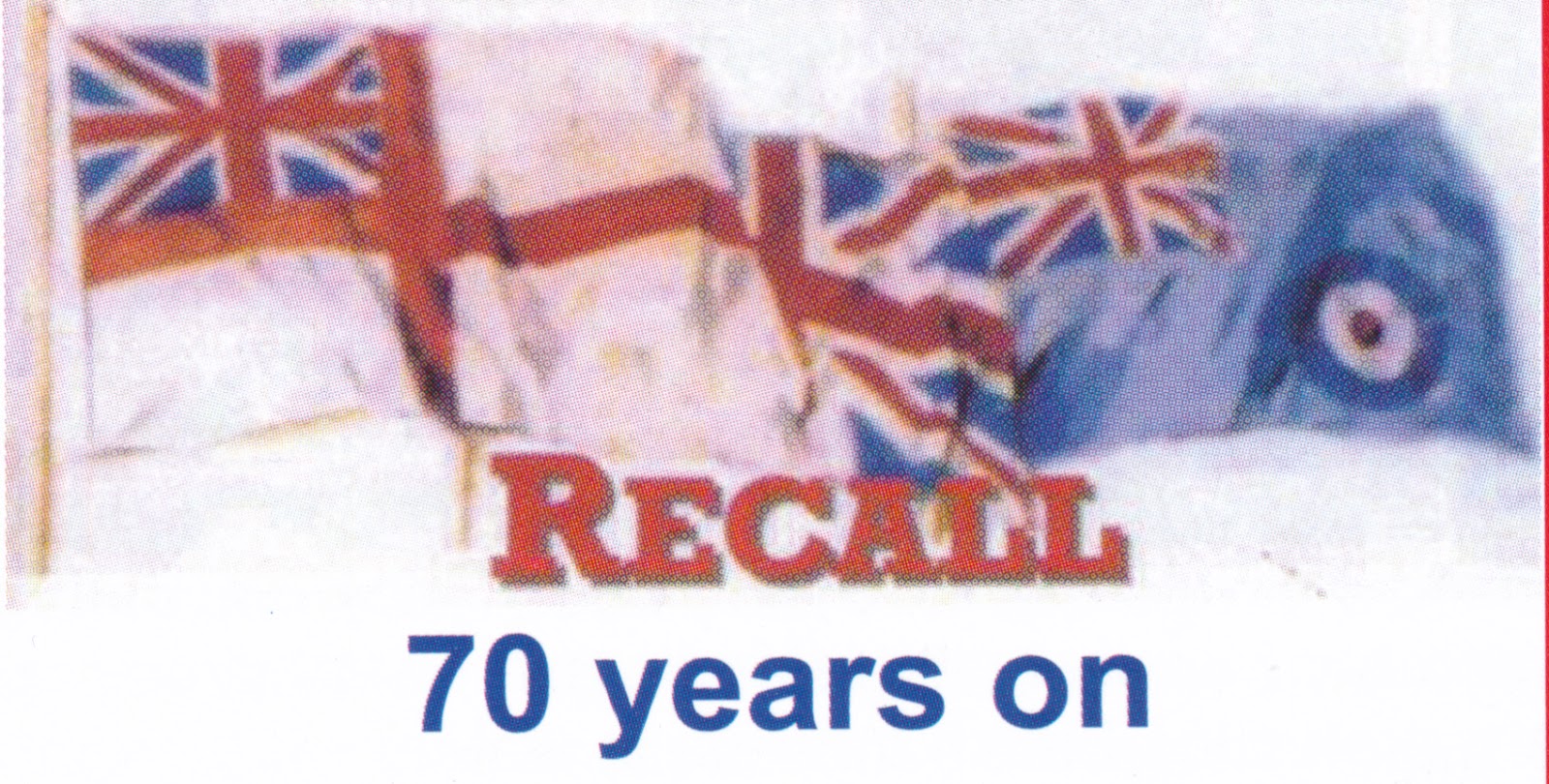
Recall 70 Years On from VJ Day

This year of 2015 has been a year of commemorations, being 800 years since the signing of the Magna Carta; 200 years since Waterloo'; 160 years since the ending of the Crimean War; 100 years since the start of the Great War and 70 years since the end of World War 2. 


Ten years ago (2005) the Village Hall, together with the History Group commemorated the end of WW2 by inviting the village veterans of that war to a Celebratory Lunch in the Village Hall. It is not known how many Eton Wick men and women served in the war time forces, although a very rough estimate of 130 is suggested. In the intervening 60 years many had moved away or died.

The occasion was largely financed by a National Lottery funded scheme known as 'The Home Front Recall United Veterans'. Fifty three ex-service persons attended the function which was kindly attended by Eton College Bursar; Commander Andrew Wynn R.N. (Retired) And the Eton Mayor Douglas Hill, also Lt. Col. M. L. Wilcockson, C.O. of the Eton College Combined Cadet Force. Many of the veterans had set up homes in Eton Wick after the war had ended, but all were now village residents, and all had served in the armed services during the conflict. All were given a souvenir book of their service titled 'Recall 60 years on'. Ten years later, in 2015, the History Group decided to present an evening; open to all; that depicted the Special Lunch and the veterans involved. Sadly many had died; become incapacitated, or were in nursing homes.

Very moving speeches had been made in 2005 and this is what prompted this article to place on record, and to serve as an appendix to the souvenir book of that year. For the follow-up event of 2015 invites were extended to 17 veterans, and 7 of these were able to attend. During the last ten years thirty four of the fifty three had died, and others found it no longer possible to attend.

Three weeks after the lunch celebration of 2005 a three day WW2 Exhibition was held in the village hall, largely due to the enthusiasm and experience of veteran John Denham. This was the third exhibition held in Eton Wick, with all of which John had been a co-organiser. The first ever was in 1977 and specifically to launch the book of the village history written by Judith Hunter, and this more than anything eventually led to the starting of the Eton Wick History Group. Sadly John has since died, but his legacy lives on. Catering for the three course lunch was organized by Mrs Margaret Everitt and her son Andrew, who were ably assisted by a team of volunteers. Margaret and Andrew also kindly provided the buffet food for the more recent History Group follow-up event.

During the 2005 lunch there were toasts and speeches by the Eton College Bursar, Commander Andrew Wynn R.N. (Retired) and by the Eton Mayor, Douglas Hill. We print here our written record of the Bursar's speech which is very slightly reduced where appropriate.

Speech by Commander Andrew Wynn LVO, RN (Retd.) at the Veterans' Dinner celebrating the 60th anniversary of VJ Day, 15th August 2005 

I spent eighteen years in the Royal Navy and traveled the world. The closest I got to a war, or anything like a war, was the 'Cold War' that thankfully never turned hot; but I was in the 'Cod War', serving in HMS APOLLO in 1973: I can remember coming on watch at 4.00 a.m. and finding waves higher than the bridge, and I can remember heavily built Icelandic gun boats ramming the thinly-plated frigates which were protecting British trawlers in waters we thought were open to all. But that was not the same as being in the way of bullets and high explosives or being in a world war.

My main sense is one of humility in standing in front of you like this, but I am honoured to do so. One of the most striking things, I think, in reading the book titled `Recall 60 Years On', is the roll call of places far and wide across the globe which resonates with the fame and deeds of British soldiers, sailors and airmen in global conflict: Dunkirk, Norway, Londonderry, Newfoundland, the Atlantic convoys, Gibraltar, Alexandria, Malta, the Mediterranean convoys, Cairo, Benghazi, Algeria, El Alamein, Tripoli, Sicily, Italy, Athens, Salerno, Anzio, Normandy, Belgium, Holland, Caen, Calais, Boulogne, Brussels, Arnhem, Bremen, Lubeck, Hamburg, Berlin, Dresden, Palestine, Assyria, Aden, Port Said, Trincomalee, the North West frontier, Malaya, Lahore, Chittagong, Calcutta, Poona, Madras, Quetta, Bombay, Rangoon, Singapore, Changi, Hong Kong, the Burma railway. You know them: you were there.


The places where men and women with connections to Eton Wick served cover this kingdom from Portreath in Cornwall to Dover in Kent and Scapa Flow in the Orkneys. Looking further to Europe, North Africa and the Middle East and elsewhere, you can see that wherever there was action, there were men from Eton Wick on the land and sea or in the air, or in support of them.

You fought until Rommel left Africa; you forced up through Italy and then you fought through Normandy and on to Berlin. Of course the war did not end there: it is just as remarkable to see it reach from Eton Wick across the world to the Far East, India, Burma, Malaya, Singapore and Japan; and in fact you can see the footprints of those in this room, between 1939 and '45 right across the globe's land and oceans from East to West and North to South; and they all came back here to Eton Wick.
I was very much moved by the experiences that you had, what they meant to you, and the memories that you had and remembered with modesty: 'packing the belongings of aircrew who did not return'; 'serving in mine-sweeping trawlers in the North Sea'; 'malnourished, near-naked and amidst sickness

 and death these shadowy figures clung to life and hope'; 'an American tank very close to us exploded and blew my ambulance and me to pieces'; 'we were escorting convoys between Gibraltar and Malta which always meant three or four days of constant air attack'; 'this was the start of a wolf pack attack that took four days to fight off'; 'the stay there was mostly enjoyable apart from the funerals of numerous casualties for which I was paid a shilling extra'; 'we had to drink a pint of milk daily because we worked with acid'; 'she did find dodging buzz bombs not to her liking'; 'unfortunately, I had a further posting to a unit engaged in disposal of unsafe explosives'; 'the awesome sight of the number of dead and wounded on that beach' [Normandy, of course]; 'I was lucky on various occasions, being narrowly missed by enemy shells etc. and was witness to many fatalities'. One of you, before joining the Army, 'having helped repair damaged boats, found it exciting to take them to sea on trials, even though we often got machine gunned by German aircraft'; 'we finally left Palestine, after clearing up the dead when the Arabs and Israelis stopped fighting each other'; 'wrapping the dead in blankets and stacking them on top of one another'; 'after walking fifteen hundred miles en route to a POW Camp near Berlin we decided to escape, chose the wrong house to call on and entered the home of a German policeman'; 'I spent a long time in Egypt —four and a quarter years'; 'I read of the sinking of the ROYAL OAK and wondered who was in that ship'; I read of one of many veterans who, 'for three and a half years, worked under appalling conditions in constructing the notorious Burma railway'; one of you had 'vivid memories of moving the bodies of the congregation from the Guards' Chapel in London, after it had been hit by a flying bomb'. Hilly Hilliard there, his Mosquito was 'damaged in attacking a submarine but he made it home to base and landed without brakes and with just ten gallons of fuel left' — which is not much.


I am going to pause at this point. Hilly had severely damaged the German U-boat, U-960, and I have a message here from the Captain of that German submarine: this is a message from Gunther Heinrich, the Commander of U-boat 960: he pays tribute to the Eton Wick veterans of World War II gathered here today; he writes: 

'All warriors, friends and foes, experienced hard and tough times and yet sometimes there were happy times to remember from when they were fighting for their country.' He further says he wishes 'all the veterans an honourable and dignified day on the 15th August at the Village Hall in remembrance of the end of the war; best wishes for a joyful get together'. He thanks the organisers of the event, and especially John Denham and Frank Bond for the booklet he received which depicts a record of the conflict. He also mentions that he and some of his crew of U-boat service pay tribute every 19th May, at the U-boat Memorial north of Hamburg, to the thirty-one men who were lost at sea when their U-960 was sunk in May 1944 in the Mediterranean. 

He quotes from a prayer called 'The Sailor's Grave': "Auf einem Seemansgrab, da bluhen keine Rosen" - 'There are no roses on a sailor's grave.'

A little more optimistically, I find in this book: 'I was on Luneburg Heath at the time the German generals signed the final surrender'; 'I was in Trafalgar Square on VE night'; 'back at Broken Furlong, work was resumed after a six year break'. I make no claim to voice my own experience of the passing horrors that you went through, but I do think I have at least some awareness of it. I was fascinated actually to find one physical connection between what all of you here did and the easier life I have led: George Wilson served in the fast and modern HMS ULSTER in 1944: she was still fast but she was not modern when I joined her as my first ship for navigation training in 1970.


I have no illusions about why it is that I have been able to have a life less threatened than yours: it is because of what your generation did in those dark years of '39 to '45. Of course, there has been conflict since then and probably you were involved: Korea, Malaysia, Suez, the Falklands, and Iraq, and now religious fanaticism; but it is nothing like '39 to '45 when the whole world suffered. That people like me have had a less troubled life is of your making. Memories fade and society moves on; babies born when man first walked on the moon will soon be grandparents; recently, at a school in Bexley in Kent, none of the pupils knew what the Battle of Britain was; and their teacher didn't know either. When one thinks that some, and I do mean some and only some - when one thinks of some young people in Eton Wick, one thinks more of vandalism than of a valuable contribution to society, and yet they have much more than you did when you were fourteen, when you went to work and then to war; but they can't take away the legacy of peace that you gained with your sacrifices, suffering and hardship.

I think this reunion is a wonderful achievement by those who thought of it and made it happen, and by you who are here. You have given me the privilege to stand here and take this opportunity, which I am very glad to take, to thank you on behalf of my generation and those following for what you and your generation have given us. I salute you and I thank you. I said a moment ago that they all came back to Eton Wick, but of course they did not all come back: Stanley Bond, Alfred Brown, Clifford Chew, William Farmer, Thomas Flint, William George, Richard Hood, Thomas McMurray, William Pardoe, Walter Pates, Alfred Prior, and George Prior did not come back, and some who did come back are not with us today. I will ask you to stand, once again, and drink to absent comrades.

A message from Commander Andrew Wynn which was read to the audience on  8th July 2015 after the film of the 'Recall 60 Years On' event:

I was very touched to be reminded about the 'Recall 60 Years On' that was arranged in 2005, and to be told that the speech that I had the honour of making on that special occasion is to get a second hearing at this evening's meeting of the History Group. It is sobering to think that ten years have passed since then. It was such a pleasure then to see so many Second World War veterans from Eton Wick, and in the 60th anniversary year of VJ Day to speak in their praise and to thank them. Now we are near the 70th anniversary, and Old Father Time has been at work as he always has and always will. So the veterans with you are fewer than in 2005. But our debt to them, and to the spirits of their comrades who have gone ahead of us, is every bit as great now as it was 10 years ago. I would like to congratulate the History Group on making sure that the memory of the hardships and sacrifices faced by so many in the Second World War still stay alive.

I salute the surviving veterans of Eton Wick. Those who have died, let us remember in the words of the imperishable Royal British Legion Exhortation: "They shall grow not old, as we that are left grow old. Age shall not weary them, nor the years condemn. At the going down of the sun and in the morning, we will remember them."