Showing posts with label 1940. Show all posts

Tuesday, 15 December 2020

World War 2 Eighty Years On - December 1940


Wednesday December 4th.

At about 8 pm. bombs fell on the G.W.R. goods yard at Windsor. Damage to coal wagons scattered timber, coal and trucks over a wide area. One wagon thrown into the air was propelled with its contents onto the roofs of the neighbouring buildings. Shops in the Goswells and Bridgewater Terrace, Windsor were damaged, also windows in Thames street were shattered by the blast. Two bombs fell on Eton College buildings, one on Savile House in Westons Yard, the home of the College Music and Choirmaster Dr. Henry Ley. The other bomb fell just outside the entrance to the Headmaster’s room. This bomb was of delayed action, its presence not being discovered until several hours later. The first bomb exploded on impact causing severe damage to Savile House, one of the finest college buildings. It was fortunate that Dr. Ley had been detained on some minor business which had delayed him going to dinner as the dining room was completely destroyed.  

Two residents of Eton Wick, Eva Bond, and Mr Cox were at the college during the evening. Frank Bond describing the bombing said his sister Eva was employed by Dr. Ley as a servant and was working at Savile House that evening. Several bombs had dropped around the district but on hearing of the Savile House bomb I cycled furiously to Eton only to be forbidden to venture past college corner. Unable to get any information as whether there were casualties, I return home to Eton Wick. Long after my returned Eva, covered in filthy brick and plaster dust with matted hair came home in a very disturbed state. Also in the house was a young girl evacuee who, fifty years on, wrote to Eva recalling memories of the night of near disaster (Frank Bond)

Reporting later on the bombing of Eton College said that a high explosive bomb had fallen in the front garden of Savile house, residence of Dr. Henry Ley, the College Presenter. Adjoining property was damaged and windows were broken in in the buildings in Westons Yard. Fire also broke out in Savile house. Sometime later a time bomb was discovered by Mr E. Bendell, the school clerk, outside his office in the colonnade. After the alarm was raised, staff salvaged many valuable papers, books, and important records. Everyone in the vicinity were evacuated. Later when the bomb exploded stained glass windows in the chapel were broken or damaged. Damage was also sustained to the school office, the roof, and an outside wall of Upper School. Upper School built in the reign of Charles II by Christopher Wren had the names of many Etonians carved on its walls and efforts were made to collect as many pieces as possible with the view to restoration later.

Mr Cox was doing fire watch duty that evening at Walpole House, where he witnessed the following incident involving a boy who had gone for extra tutoring to another house. Returning late from this tutorial after lock up, he found his House Master, H.K. Marsden, waiting in the boys’ entrance as he entered. Within Mr Cox's hearing, the boy was given a severe dressing down. He was covered in dust but just replied “I have just had a very bad shock, Sir”, which was putting it mildly for he was on his way back and just passing the Memorial Hall when the bomb fell in Westons Yard demolishing part of the Music Master’s house and school office near the Chapel. Needless to say that once it was realized what the boy had been through he was taken care of. Mr Cox said how much he admired the young boy for the way he handled his ordeal. (Daphne Cox.)

Chapel. Needless to say that once it was realized what the boy had been through he was taken care of; Mr Cox said how much he admired the young boy for the way he handled his ordeal. (Daphne Cox) 

Evacuated to Eton Wick, George White remembered vividly the night Eton College was bombed. "I was cycling home in the dark from the cinema at Slough; suddenly, when about a half a mile from Eton, the air raid siren sounded and within a very short space of time huge high explosive bombs fell in the direction of Eton. I threw myself into a ditch at the side of the road and after possibly a minute I looked around me and saw dozens, maybe hundreds, of incendiary fires from incendiary bombs all across the fields and in the roads etc. (George White) 

December 5th. 

The unexploded bomb (UBX) which fell in the College Colonnade caused several difficulties necessitating parts of College to be evacuated and the main road to Slough closed to traffic. Later in the evening the bomb exploded causing much damage to Upper School fortunately there were no casualties. Following the bombing of Eton a letter to A.A. Command from the College Provost expressed the view that the method of A.A. defence was unskilful. There was anxiety that College buildings would be destroyed by the Anti-aircraft guns firing at enemy raiders that were merely passing over head and he was sure that falling shrapnel would cause damage to the buildings as well as being dangerous. It was of no importance where the guns were positioned as long as they did not fire, as the firing of the guns could scare the German pilots into dropping bombs on Windsor and Eton. 

Throughout December the bombing onslaught continued on London and other towns and cities throughout Britain. Whenever enemy aircraft ventured over the district came within range the anti-aircraft guns at Datchet, Burnham, Windsor Great Park and Dorney went into action. The barrage of exploding shells and occasionally exploding bombs drove some household pets and farm animals wild. Mrs Miles recalled having to take her dog to the vet to get tranquilizers for him as he would tear madly around the house madly when the guns on the common were firing. Village residents had a fear of shrapnel from the exploding shells causing casualties as well as damage to their homes, but none were ever reported from this source. 

21st. December

During the evening of the 21st. December two high explosive (H.E.) and one delayed action bomb dropped on Kinross's farm in the Windsor road Eton, causing no damage or casualties. The bombs had dropped close to the College tennis courts, one of which exploded leaving a crater 22 yards across; this was filled in with rubble by Alf Cook and Amy Armstrong, the College carters also included from previous bomb damage, utensils from the boys bedrooms. The second H.E. bomb failed to detonate and was listed as an U.X.B. (unexploded bomb). This bomb became the subject of a request from the army to the farm foreman to pull it out with the tractor. His reply in no uncertain terms, told the Army what they might do with it, and for all that is known, it might be still be there - future golfers might get a surprise!. An incendiary device also burnt out the rick yard (Jim Kinross)

A legacy from the late Sir Sydney Herbert, an old Etonian, enabled Eton College to purchase Manor Farm at Eton Wick with all its buildings, including the rights of the Manor of Eton including the Manor and its lands. This completed the package of lands bought by the college in 1929 with the help of the Eton Land Fund. Lands of the farm are scattered over South Meadow, Athens fields near the river and land near to the railway arches. With the requirement of Manor farm and the ownership of the other lands there about, it was professed that the amenities of the surrounding district would be preserved the history of the Manorial Rights and Customs of Eton gives protection as to the use of the Little Common and the Large Common that stretches from Common Road to Eton Wick. A number of fields, including the Eton College playing fields of Mesopotamia, Racket Court Field and South Meadow are subject to Lammas Rights. This gives the right to those freeholders and tenants to graze their cattle on those fields from 1st. August to the 31st. October.

Under the emergency powers given to the County War Agricultural Committees some of the common and lammas lands were taken for arable crops. The demand for food production on the home front became urgent as an increasing number of merchant ships bringing food supplies were lost to attacks by German U-Boats. Conscription and membership of the Territorial Army had taken some farm labourers from the land before it became a reserved occupation. Land Army Girls, Prisoners of War, Service personnel, Eton College boys and other volunteers were employed or gave help on local farms and horticulture holdings in the drive to produce more home-grown food.

Towards the end of the year 262 Battery left Dorney Common to be replaced by another battery and the relieving troops were probably from the London Scottish Territorial A.A. Regiment as the skirl of Bagpipes through the early morning mist is a memory of Peter Morris whilst picking mushrooms on the common.

The pipers were a complete contrast to the Burglar of 262 battery whose reveille awoke those living near to the camp. The change to the so-called skirl of the pipes had Daphne Cox as a child, asking what the horrible noise was. On occasions a column of troops from the camp with the pipers in the lead would march through the village en route to Windsor.

The tented troop accommodation of the Dorney Camp was being replaced with more permanent buildings in the form of Nissen Huts enabling the resident battery to invite the village children to a grand Christmas party. This was due to the kindness of the Commanding Officer, Major Highton, and Captain Sawyer. The party was organised with military precision, each child having a label attached to their coat and arm. The battery chefs laid on a tremendous feast. One child on seeing all the good things to eat declared to the Major, "Sir, I can hardly wait". The N.C.O.s, Officers’ wives and other lady helpers became the waiters for the feast that had been laid out on two large tables. A decorated Christmas tree, Punch and Judy Show and singing with musical accompaniment entertained the young guest. To the sound of Bugles everyone left the hut to greet Father Christmas who arrived by army lorry accompanied by the blackest clown playing a banjo and the children all received a present and a silver coin from Father Christmas.     

Air raids on British cities culminated in a heavy incendiary attack on London on December 29th. 1940 and these fires in the City area lit the sky with a red glow that was visible from Slough. The damage wrought to the buildings by the firebombs during this raid brought a Defence Order for men of 16 to 60 years to register for fire watching amounting to forty-eight hours a month. All factories, shops and offices were to station firewatchers to combat the serious threat from incendiary bombs. Men from the village working on the Trading estate were expected to do fire watching at their place of employment. Firewatchers and plane spotters were also stationed on the roof of factories to ensure that as little interference to production as possible occurred during air raid alerts. Warning to take shelter being given to those working when danger seemed imminent. Married men often entices the young single men to do their turn of night fire watching with an inducement of three shillings (15p).

This is an extract from Round and About Eton Wick: 1939 - 1945. The book was researched, written and published in 2001 by John Denham. 


Monday, 16 November 2020

World War 2 Eighty Years On - November 1940

November

Several well-known public figures came to live in the district during the war, among them film actors Wilfred Hyde White and David Niven took residence in Dorney. David Niven, recently married and serving in the army, lived at Flaxford, Dorney, moving later into the Wheatbutts, Eton Wick with his young family.

Friday November 8th.     

During the night, bombs dropped in Windsor Great Park damaged one of the lodges and killing a young boy.

Friday November 15th. 

A heavy night raid on London brought German aircraft approaching from the west over Windsor. Intense anti-aircraft fire resulted in the enemy dropping 400 incendiary bombs which rained down on Clarence Road, Arthur Road, The Goswells and Riverway area of the town. Thirty two fires were started and some injuries inflicted. Fires were started at Eton College when fire bombs fell on the roofs of Warre School and Drill Hall Schools. The outbreaks were initially dealt with by Etonians and wardens with stirrup pumps until the arrival of the A.F.S.. Enemy bombers commencing their bombing run west of London encountered a hostile reception from the locally sited guns. Residents of Windsor and Eton reported damage to the roofs of houses and the wrecking of several greenhouses due to shrapnel falling from the exploding shells.   

Thursday, 22 October 2020

World War 2 Eighty Years On - October 1940

Air activity during September increased the frequency of daytime alerts for the district followed by an increased number of high explosive bombs being dropped.

Parents were concerned for the safety of their children and complained bitterly to the Eton UDC about the provision of shelters for the school. The Council made another strong   appeal to the Bucks Education authority, also to the Secretary for Education to remedy the situation. Both authorities replied that it was impossible to provide shelters for Eton Wick schools at this time, but it would be done as soon as possible. With the view to erecting air raid shelters an architect surveyed the school building but months were to elapse before shelters in the Wick were sanctioned and completed.

A canvas of Eton Wick householders resulted in 57 applications for Anderson or Morrison shelters. Eventually the Surveyor reported that sanction had been obtained from the Ministry for the erection of 48 and 24-person communal shelters at the following sites.

Sheepcote Road                                             one for 24 persons

The Walk                                                         one for 48 persons, one for 24 persons

Common Road                                                one for 48 persons

Leeson Gardens                                              one for 24 persons

Alma Road                                                       four for 24 persons

Northfield Road                                                two for 24 persons

Air raid shelters for Eton were located at:-

The College Arms public house                       80 persons

Barnes Pool                                                    100 persons

Eton College Boat House                                 75 persons

Newlands, High Street, Eton.                           25 persons

Arches of the railway viaduct                           50 persons

The railway viaduct, a half mile from Eton Wick, was not thought to be practicable and was never used by the village school. One hundred and seventeen applications were received by the Eton UDC for help with domestic air raid precautions. Materials were supplied in 58 cases and work was carried out in another 23. At Broken Furlong and Vaughan Gardens it was advised to use the archways through the houses as a communal shelter in each block.

A substantial underground shelter was constructed at Bell Farm, Eton Wick.

Sunday October 6th.

About 4.30 p.m. a German twin engine bomber dived out of the clouds near the Slough Trading Estate and machined-gunned the town in several places. Light ack-ack (40mm Bofors) batteries opened fire as the enemy flying through driving rain South of the Bath Road, passed unharmed through the Balloon Barrage to drop several bombs causing damage to property. There had been several small raids during the day to bomb airfields in Southern England and the intended target was possibly the Hawker Aircraft factory at Langley.

Sunday October 13th.   

Five elderly residents lost their lives and several were injured when two high explosive bombsfell on Brook Path, Cippenham, demolishing cottages for Aged People.

A clear moonlight night after the fog and rain of the weekend brought 400 German aircraft to bomb London. Enemy aircraft passing over the village drew fire from the surrounding anti-aircraft batteries lasting into the early hours. At 8.30am the sirens again sounded the alert, the all clear sounding at 9.25 am.

Tuesday October 22nd. 

During the evening several bombs fell on Windsor in the vicinity of Peascod Street and the back of W.H. Smith in Thames Street. Later a single bomb fell outside the Princess Christians Nursing Home, Clarence Road causing some   damage. Others fell in the Castle grounds, damaging the Golf course and Cricket ground but no casualties were reported. Manning the guns in defence of the Castle from low flying attack was 121 Independent light ack - ack (LAA) equipped with 40mm Bofors guns. A few of these were mounted on forty-foot-high concrete towers, one of which was located on the Brocas, at Eton. This site quickly saw night action proceeding to shoot down enemy flares dropping over Windsor Castle.  The noise and vibrations from this quick firing gun sent people scurrying to their air raid shelters or under the stairs. Gunner Witt serving on the Brocas site recalled the plight of an elderly lady living close by in Brocas Street, who being very ill, had taken to her bed. The family was virtually waiting for the sad end of the dear lady's life but gunners of 121 battery   apparently applied a better means for a cure than the doctor. The family was virtually waiting for the sad end of the dear lady's life but gunners of 121 battery apparently applied a better means for a cure than the doctor.  On hearing the rapid fire and the commotion that shook the house, the dear lady jumped from her bed and grabbing a bottle of gin, took herself to shelter under the stairs.  A miraculous recovery followed much to the distress of some of her family who evidently found the aged person a trial.

The last days of the month brought less enemy activity over the area due to cloud, rain and fog. Under the cover of bad weather, a lone raider dropped bombs on Dennis Way, Cippenham killing two people, also on the private polo ground of Dedworth Manor killing a pony. Warnings of enemy activity disrupted the Eton Wick school day on nine occasions during October which made the teachers anxious for the safety of the children. There had been no sign of work commencing on shelters so the children stilled practiced the usual precaution of taking shelter under their desk.

Thursday October 31st.

The official end of the Battle of Britain, which lasted 114 days, cost the German losses of 1,733 planes and 3,893 men with RAF Losses of 828 planes and 1007 men. The end of the battle did not solve the social difficulties of the evacuated families; sharing a home with strangers whilst one’s children were billeted elsewhere was a problem. To help with the   situation a centre was set up at the Church Hall, Eton, to give evacuated families somewhere to meet and also give householders a chance to have their home to themselves for a short time. Those who were able, helped with knitting comforts for evacuee and service personnel. Wool was purchased with the money earned from the sale of salvage. The salvage of waste, conducted by Mr Chew with the help of young volunteers, around the village had gone well with the sale of scrap iron, paper, rags and any other commodity worth salvaging realizing a handsome profit. A suggestion of Mrs Chew to use this money to buy wool with which to knit garments for men and women from the village serving in the forces was readily adopted.   A display of posters in the village shops asking for volunteer knitters was organized by Mrs Mead.  Forty-five volunteers   including three Eton Boys signed up to whom £15 was initially allocated to purchase wool. Once a week the Methodist Hall jumped from her bed and grabbing a bottle of gin, took herself to shelter under the stairs. A miraculous recovery followed much to the distress of some of her family who evidently found the aged person a trial. was loaned free of charge for the issue of wool and collection of finished articles. Within the first few months many knitted items were produced and about 100 items, such as scarves, mittens and socks sent to over fifty servicemen in the first few months.  

To raise money for war weapons, great publicity was given to National Savings, a campaign vigorously supported by Eton Wick. The school had a flourishing savings group run by the Head Teacher, Miss Plumridge, which was well supported by the mothers. The Women’s Institute also had a group amongst its members but their committee felt more could be done in the village, so every house was canvassed. Two groups were formed, one run by the Methodist Church and the other by the Women’s Institute.  A third group made up of the school and supported by the evacuated L.C.C. School gave total enrolment of over 300 savers.  Volunteer collectors, braving the winter weather and blackout, called on savers each week with saving stamps, their combined collection averaging of £28 each week.  The school, encouraging pupils and parents to save, collected £10 in the first week and £30 during the following six weeks. Many schemes would materialize to raise money before the conflict was over such as "Wings for Victory" and "War Weapons Week". Introduction of a purchase tax on household goods and clothes at the end of October made little difference to the goods sold by village traders. Other shortages however did effect village trade, namely an acute shortage of coal. The increasing demands of factories for power produced a shortage of supplies to the householder which became evident during the winter months of 1940-41. To help overcome the fuel crisis, men conscripted for military service, were selected by ballot, and sent to work in the coal mines. They became known as Bevin Boys. Coal merchants Albert Dear, Brocas Street, Eton, - William Parrot. 1 Clifton Cottages and Albert Hood, Tilstone Avenue, Eton Wick had difficulty in obtaining supplies and rationed their customers accordingly. When Albert, who went into the army his business was acquired by R. Bond and Sons.

This is an extract from Round and About Eton Wick: 1939 - 1945. The book was researched, written and published in 2001 by John Denham. 

Tuesday, 15 September 2020

World War 2 Eighty Years On - September 1940


Sunday September 1st. 1940

Air raid warnings were now more numerous with air activity over the area daily.  In the early hours, an enemy aircraft dropped bombs on Slough. A direct hit destroyed a house, but the family escaped injury, unfortunately a passing R.A.F. Officer was killed.  Fierce ack-ack. fire from the local batteries ensued but no hits were obtained. As the Battle of Britain intensified the soldiers manning the guns on Dorney Common were at action stations almost continuously. Village residents living close by the camp hearing the shouted orders and other activity connected with bringing the guns to action harboured fears that the site would be subjected to aerial attack.


Friday September 6th.

The alert sounded just after breakfast and lasted about one hour.  At the village school the pupils gathered in the classroom ready to take shelter under their desks if a raid should develop.  It was a fine day, towards London vapour trails formed in the sky as the high-flying RAF fighter aircraft fought with the attacking planes. There had been intense night and day raids during the week over much of the south of England.  Concentrated attacks were carried out on fighter bases and aircraft factories attempting to eliminate the RAF fighter defence.  Hawker’s Brooklands factory producing Hurricane fighters was a designated target, but RAF fighters intervened shooting down six of the attacking force. The remaining attacking Messerschmidt 110’s missed the target and bombed the Vickers factory at Weybridge causing damage and casualties.


Saturday September 7th.

At 8 pm the code-word ‘Cromwell’ (Invasion imminent) was sent to London, Southern and Eastern Commands - the Battle of London had begun.  Local memory has revealed that a light aircraft was available to fly members of the Royal Family at Windsor to safer locations using Agars Plough as an airstrip.  The Village Hall Committee was informed by a Major Hutton that the army would billet troops on the ground floor of the hall for the duration of hostilities.  This proposal did not materialize but troops were billeted at the Methodist Chapel, Tough Memorial Hall for two nights in 1943. Village residents had little sleep during the night (Sept 7th and 8th.) as German planes circled overhead preparing for their bombing run on London. The raid, which lasted more than six hours, started huge fires lighting the night sky with a red glow.

Throughout the night the anti-aircraft guns around Slough went into action whenever enemy planes were within range.  Enemy activity continued each night during the following week.  Air raid alerts lasted from late evening until the early hours of the following morning. Random bombs were dropped in the Slough district, but no deaths were reported.

Sunday September 15th.

A fine day which brought large formations of German planes to attack London.  The formations of R.A.F. fighters were clearly seen from vantage points around Slough and Windsor as they engaged the Nazi planes in the defence of the city. Spitfires from 609 squadron patrolled over the Windsor area.  It was claimed at the time that the R.A.F. had shot down 185 enemy aircraft. After so much activity six days passed without the sound of the siren (Sept. 16th. -- 21st.) only to wail their warning again at 10.30 pm on the 22nd.  Several bombs were dropped over Slough resulting in a large number of houses being damaged with one person killed and several being injured. The local ack-ack batteries were in action and some very loud explosions were heard.

Saturday September 28th.

Attacks by enemy aircraft approaching London from the west brought frequent air raid warnings to the Slough - Windsor area, consequently the area became part of the West London early warning district. German planes on their approach to London during the last two nights of the month met with heavy ack-ack fire.  Two houses were destroyed, and four evacuee children were killed when oil bombs fell at Salt Hill, Slough, during the night of 28/29th.

Monday September 30th.

Another fine day with six local air raid alerts as the Luftwaffe attacked London. This, the 82nd day of the Battle of Britain, was the last massed daylight raid on the capital. In the late afternoon British fighters engaged a hundred bombers escorted by Messerschmidt fighters.

At about 5pm. a German Messerschmidt of 7/JG27 Nr 4851 Bf109E-1 fighter which had been on escort duty to the bombers became separated from the rest over Windsor Forest.  Conflicting news reports at the time stated that the German pilot was attacking two Anson aircraft when he was engaged by a British fighter which scored hits to the radiator and petrol tank.  Diving out of the clouds the pilot attempted to land near Queen Anne's Gate, Windsor Great Park. but overturned during the forced landing smashing wings and fuselage. The pilot was thrown clear with no injuries.

Other reliable sources state that the fighter on escort duty to the bombers was attacked over Surrey and damaged by Pilot Officer P.G. Dexter of 603 Squadron. A New Zealand Air Force officer who was driving through the park at that time was able to arrest the German pilot. The plane, the first to be shot down in this area attracted many sightseers and later it was put on display outside the old Windsor Post Office. 

The German pilot, Oberleutnant Fisher, has given a different explanation, saying that his own Messerschmidt 109 was unserviceable that day and he had to fly the spare Me109. Over London the plane developed engine trouble and all his efforts to stay airborne were to no avail, so he looked for a suitable site to land.   He   had   not seen any anti-invasion defence obstacles against airborne landings until it was too late and avoiding   these had made it  difficult  landing  the  aircraft . The first person on the scene was the lodge keeper at Queens Anne Gate who found the Nazi uninjured after a lucky escape and speaking in good English, the German asked the lodge keeper for a cigarette. An armed guard was mounted on the crashed plane which attracted crowds of sightseers.  

Oberleutnant Fisher became a POW in Canada.

Courtesy of the Tate Gallery Creative Commons CC-BY-NC-ND (3.0 Unported)

This is an extract from Round and About Eton Wick: 1939 - 1945. The book was researched, written and published in 2001 by John Denham. 

Sunday, 16 August 2020

World War 2 Eighty Years On - August 1940

Friday August 16th.  

Daylight raids on airfields from Kent to Hampshire brought two daylight warnings for the Slough / Windsor district.  Patrolling formations of R.A.F. fighter planes were seen towards London but no enemy aircraft appeared. A raid warning during the night was without incident but enemy bombers with their distinctive engine rhythm were heard. 

Saturday August 24th.

During the night the anti-aircraft guns located in South Bucks and East Berks went into action for the first time.  High explosive and Incendiary bombs were dropped in Windsor forest near St. Leonards Hill.  

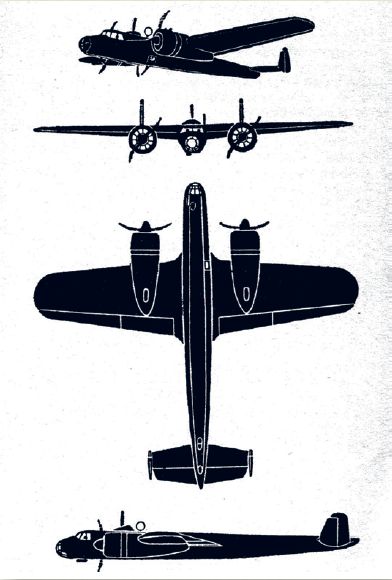
Dorier 17 sillhouette courtesy of Military History Matters

Dornier 17 silhouette courtesy of Military History Matters.

Lt. Col.P.J.Barkham, Commanding Officer of 262 Battery relates the battery`s first action. 

"By the end of July I had left Lent Rise and moved to Dorney Common to take charge of that site. I had not been there very long when on a beautiful clear warm summer evening, with  no wind, as darkness fell there was much enemy activity over the London Docks. Around 11.30 pm. out of the melee, clearly illuminated by searchlights and flying at about 10,000 feet, there was an enemy bomber, a Dornier. It was obviously going to be our first ever, searchlight aided, night, visual engagement. We were not successful, perhaps because our powder burning fuses had been ‘at readiness’ and exposed to the atmosphere for too long to be reliable.-- perhaps not, who knows.-- There were many more anxious nights to follow, but no more hostile aircraft came within our range before the end of August when I left to take charge of a site defending Stanmore Fighter command".

Monday 26th August. 

A local report stated that the gun battery on Dorney Common drew blood. The Hun aircraft was caught in the searchlights over Slough, and a shell fired from Dorney was seen to burst under the port wing. The machine fell away out of the searchlights and crashed in Surrey.  A Heinkel bomber crashed at Caterham, Surrey in the early hours of August 27th, having been hit by ack-ack. fire. The kill was claimed by 148 Battery stationed on Chobham Common.

This is an extract from Round and About Eton Wick: 1939 - 1945. The book was researched, written and published in 2001 by John Denham. 


Monday, 13 July 2020

World War 2 Eighty Years On - July 1940


The Eton Wick cricket club continued to play their home fixtures in the rural setting of Saddocks Farm where the rivalry between the local teams attracted good village support. Wins were celebrated, as when the Wick played the visiting Windsor team ‘Victoria’ winning an interesting and entertaining match by 30 runs, having dismissed the ‘Vics’ for 52. The strong bowling combination of Stacey and Buckland took four wickets for 15 runs and 3 for 30 runs respectively. In reply Buckland and McGill soon achieved victory for the Wick. War restrictions and rationing brought a break with tradition. The serving of a cricket tea to the visiting teams ended when tea became rationed in July to 2 ozs per person each week.  


Saturday July 13th.

          
An explosion at High Duty Alloys on Slough Trading Estate killed three and injured more than forty men of which three died later of their injuries.  At the time the incident was attributed to enemy action, as HDA was a major supplier of alloy aircraft parts and incendiary bomb components, but later this proved to have been an industrial accident.  To manufacture many of the intricate aircraft components a heavy forging hammer had been installed.  The regular dull thump, day and night could be heard at times in the village, the countryside around Eton Wick being much quieter in 1940.
Enemy activity during June and July had been concentrated over the South coast with attacks on coastal convoys in the English channel.  July 10th  considered Day 1 of the Battle of Britain , saw  Dornier 17’s and Ju 88’s escorted by Messerschmitts 109’s attack shipping, ports and airfields. It was not until August 1940 that widespread night raids commenced  over Britain.

This is an extract from Round and About Eton Wick: 1939 - 1945. The book was researched, written and published in 2001 by John Denham. 

Sunday, 28 June 2020

World War 2 Eighty Years On - June 1940

June 1940

Councils together with other public administrations, were given the responsibility of organizing civilian labour to aid the military in preparing local defence works to meet a possible airborne invasion.  Local signposts were taken away, business and shop names that gave the location were painted out and place names that may be of help to invading forces were removed. Church bells were silenced only to be rung to signifying that enemy forces had landed. Motorists were ordered to immobilize their vehicles when not in use. In the event of invasion, the civilian population was told to stay put less they inhibited the manoeuvrability of the defending armed forces.
Large open spaces such as the village common lands and Eton College playing fields were deeply trenched at strategic points to frustrate landings by German troop-carrying planes and gliders. The urgency with which the defences were needed necessitated the help of farmers, volunteers, Eton College boys, local contractors and military personnel.


Military 1940

Anderson Shelter
The occupation of northern France gave the German Luftwaffe bases stretching from Norway to Cherbourg. From these newly acquired bases they launched their first full bombing attack with seventy aircraft raiding eastern England during the night of June 18th-19th.  RAF fighter command, who were also responsible for operating barrage balloons together with the army Anti-aircraft Command, shared the defence of major cities and other strategic targets. During 1939 Dorney common had been selected as a possible anti-aircraft gun site for the defence of Slough Trading Estate, Windsor Castle and possible enemy approach to attack London. The site, code number SM7, had provision for a troop of four guns. Earlier some work had been done on the gun pits and the underground command post. Troop accommodation was tented but these were replaced by Nissen huts and other more permanent buildings by 1941 The house known as Fruiterers Gate, Boveney and adjacent to the site was requisitioned for Officer quarters. 

June 22nd.


German troops occupy the entire French Channel and Atlantic coastline. Imminent danger of invasion to Britain.


Courtesy of WW2 Today.
Friday June 28th

A fine summer’s day saw 262 Battery of 84th (LondonTransport) HAA Regiment R.A.T.A., moved from its two London locations at Wormwood Scrubs and Richmond Park to site SM7 Dorney camp, and Lent Rise, Burnham.  Battery Head Quarters and two sections arrived at Dorney Common with 4 x 3-inch 20cwt. guns firing 198 powder burning fuses. with Vickers predictor of 1920 vintage and searchlight, no Radar. One section of 2 x 3-inch 20 cwt guns went to Lent Rise, Slough, and one section of 2 x 3-inch guns to Wexham, Slough; these two latter sites had even older equipment. The Dorney site was already in being when the Battery HQ arrived with all accommodation being tented. The gun emplacements were already sandbagged and had obviously been in existence since 1939 or even 1938. The Command Post consisted of the standard A.A. command post with its small, below ground, concrete dug out which at that time housed the telephone line to the Gun Operations room and the plotting equipment that went with it. It also included one of the fixed Azimuth read out devices and a teleprinter type machine, but these were already out of use by the time we got there. I do not think the guns had ever been fired. (P.J.Barkham Lt.Col. RA)

On arrival we found the Dorney site in its infancy, so much so that Eton College boys came to help fill sandbags, a job they seemed to enjoy doing. To make the gun pits, sandbags were filled from materials dug on site, the soil being very stony.   If there had been an attack on the site, the consequences would have been unthinkable. It did not help at this time that a captured Focker Wolfe Condor huge reconnaissance plane was on test from White Waltham airfield. Our prime task was to guard against possible attack on Slough Trading Estate on which there was a huge R.A.S.C. Vehicle depot. The aiming point for lining up the guns to instruments, was the flagpole on the Round Tower at Windsor Castle. The standby bearing was over the Slough Trading Estate. These guns had a lot of brass including the firing handle and I remember an energetic artificer, forgetting the safety catch was off, putting a round of shrapnel over Slough with his duster. The guns were manned from daybreak, this being 3 a.m. until full daylight and again from early evening until dark. There was a compulsory rest period of two hours every afternoon. I do not think the German Luftwaffe was aware of this, as the guns were also manned on alarms during the day. The stream (Roundmoor Ditch) I remember, stored a stock of Molotov Cocktail bombs for safety, it is hoped they were all found!  At this time the camp lacked many amenities so the invitation from nearby local residents to use their bathroom facilities was much appreciated by many of the gunners. The large white gate across the road at the village boundary to Dorney common became a military check point during the days after Dunkirk when invasion seemed imminent. For security the gate was closed at night and often in the day during an alert. Having done guard duty at the gate many times, Gunner Dixon recalled that some local residents were indignant at being inconvenienced whilst going about their business.  Following the collapse of France and Dunkirk all privilege leaves for armed forces personnel had been cancelled, This order remained until the invasion stand down when 272 gunners were allowed occasional day leave from 6 a.m. until midnight.    (Mr. D.A.Dixon, Gnr. 262 Bty)

L to r.   Gnr. Dixon.  Gnr. Robinson.   Gnr. Tavener.
262 Bty HAA RA. TA. 
The arrival of 272 battery aroused great interest amongst the teenage boys but older people had their fears that the guns would attract the enemy bombs. John Powell, recounting his teenage memory of those days recalled that he would wait in the ditch for hours, always dark, always alone. In the stillness of the evening I could hear the air raid sirens in the direction of London being sounded, then closer as the local alerts were sounded until I was surrounded by the warning wail of many sirens. Then searchlights from various locations would be searching for the enemy. With blazing effect, the searchlight from the ‘ack-ack’ battery was put into action, lighting up the whole area. I have only to close my eyes and I can still hear the sound of the diesel driven generator and the officer in charge shouting out the orders....suddenly the light was doused, now there was a moment I had been waiting for. I heard the orders....Range....Height....and direction... then with blinding effect....FIRE....Never will I forget the recoil of the huge anti-aircraft gun, not the small Bofors, but the huge single shot  gun, being able to see the crew, searchlight, generator all illuminated in the blinding flash from the firing.... no more than three shots. The barrel had to cool off I believe. Myself as a young man being left in a state of bewildered satisfaction.
  
Dorney (SM7) site with other gun sites around the Slough-Windsor area were under the command of 38 Brigade forming part of the 1st. A.A. Division based on Langley. Independent batteries armed with 40mm Bofor guns were also included as a defence against low flying enemy aircraft. Slough Trading Estate, Windsor Castle and local military installations being possible targets vulnerable to air attack from enemy aircraft approaching London along the Thames valley. 

Saturday June 29th.

RAF fighter stations and aircraft factories were priority targets whose defence included barrage balloons. Under the command of 956 Squadron R.A.F, 24 Barrage Balloons were placed around Slough and Langley mainly for protection of the Trading Estate and the Hawker Hurricane Factory at Langley. The sight of Balloons and the number of heavy gun sites around Slough and Windsor brought apprehension and caused people to speculate whether this was a safe place to be.  Two weeks later another defence was added in the form of smoke screen lamps that were placed South of Slough on a line reaching from the Myrke in the Datchet road across Fishers fields, through the Kinross Farm (Datchet) to Chalvey and the Trading Estate, part of this line of lamps ran along the line of the Eton Wick Road. The smoke lamps were an adaptation of commercial orchard heaters used for protection from frost or forty-gallon fuel drums suitably modified. Smoke, usually dark brown, was produced by incomplete combustion of Diesel or heavy fuel oil and gave off a smoke containing oil and soot particles. Residents in the vicinity were warned by leaflet a few days before the big test to sleep with their windows closed. The resultant smoke gave a good fog but was dependent upon the wind direction for its effectiveness as a defence for the Trading Estate. The smell described as evil, was quite upsetting to many people.  If caught in the open when the smoke pots were operating faces became blackened and clothes smeared in the black oily substance of the smog. Initially the smoke pots were operated by the army but later it became the duty of the Home Guard. Italian POW’s were also used for this duty if the need arose. 

Two further defence measures for the Trading Estate were the building of two decoy sites. One to represent the industrial estate constructed on the bend of the river at Datchet, the other to the west of Boveney Road.  This was a ‘QF’ decoy fire site, manned by RAF personnel to be activated if the Slough Trading Estate was attacked in the hope that the bombing would be diverted. Visits to the site by Eton Fire Brigade officers supported the view that this was a Boiler Fire type with water flush that would cause explosive burst of flame when mixed with the burning oil.  Fortunately, it was never required for this, but it did ignite once by accident. RAF personnel under the command of Warrant Officer John Williams, constructed and maintained the site. There being no camp accommodation, the airmen were billeted with families in Eton Wick and Dorney. Having no calls to action the airmen other than guard duties and the military requirements of the site they turned their hand to keeping pigs, growing potatoes and keeping chickens which was also a good source of income. The only remembered contact with the enemy was to retrieve the body of a German fighter pilot from Thames field whose parachute had failed to open. 

Posters displayed warnings that German spies and Fifth Column agents could be active in the country and warned everyone to be on their guard against careless talk. Police and Home Guard patrols carried out Identity Card checks, especially at night. Any loitering by persons on or near to Windsor Bridge was challenged and questioned as to their business. Reports show that the patrols’ customers were mainly those who had something to celebrate or were under the influence of too much liquid refreshment.

Munitions works, aircraft factories and other important wartime installations had strict security. This was also the procedure at military camps. Reporting the lack of recreational facilities on gun sites and camps the Windsor and Eton Express begged its readers who had books, spare radios, gramophones and records to give them to the troops.

Responding to the appeal, Joan Ballhatchet and her friend on taking a gift of gramophone records to Dorney camp, encountered first-hand military security. Arriving at the camp entrance the sentry challenged them, ordering them to advance and state their business. At the same time the sentry sounded the alarm on a gong to summon the guard. To their consternation the girls were immediately surrounded by two soldiers who came running with rifles and fixed bayonets.

Recalled memories are told of an incident observed by A.R.P. Warden, the Reverend Morris and the village constable, P.C. Raynor, demonstrate the uncertainty felt at the time. A car approaching the common in the late evening was signalled by the sentry on guard at the white gate nearby the camp entrance to stop. This was for a routine identity card check, but the driver had other ideas and just drove past. A shot was heard as the sentry fired a round at the fleeing car either from fear or reaction, at the time the fear of German spies and infiltrating fifth columnist was very real. Two RAF men were also fired upon when making their way at midnight along the river tow path for duty at the Boveney QF decoy site. Neither the army nor the Home Guard admitted to the episode, but bullet damage was found to the trunk of a tree the next morning.

Numerous camps and gun sites were established in the Slough / Windsor area, Lent Rise, Burnham; the Polo Ground, Datchet; the Great Park, Windsor; Slough Trading Estate and at Twinches Lane, Cippenham. This camp overlooked the Slough Girls High School playing field. Senior girls doing physical training became an attraction for the watching young soldiers who, with ‘Wolf Whistles’ delighted the girls if not the teachers. 

With so many industrial and military targets and the close proximity of an anti-aircraft battery to the village, public air raid shelters were urgently requested. Raising the matter in Council Councillor Mr H. Bunce inquired how Eton Wick would go on in the event of an air raid pointing out that there was no shelter for the children or anyone else..... moreover, there were more children at school in Eton Wick than at Eton where there were facilities. Upon further inquiries, the Surveyor said that the nearest shelters were the railway arches along the Eton Wick Road. Mr Bunce thought half a mile was rather a long way for small children to run and if this was the best that could be done, why send the children there to school. In reply the Council Surveyor stated that consideration had been given to shelters but had been turned down by the Home Office for Eton Wick, also no application for a shelter had been received when the notice was sent around. Plans for air raid shelters put to the authorities by the council received a flat refusal as Eton Wick was considered a safe area. The Council considered the situation and applied many times before permission was obtained for the building of public shelters.


This is an extract from Round and About Eton Wick: 1939 - 1945. The book was researched, written and published in 2001 by John Denham. 

Wednesday, 17 June 2020

T. McMurray Royal Army Service Corps - 51st (Highland) Division


Thomas Alexander McMurray (Private No. 105151) - Royal Army Service Corps - 51st (Highland) Division

Tom was born in Scotland on March 4th 1915. He had two older half brothers and three sisters. His early schooling years were in Glasgow, until, when he was 11½, the family moved south. At first, they all lived with the grandparents in Boveney Court Cottages. These houses have long since been demolished and undoubtedly, as was the custom in the 1920s and 30s, the old bricks were used in the building or extending of Dorney's old style properties. The Boveney Court Cottages in question, are believed to have been beyond Old Place in Boveney. Accommodating six children, their parents and grandparents, was not a very satisfactory long term arrangement in the small cottage, so in a short while the McMurrays moved to 5, Castle view Terrace in Victoria Road, Eton Wick. 


Tom registered at Eton Porny School on October 18th 1926 where he completed his elementary education. On March 27th 1929 he left school, at the age of 14 years. When he got older he found employment working as a steward at the rather exclusive Moor Park Golf Club in Rickmansworth. The work was much to his liking, but it did mean living away from his family home and this, together with his early years spent in Scotland, all contributed to his being less well known in the community. Tom was an enthusiast of both classical and jazz music and had in fact taken classical music lessons.

His father was killed in a cycle accident in the Autumn of 1933, while cycling home from his work on the Slough Trading Estate. His prized possession, a violin, was given to Tom, now an 18 year old. The violin had previously been given to his father, following a tragic fatal accident to its first owner. When, some years later, Tom's life was abruptly ended, his mother destroyed the violin and declared that three owners, all dying violently, was more than enough.

Tom McMurray on holiday
at Barrow in Furness with relatives
When war was declared in 1939 Tom quickly volunteered his services in the R.A.S.C. serving with the N.A.A.F.I. (Navy, Army and Air Force Institute). In due course he was posted to France. In the spring of 1940 the German Army invaded the Benelux countries and thrust the allied forces back to the sea. Tom was not among the 338,000 troops successfully evacuated from Dunkirk during the first week of June, which had led his family to conclude he was either killed or drowned while attempting to leave the beaches. For 2½ years Tom's mother understood he had been listed as missing, and then came notification he was presumed killed. In fact, for two weeks after Dunkirk, British and allied forces were still resisting the German advance, many miles so of the earlier evacuation.

In mid June 1940, France surrendered and British, Polish and other troops withdrew to the ports of Brest, St Malo and St. Nazaire in a desperate attempt to board any available vessel able to sail to England. Service vehicles were dumped into the sea and vast N.A.A.F.I. supplies were shipped or dumped. The Commonwealth War Grave Commission reported:

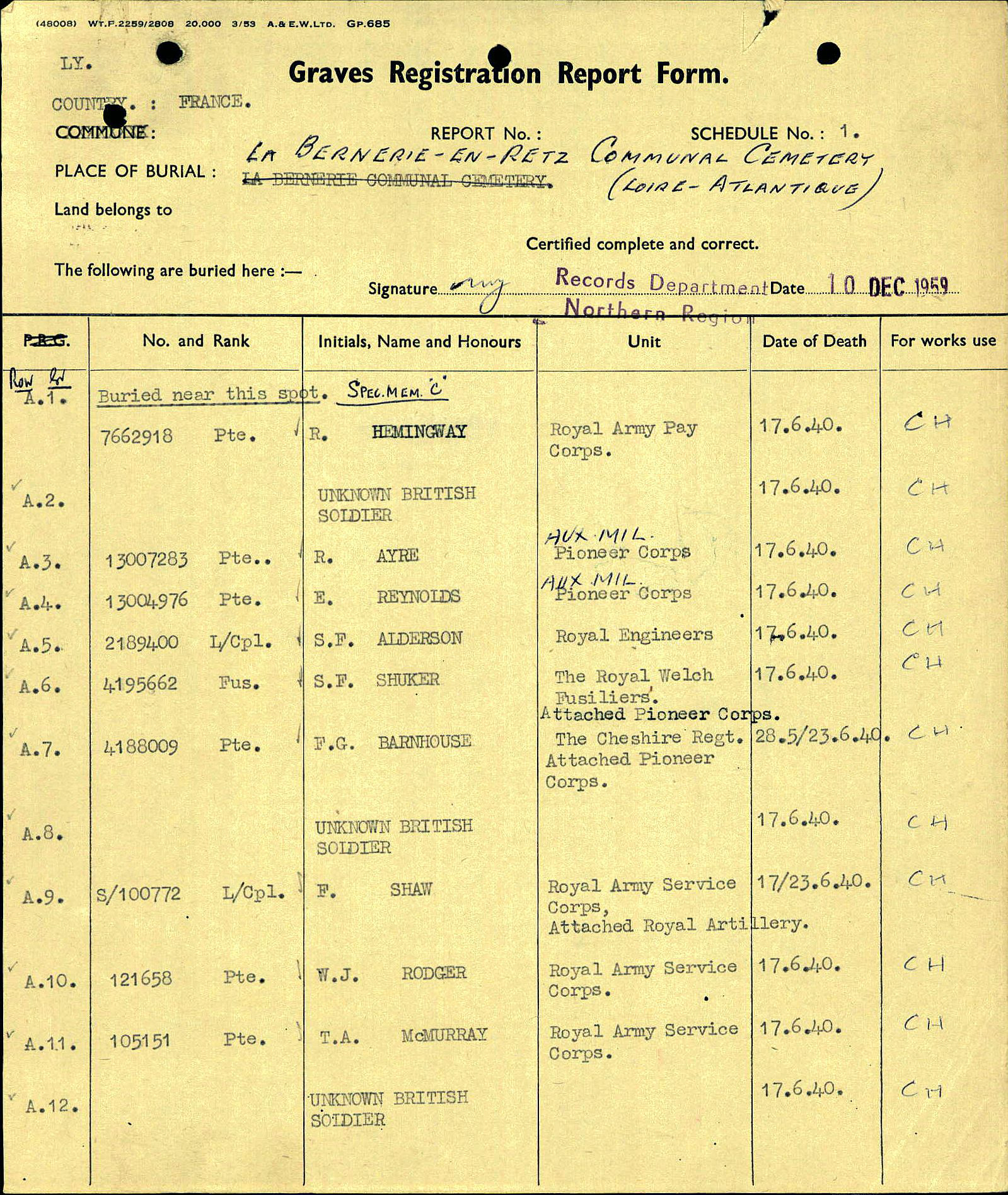
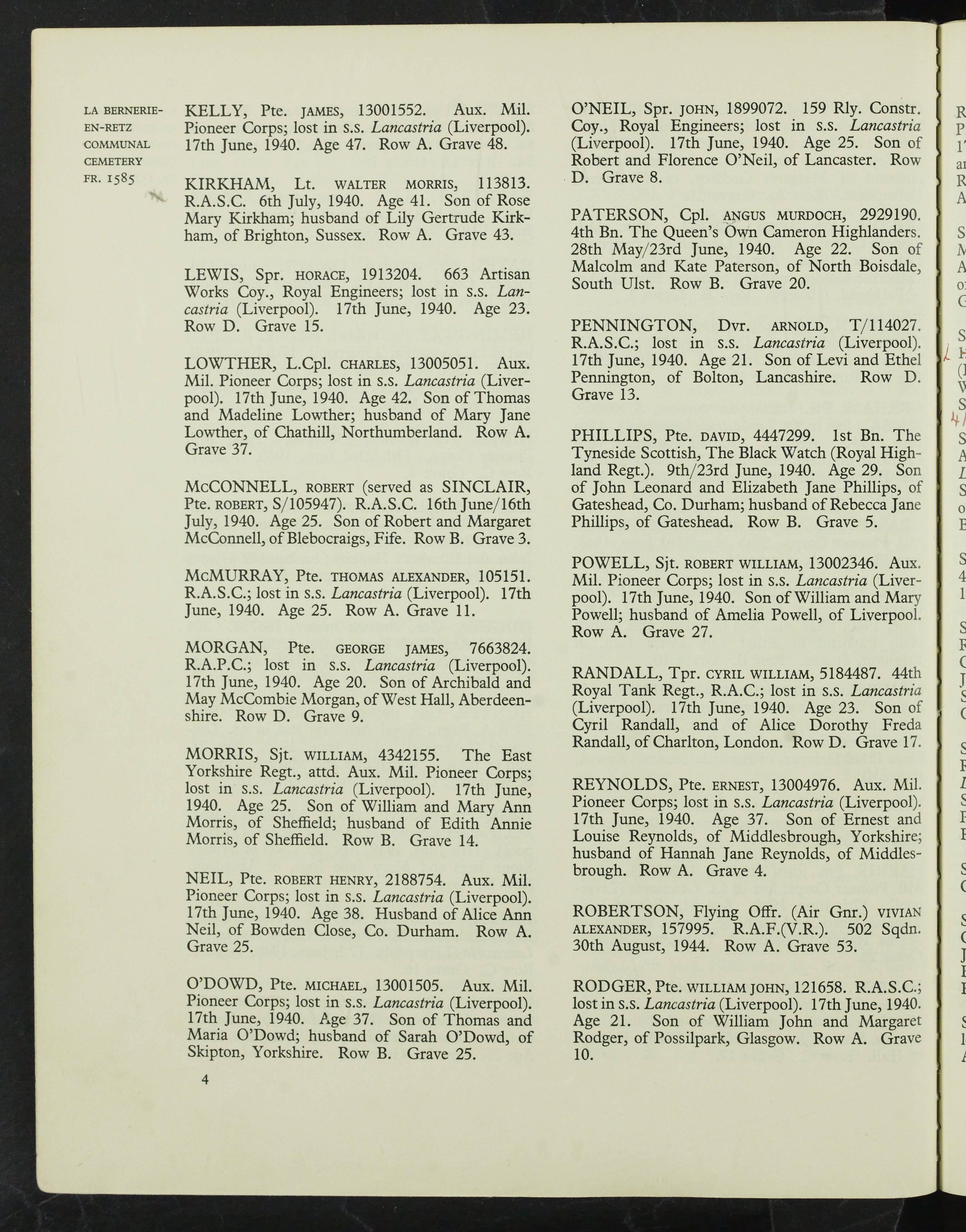
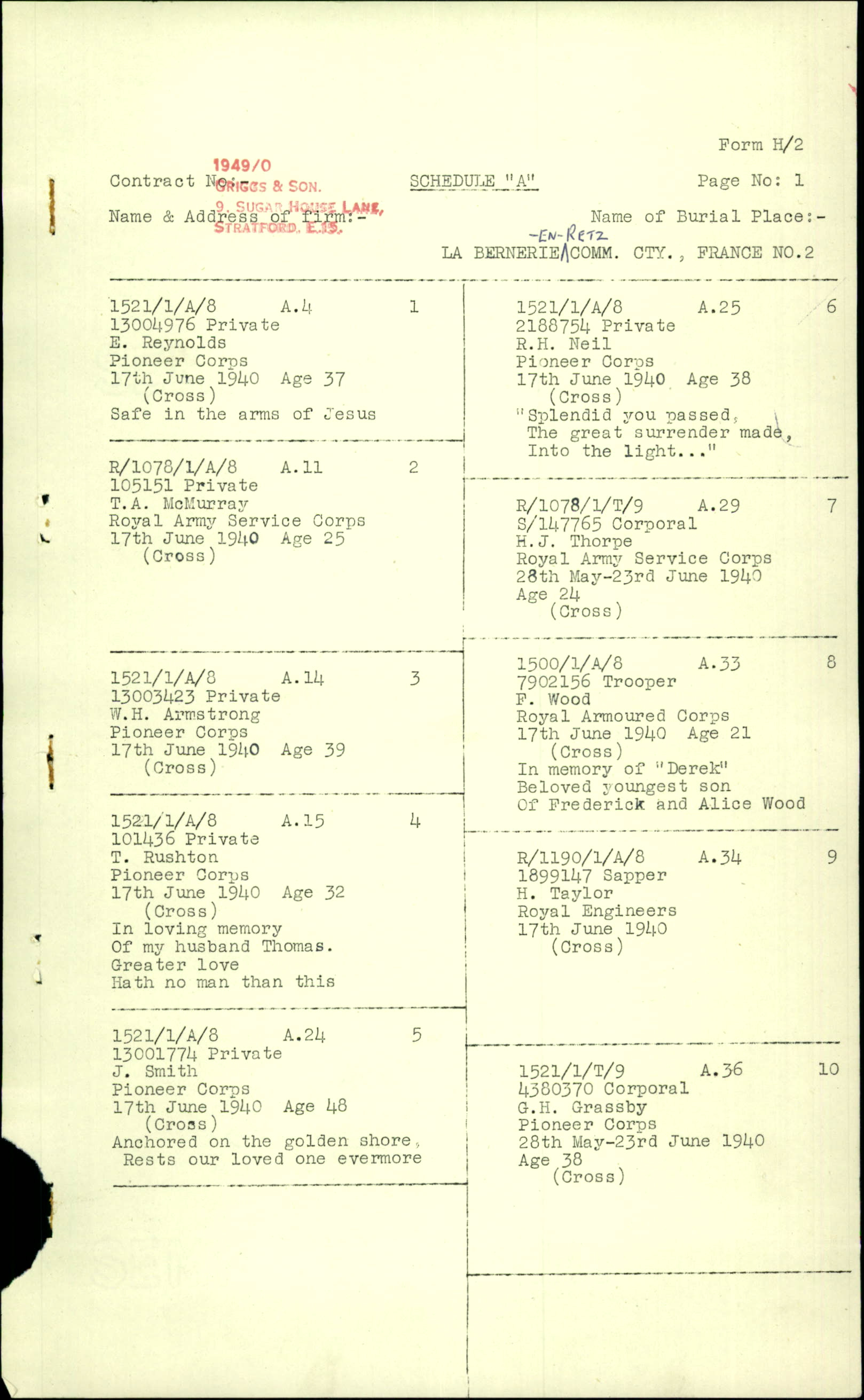
McMurray, Thomas Alexander, Pte; 105151, Royal Army Service Corps, lost in S.S. Lancastria (Liverpool) Died 17th June 1940 Age 25 (buried) La Bernerie en Retz Communal Cemetery; Department of Loire, Atlantique France. Grave No. 11 in Row A.

The Bernerie en Retz Cemetery
Many thousands of troops were successfully evacuated from these ports between June 16th and 18th. On the 17th the luxury liner Lancastria, just returned from evacuating men from Norway, was sent to St. Nazaire. It lay outside the harbour and embarked at least 5000 troops, some estimates quote as many as 7,000 troops, when enemy aircraft successfully bombed the Lancastria and she sank within an hour. Most men jumped into the sea but many perished in the choking oil, or were strafed by German aircraft. Approximately 3,000 lost their lives. Amidst so much gloom during June 1940, Prime Minister Churchill asked for this shock disaster to be kept temporarily from the public. Many sailors spoke of a navy superstition of misfortune to a ship which changes its name. The S.S. Lancastria had done just that.

The Bernerie en Retz Cemetery is a communal (civil) cemetery, with an extensive plot for military use. It is situated on north east side of Bourgneuf Bay, eight kilometres south east of Pornic and about 30 miles west south west of Nantes; 400 yards from the main road and south west of the local church. Most of the 121 soldiers and six airmen buried there were casualties of Lancastria.

One of Tom's sisters is still living in Eton Wick 60 years later. He was not married. Locally he is commemorated on the Village Memorial in the Churchyard and on the Memorial tablet on the Village Hall. Ex-servicemen generally remember the N.A.A.F.I. for its mugs of tea and cakes, but the sober wartime statistics record the deaths of over 550 of its personnel during W.W.II.


Grave Registration and Headstone records 

courtesy of the Commonwealth War Graves Commission

This is an extract from Their Names Shall Be Carved in Stone  
and published here with grateful thanks to the author Frank Bond.

Private McMurray's death was reported to the War Office Casualty Section on 12th December 1942: National Archive reference WO 417/55.