Monday, 25 July 2022

Tough Assignment - Mrs Annie Tough

Mrs Tough, founder of the Eton Wick Chapel, was born Frances Annie Moore at Rotherhithe in Kent in 1853. So much of her life was bound up with Methodism and the Eton Wick chapel, and the story of this has been retold in the earlier chapters of this book, that a summary of the main events and activities must now suffice.

In 1863, aged 10, she joined the Rotherhithe Primitive Methodist Church Sunday School. At the age of 13 she was truly converted and began to learn to play the organ for the church. At the age of 17 she became a Sunday School teacher. At the age of 20 she became a member of the church and about the same time a class leader.

In 1877 she married Charles Tough and began her married life at Eton Wick. She joined the Primitive Methodist Church at Windsor and started a Sunday School at Eton Wick.

About 1882, or soon after, she began seriously to try and get a chapel in Eton Wick, and when Windsor could not help, she joined the Primitive Methodist Church at Maidenhead and started a Womens Meeting in Eton Wick.

In 1886 the chapel was built, and she became one of its first trustees. She may also have been the first society steward. About 1890 she became the assistant super-intendent of the Sunday School. In 1901 she began her work as a local preacher. Some-time before 1904 she became President of the Windsor Branch of the Women's Total Abstinence Union. In 1907 she was elected for the first time as circuit delegate to the District Meeting, and in 1916 as a delegate to the Presidential Conference.

In 1930 Frances Annie Tough died suddenly at her home at Bryanston, Moores Lane, on the 9th June. As the Rev. J Tolfree Parr said at her funeral she was remarkable woman; she was tough by name as well as by nature and has left an enduring gift to the village she came to love.

Mrs Tough


59 years as Sunday School Teacher                                                                  1873 - 1930

57 years as Church Member                                                                              1866 - 1917

51 years as Organist                                                                                          1880 - 1930

50 years as Leader of the Women's Meeting                                                     1886 - 1930

43 years as Trustee                                                                                            1886 - 1930

43 years as Society Steward                                                                              1886 - 1930

40 years as Superintendent and Assistant Superintendent of Sunday School  1890 - 1930 

The Eton Wick History Group is most grateful for the kind permission given by the Eton Wick Methodist Chapel to republish this history, Tough Assignment on this website.


Monday, 18 July 2022

Old Days of Eton Parish - CHAPTER VIII - CHECKS AND DISASTERS.

CHECKS AND DISASTERS.

THE death of Edward VI. (1553), and the accession of Queen Mary, who was a firm adherent of the Pope, gave a temporary check to the Reformation.

She ordered the restoration in Churches of all that had been abolished, and her order was in Eton, as else-where, complied with. The High Altar was again set up in its old condition, and a canopy erected over it; some of the other altars were restored, and the texts which had been painted upon the walls were removed.

In most places, the clergy had become so little accustomed to the reformed ritual that they thought best to conform to the Queen's requirements. But the Provost and some of the Fellows had broken the College Statutes by marrying; and on this account they were deprived of office and others were appointed in their place.

The new Provost and Rector was in full sympathy with the Queen, and shortly after was chosen to preach at Oxford, on the approaching execution of Cranmer. He also took a prominent part in persecuting the reforming clergy, and accordingly a year or two after (1558), on the accession of Queen Elizabeth, he too got into trouble, and was deprived of his position.

These violent changes, and the bitter spirit excited by them, left a sad legacy to this country.

From the year 705 or earlier until Queen Mary's death, the unity and the continuous life of the Church of England had been preserved, and the Church had practically included all professed Christians in England,1 but now there appear two rival parties, the Papists and the Puritans, both largely reinforced by foreigners, and supported by foreign influence; both bent on leavening the national Church with their notions, and both eventually seceding and forming themselves into separate bodies of Non-conformists.

Queen Elizabeth on her accession had a difficult task before her, but she did her best to check the evil effects of these two opposing forces, and to restore peace and order.

She quietly undid the work of Mary and took her stand on the policy of her father Henry VIII. and her step-brother Edward VI.

In this she was supported by at least two-thirds of her subjects, and out of 9,400 clergy then in England, less than 300 refused to accept the reforms introduced, and to take the oath of allegiance.

Her moderation however did not succeed in its object. The persecutions in Mary's reign had stirred a bitter hatred of the Papacy, and of all usages, however ancient and venerable, which were associated with the papal dominion.

In their unreasoning zeal against all that appeared to them to be of Roman origin, the Puritans had little regard for the links which bound the historic Church of England with the Church of Christ in all lands and in all ages. Had they been allowed their way, they would have broken the chain of continuous life, and have started a brand-new society, fashioned after their own interpretation of Biblical teaching. As it was, great havoc was done; many beautiful monuments and ornaments in Churches were destroyed, and the services were often reduced to the barest and coldest simplicity.

We find some signs of this in the history of Eton. In 1559 the High Altar was again removed, and in the next year the College barber was paid "for wypinge oute the imagery work upon the Church walls," in other words for smearing over valuable frescoes with a coating of whitewash. A little later the chancel screen, made out of the rood-loft in the old Church, was defaced; the figures on it were demolished, and the niches were filled up with stone and plaster. But even this did not satisfy Puritan zeal. In 1569 the whole of it was ruthlessly pulled down, and the division between the choir and the nave obliterated.

Some notion may be formed of the size and solidity of this structure from the fact that its destruction occupied twenty-one days of carpenters' work besides the time spent in " joyninge ye weinscott and repairinge and washinge ye walls where the rood-loft stoode, and pavinge ye same place with grete stone and bricke."

A little later we hear of ‘pues’ being introduced into the Church, and a sounding-board erected over the pulpit. This latter mention shows that here, as elsewhere in England, more attention was being directed to preaching, which had of late been grievously neglected. It may also show that there was some kindly consideration paid to the townsfolk, who occupied the nave, and who by the removal of the rood-loft would have a better chance of hearing sermons. Whether, now that their altars in the nave were removed, the townspeople were admitted into the choir for Communion, we are not informed.

A sermon preached in the Church by one of the Fellows about this date contains some plain reproofs and warnings to all classes, and among them tailors and drapers, butchers and bakers are personally rebuked for dishonesty.

Another irregularity crept in during these unsettled times. From the foundation of the College, for upwards of a hundred years, the Provosts of Eton had also been Rectors of the parish, but now we meet with occasional exceptions, owing to the appointments of laymen to the Provostship. This abuse, although protested against, was not of such serious importance to the parish as it might have been elsewhere, as there were always many resident clergy among the Fellows able to discharge the clerical duties. Some of these, however, appear to have given the Bishop of the Diocese no little trouble and anxiety by their neglect to conform to the rules of the Church. They seem also to have disturbed the minds of the Queen's chief advisers. A letter from Bishop Grindal to Cecil, her Secretary of State, bids him in somewhat uncomplimentary language “remember Eton and the hedge priests there.2

In 1560, Queen Elizabeth took measures to restrain the destruction of Church monuments, and to correct the negligence in religious worship; and in 1566 she issued her ‘Advertisements’ to enforce a minimum of decent ceremonial; but these measures were met by the Puritans with a counter attempt to abolish episcopacy, and to reject the Prayer Book. On the other hand the Pope issued a bull, pronouncing the Queen excommunicate for rejecting his supremacy, and declaring her deposed from the throne of England. But the Queen was popular, and held her ground, and the Church of England was pre-served from being committed to the influence of either opposing party.

The defeat of the Spanish Armada in 1588, and the banishment of those who refused to conform to the national religion, led at least for a brief space to quieter times, and to a better understanding of the real principles at stake.

A slight indication of the turn of the tide in Eton is to be seen in some attempted improvements in the Church. A new timber screen between the choir and the nave was erected by one of the Fellows, Thomas Hever, in 1625, carved with the arms of the Founder, Queen Elizabeth, the two Universities, and Eton College. The gilding of the Cross on it was paid for by the College. Hever also presented a Communion chalice, and "sett up a Communion table and gave foure strong formes to stand in the iles of ye Church for the towne men to sitt on. "These are probably the seats which are still existing in the Ante-Chapel.

About this period, there begins a fresh source of information as to parish matters. The Parish Registers of baptisms, marriages and burials date from 1598, and occasionally contain interesting notes, which throw light on the events and customs of the day.3

Notes

I Nominally at least in those days every citizen was a Christian, and every Christian a Churchman.

2 Domestic State Papers, August II, 1561.

3 Four volumes of the Parish Registers are preserved in the College muniment room : Vol. I. contains baptisms, marriages and burials, 1598 to 1653 (also some marriages, 1693 to 1705) ; Vol. II., 1653 to 1716 ; Vol. III., 1716 to 1747 ; Vol. IV., 1748 to 1779.

OLD DAYS OF ETON PARISH by The Rev. John Shephard, M.A. was published in 1908 by Spottiswoode and Co Ltd. The text is has been copied from the original book that is now out of copyright.
Monday, 11 July 2022

From the Parish Magazine - Eton Wick History Group Meeting - The Influence of Eton and Eton College on Eton Wick and Infant Welfare


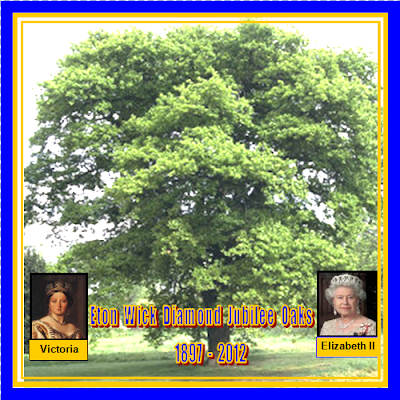
Mr. Cullum introduced the 25th June 1997 meeting of the History Group. He mentioned that plans for a visit to the Rowing Lake site had not yet been finalised; the unveiling of the Group's new plaque at the tree planted by 'Toddy' Vaughan to commemorate Queen Victoria's Diamond Jubilee was to be marked by a small ceremony towards the end of July. 

Mary Gyngell and Mr. Povey had both written to Rail Track concerning the untidy state of the viaduct and Rail Track had since removed all the old boarding and have undertaken not to re-rent the arches. After acknowledging the generosity of the ladies who provided the Group's refreshments, Mr. Cullum handed over to Mr. Bond for the topic for the meeting: 'The Influence of Eton and Eton College on Eton Wick', after which Mrs. Ballhatchet would give a brief talk on 'Infant Welfare'.

Mr. Bond opened by pointing out that both Eton and Eton Wick had been in existence for many years before the College arrived in 1440, that Eton itself may already have been 700 years old at that time; and that whilst Eton College never set out to Influence Eton Wick, it had done so, in one form or another, for 557 years. 

Mr. Bond then painted, in words, an onward-flowing picture of the area from those early times, when the sand around here would have been thickly wooded (lots of willow and oak) and boggy with more streams and an abundance of fish (1d. a bushel for young salmon!), it is apparently recorded in the Doomsday Book that Eton paid a tax of 100 eels. He pointed out how fortunate Eton Wick is to be surrounded with Lammas and Common lands and he urged the members to be on their guard against any invasion of this protected land. (Mr. Bond later mentioned that apparently two Eton Boarding Houses and houses near The Willowtree stand on Lammas land - although it should be noted that this can be permitted provided a similar area of land is freed to be registered as Lammas to compensate for the loss). 

Mr. Bond was able to tell us a great deal about the history of the College, including lesser known facts such as the King (Henry VI) allowing weekly markets and two annual fairs because of the influx of people required for the construction of the Chapel and College - and keeping the College boys in Chapel whilst the Pig Fair' was on because the boys used to cut the pigs' tails off; and Edward IV's planning to send all the goods and chattels from Eton College to St. George's Chapel but suffering a change of mind when he realised that Windsor Castle could not accommodate his 'lady friend', Jane Shore; she was then housed at Eton College and all the College possessions were returned! 

Needless to say, Mr, Bond's talk contained an abundance of information and it would be impossible to reproduce even a fraction of it here. As to the influence of Eton College and Eton on Eton Wick: The College must have hindered the growth of Eton itself, as a town, in that the spread of the College buildings resulted in demolition of town property and Eton residents moving out to Eton Wick. Against this must be balanced the opportunities for employment offered by the College over hundreds of years to both Eton and Eton Wick residents. It should be remembered, too, that many Eton masters and their wives initiated and supported local projects and that Eton Wick enjoys its Village Hall courtesy of its College benefactor, Toddy Vaughan. Another Eton master, Mark Anthony Portly (b. 1731) founded the charity which resulted in the setting up of Eton Porny School. College boys still come and help our more elderly residents and two boys help at Eton Wick School. 

Mrs. Ballhatchet continued by outlining the influence the College had on the provision of health care for mothers and children - starting (in 1915) one of the first baby clinics in [Buckinghamshire, which was run by a Nurse Orchard with a committee Including Eton masters' wives. By 1917 the 'Babies Welcome' clinic was well established, records of babies' health were kept and talks were given by the local doctor, Nurse Orchard or one of the masters' wives. Mothers were able to make purchases at the clinics of such items as baby milk and Viral, material, knitting wool and patterns, second-hand clothes - and Eton College dripping? Eton Wick's clinic always did well in County competitions and presentation of the certificates awarded was made at an annual picnic at one of the boys' boarding houses; and there was always as Christmas Party. This clinic, started 82 years ago, still meets once a month with a local doctor and nurse in attendance.

The next scheduled meeting was to be on WEDNESDAY, 10th September 1997, when a representative of Oxford Archaeological Unit will give a talk on 'THE ETON COLLEGE ROWING LAKE'.

During the 1990's the Parish Magazine of Eton, Eton Wick and Boveney reported on the meetings of the Eton Wick History Group. A member of the audience took shorthand notes in the darkened hall. This article was published in the August edition of 1997.


Monday, 4 July 2022

Photographic History - Village Characters - Mrs Dorothea Vaughan


Dorothea was married to E L Vaughan (Toddy) in the mid-1920s. He was by this time in his 70s. After Mr Vaughan's death in 1940 she continued to support her husband's village interests with much generosity. She gave chairs to the Institute insisting that they be bought from her birthplace, Ireland. She donated a stained glass window to St John the Baptist Church, which was dedicated to the memory of her late husband. Although handicapped by deafness in later years she still attended Youth Club meetings as its President. Dorothea died in 1954. The Vaughans owned the Wheatbutts in Eton Wick, but lived at Willowbrook, Eton. 

This article was first published in A Pictorial History of Eton Wick & Eton.


Monday, 27 June 2022

World War 2 Eighty Years On - June 1942 - Salvage and Savings

 June 

Salvage and savings were encouraged by the government to aid the war effort.  Poems, ditties and catch phrases are recalled that were chanted by the children engaged in raising savings.  Time has eroded the memory of the complete text but the following are recalled:-

 “ Rawlapindi is sunk and Hood

Come make these losses doubly good

By the guns that blazed on Jervis Bay

Give us the ships we need today


Also partly remembered was the following:-


“One day little Albert Ramsbottom

To see how much money he had got

Stuck a knife in his money box

And wriggled and fished out the lot

It came to one shilling and ninepence

Which he found with a few simple sums

Was fortytwo ha'penny suckers

Or twentyone packets of gums"


The shortage of raw materials from normal sources gave impetus to salvage drives. Eton U.D.C co-operating with Windsor, supported a two-week salvage campaign organised by Buckinghamshire C.C., aimed to collect fifty tons. Eton and Eton Wick set out to collect 10 tons of paper, metals, rags and bones, rubber and bottles and jars and surpassed their aim ending the two weeks with a total of 22 tons. The combined total collected was a staggering 140 tons The salvage of books was set at 4500 but the target was exceeded by 2000, Eton Wick contributing 1554. 

Though in poor health, Mr Chew, with the help of Miss Morris and the Guides organized the successful salvage drive at Eton Wick. The Guides had been entered for a Rally but they withdrew from this when it became known that Mr Chew was depending upon them.  Boys of the village did not have the same loyalty as only Harry Prior jnr and Briddles with two others gave help, transporting the collection by the loan of a horse and cart. 

Enthusiasm of Girl Guide salvage collectors was such that if it was not screwed down, on to the cart it went. A competition for the best poster was arranged for children attending local Elementary Schools. Prizes were given by the Salvage Committee, the winning exhibits displayed by Messrs Spottiswoode at their shop in Eton High Street.  Winning entries received prizes given by the Salvage Committee.  No.2 Bell Cottage, Bell Lane became the village salvage collecting centre having been lent to the Waste Utilization Committee there the waste paper and scrap metal was sorted to await collection.

 Increasing night activity by the German Luftwaffe during the months of April and May and into June kept the local anti-aircraft batteries alert as the enemy commenced their reprisal ‘Baedeker Raids’ on the cathedral cities of Norwich, York, Canterbury, Bath (25, 26, 27th), and Exeter (May3-4)¹. This activity also brought broken nights sleep to the village inhabitants as German and RAF planes passed over Slough - Windsor on the way to their respective targets.

This is an extract from Round and About Eton Wick: 1939 - 1945. The book was researched, written and published in 2001 by John Denham. 

Note 1 John Denham's wife Betty live in Exeter between 1932 and 1951.


Wednesday, 22 June 2022

Old Days of Eton Parish - CHAPTER VII - HENRY VIII AND AFTER.

King Henry VIII
by Unknown Anglo-Netherlandish artist, c1520,
National Portrait Gallery London

IN 1509 Henry VIII. began his reign. The following year was marked by an outbreak of the plague in Eton, and in consequence most of the Eton School boys were removed to Langley Marish, but there is no record of the extent of the disease, or of any unusual mortality in the parish. 

During this reign, three great processions passed through the town. The first was in 1519. The King had kept St. George's day with great pomp and then rode from Richmond through Hounslow, Slough, and Eton, attended by the Knights of the Garter and their suites. A writer of the day describes it as being "as great solemnity, as it had been the feast of a Coronation."

Another remarkable procession was the funeral of one of Henry's wives, Jane Seymour. This took place in 1537. On the three previous days, labourers were employed to repair the road between Long Bridge (Fifteen Arch Bridge) and Baldwin's Pool. It would appear that the road had suffered from the heavy traffic connected with the building of the College, so the cost¹ was undertaken by the College. 

A still more gorgeous spectacle was the funeral of King Henry VIII., whose body was brought from Westminster to Windsor. The procession is said to have been four miles in length. On the coffin drawn by eight horses was a wax effigy² of the deceased King. As it passed through each parish, it was received by the clergy and choirs, holding tapers and chanting the Penitential Psalms. Special mention is made by the chroniclers of the respect shown as the funeral procession passed Eton Churchyard. 

It was during the reign thus closed that the Reformation of the Church of England began. The first step taken was the repudiation of the Pope's jurisdiction over the English Church, thereby endorsing the principle, always held in Eastern Christendom, of the independence of each national Church. A public declaration to this effect was made by the Provost and other clergy of Eton in July, 1534. 

The encroachments of the Bishops of Rome into the Anglo-Saxon Church dated from the coming of William the Conqueror but had never been accepted without protest. Their increasing exactions of various money-payments were cordially disliked by the independent people of this country. Eton probably shared the feeling strongly, having so lately experienced the effects of papal interference, and hence was doubly glad to throw over the usurped authority; especially as for the present it meant no changes in the accustomed services and the arrangements of the Church. 

The King soon followed up his first step by an attack on the monasteries which were the warmest supporters of the Pope, and the wealth of many of the religious houses was swept into his coffers; but the Royal College, although threatened and required to give an account of its annual revenues and expenditure, escaped spoliation, and the Rectoria remained in the hands of the Provost, being valued at £10. 

In the next reign the Reformation movement was further advanced. The rejection of foreign interference was followed up by the removal of various customs and teachings, which had come in from Rome, and lacked the authority of the ancient undivided Church. 

The invention of printing (1440) had revived learning in this country, and Wickliffe's translation of the Bible had opened the eyes of many to the unscriptural character of much of the religion of the day, and to the abuses and corruptions which were then prevalent. This increased knowledge was further fostered by the reading in English of a lesson every Sunday and holyday, a practice introduced by Henry VIII. together with the saying of the Litany in English.

Now, under Edward VI., the Prayer Book was revised throughout, rearranged, and translated from Latin into the mother tongue of the country. 

Indications of the movement are soon noticeable in Eton. 

In 1547 the number of Chaplains employed was reduced, as, with fewer services, so many priests were no longer needed. A copy of the Great Bible was also pro-cured, and placed in the Church, as also a copy of Homilies or Sermons, which had been put forth by authority for public use and instruction. The Gospel and Epistle were now read in English. 

The following year, under a Provost who was an ardent Reformer, certain images which had stood behind the High Altar were removed, on the ground probably that they had been regarded with superstitious reverence. The Church walls also were adorned with Bible-texts, "for the better edification of the Scholars and Parishioners." The same year the new Order of Communion came into use, and in 1549 the revised English Prayer Book was authorised and ordered for all the services of the Church. 

The custom also of keeping the Feasts of the Death and Translation of Thomas Becket, Corpus Christi, and the Nativity and Assumption of the Blessed Virgin was discontinued.

A few years later the various side-altars in the Church were removed, and what must have been a shock to the feelings of many devout people, the embroidered frontals were sold, the Provost and several of the Fellows buying them for their own purposes. 

But, generally speaking, these changes caused little serious stir, either among the clergy or the people. There were, however, exceptions. The people of Devonshire and Cornwall resented strongly the alteration of their accustomed services, and rose in rebellion, and there seems to have been some special cause for anxiety in the neighbourhood of Eton and Windsor. 

In consequence of the Exeter riots, orders were issued for the repressing of commotions and uproars, if any such should happen in the counties of Oxfordshire, Berks and Bucks.

Provost Smith writes to the Secretary of State as to the evil state of the realm, and suggests the appointment of responsible gentlemen in each shire to enforce the King's proclamation; " the Watchmen," he wrote, " were no good, only great promoters of rebellion."4

On the other hand, there were some extremists, who regarded the Church of Rome as wholly evil, and were opposed to the retention of any of the ancient ceremonial, as if it all were alike tainted. Happily they were in the minority; and the Church of England, although reformed and purified, remained in all essential points the same old historic Church, with the same clergy ministering the same Sacraments in the same buildings, and using, with slight exceptions, the same ornaments as in times past. 

Notes 

1 Various inhabitants of Eton seem to have left money in their wills towards the repair of this road, there being no public resources in those days to meet such expenses. 

2 Similar effigies are still preserved and shown in Westminster Abbey.

3 Cal. State Papers, July 1549

4 Cal. State Papers.

OLD DAYS OF ETON PARISH by The Rev. John Shephard, M.A. was published in 1908 by Spottiswoode and Co Ltd. The text is has been copied from the original book that is now out of copyright.

Monday, 13 June 2022

From the Parish Magazine - Eton Wick History Group Meeting - Archaeological History and Finds of Eton College's Rowing Lake


On the 13th of August and 10th of September the Group explored the archaeological history and finds of Eton College's Rowing Lake site. Approximately 45 enthusiasts visited the site itself in August, meeting at the newly formed information Centre at Boveney Court Farmyard to commence with a short explanatory talk, given by Mr. Tim Allen of the Oxford Archaeological Unit, and then transferring by minibus and cars to be conducted around the site by Mr. Allen: subsequently returning to the farm to examine various finds. This was the end of the archaeologists third summer of excavation there and they have examined two-thirds of the Rowing Lake project area. The remaining third will continue in agricultural use until after the year 2000, by which time it is hoped that half of the rowing course will have been dug and the main contractors will then be ready to clear remaining land to enable the archaeologists, with the help of students and school-leavers to check it out before the final 1200m of lake is excavated. Our site visit had to be drawn, reluctantly to a close when the light failed, and we were treated to a beautiful sunset.

The finds have been numerous, some very exciting, and Mr. Allen's enthusiasm was most infectious, so there was a very good turnout when he came to give a talk to the Group on the 10th of September. He illustrated it with many photographic slides depicting not only some of the fascinating finds, but also explanatory maps and diagrams to enable us to pinpoint their precise locations. Mr. Allen explained that the archaeologists' first step had been to fly over the site and examine crop marks, areas which remained wet when others were parched, mounds etc. Crop marks in the area showed the site of Roman and Iron Age enclosures and Bronze age burial mounds and wet areas proved that the Thames had previously meandered down a different channel. In 1993 they thought that anything of interest would be found on dry ground (magnetic and electrical resistance tests don't works when the area is wet) but, in 1994 they dug trenches in the wet areas and soon found a large Mesolithic (8000-4000 BC) site they found 35,000 flint tools in an area of 50m. A hearth and some pottery were dated at 4000 years old and vertical posts which were probably bridge supports proved that the major channel of the Thames flowed through the project site until some 2000 years ago evidence of two bridges was found in 1995 and a further four in 1996 - one bridge dated from 1400 - 1300 BC and another from 800 - 400 BC (even remains of a beaver-lodge were found, complete with dead beaver). Until about 300 AD the channel continued around the south side of Eton Wick where the Neolithic enclosure was found in South Field: in fact, there were enclosures at each end of the original channel. 

The remains of beetles, snails, plants, and pollen in the peat have enabled the archaeologists to reconstruct a complete environmental history of the Rowing Lake site: how 6,000 years ago it would have been completely wooded and then gradually the land was cleared. Large groups of people lived there in Neolithic times they were the earliest farmers in Britain and thousands of flints, pottery and animal bones dating back 6,000 years were carefully excavated; pots were round-bottomed which indicated they were from the continent and had been brought by the first settlers in Britain; quern stones were found and they would have been Roman, as would have been the remains of a cart and Roman pots. 

There were two Bronze Age barrows circular ditches generally with burials in the centre: a number of skeletons - there had been 7 cremations in and around the East barrow alone and inhumation burials (normally laid on their side and with their knees tucked up under their chins) of an 18 year old woman with a decorated pot dating to 1500 BC, a roan of about 45 and a child of 12; also one skeleton laid on its back which still had an amethyst pendant and could have been Saxon; and then, of course, there was the skeleton, Luke, who dated back at least 2.500 years. There were, too, skeletons of cattle and sheep. Another exciting find was a Bronze Age well, lined with planks the earliest known of in Southern Britain. A coin made in Kent between 100 and 50 BC was found; and another coin dated 210 AD. it is thought that during the Roman Period the area became a low status farmstead site; and the head of an aid (a primitive wood plough) was found it dated back to about 900 BC.

There was, of course, much more; and we look forward to the return of the archaeologists in 2000 or 2001, when we hope there will be more exciting finds to record.

During the 1990's the Parish Magazine of Eton, Eton Wick and Boveney reported on the meetings of the Eton Wick History Group. A member of the audience took shorthand notes in the darkened hall. This article was published in the October edition of 1997.