Monday, 10 January 2022

Eton Wick 1921 Census - A First Look

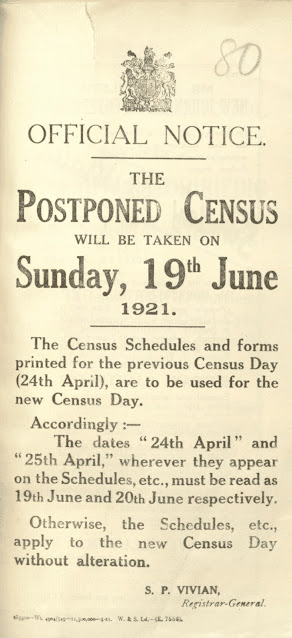
Poster courtesy of The National Archive


On 6th January 2022 the UK census taken on 19 June 1921. A first glimpse of the available data online reveals that there were 524 people living in the area between the Railway viaduct and Parish boundary along Bell Lane. The area of the Eton Wick Parish Council. Further investigation will be undertaken when more information becomes available. 

6" OS Map revised in 1910
courtesy of National Library for Scotland

The Eton Wick Census Project pages can be found here.

Wednesday, 5 January 2022

Old Days of Eton Parish - The Eton Bridges

CHAPTER III

FROM matters connected with the Church we turn for the present to other points of local interest. 

Eton seems to have been always subject to floods, and even at ordinary times the crossing of so many intersecting streams must have made the bridges not merely a con­venience, but in some cases an absolute necessity. The first mention of any of the Eton bridges occurs in a docu­ment called the Hundred Rolls, dated 1274, i.e., 167 years before the College was founded. In this it is stated: "The whole township of Eton from Baldwin Bridge to Windsor Bridge was accustomed to give toll of fuel in vessels and all the royalties appertaining thereto.1" This toll was probably in the form of blocks of wood or faggots cut from the copses in the parish. It was given in aid of the royal revenues, which were much impoverished in the time of the Crusades. Baldwin Bridge, for it was originally called, is again mentioned in the Founder's plans for the College.

1.         This was probably the earliest of the bridges and was naturally required to connect the town with its farms and woods in other parts of the parish.

At an early period several houses seem to have sprung up along Baldwin Shore,some of them of a substantial size, and from thence they extended along the right side or the long walk' to what is now Savile House in Weston's Yard.

Who Baldwin was is unknown, but it may be presumed that he was founder of the bridge and its endowment.

It is not called Barns Pool Bridge till the latter part of the sixteenth century. Barns Pool may have been a landing wharf. It has been suggested that it was so named from the barns in which goods were stored.

In Queen Elizabeth's reign steps were taken to secure, for the maintenance of the bridge, the title to certain property, consisting of a house adjoining the bridge, and other land. This, in 1592, was conveyed to thirteen Feoffees or Trustees, being inhabitants of Eton, "for erecting or repairing and from time to time amending and maintaining for ever the said bridge."

By the terms of the trust, the Feoffees are empowered, after spending what is necessary on this purpose, to bestow the remainder "in such ways as seem to be the best, and to the most advantage of the inhabitants and parishioners of Eton."

They are instructed to meet yearly at Pentecost at the Bridge House and appoint two of their number, called the Bridge Master and the Bridge Man, to carry out the objects decided by the majority.

In accordance with these instructions, we are told that in the year 1658 "the bridge called Barnspool Bridge, alias Baldwin Bridge, was pluckt upp and new built." In 1676-9 the house adjoining the bridge is described as the Town House, and the land all round, Town land. A commodious room was built in 1793 for the meeting of the Feoffees, also for the meeting of the inhabitants on the common business of the parish.

In 1687 the last mentioned bridge, which was made of wood, was superseded by one of brick, and in 1884 the present iron bridge was constructed.

By a careful improvement of the Bridge Estate property, its annual value has been considerably increased. In 1676 it was £4 10s; in 1876 it had become £311 10s. 6d., and in 1901 produced a rental of £554 11s., and many persons and institutions have received considerable benefit thereby.

II. In (303 a flood demolished Spitelbrigge, now known as Beggars' Bridge, close to Willowbrook.

In consequence of this an injunction was issued to the Sheriff of Buckingham reciting that the

A History of the
Baldwin's Bridge Trust
by F.I. Wilson
Published 1977

bridge was broken down and destroyed "to the injury of the adjacent country and manifest danger of travellers," and an enquiry was held at Eton, before two commissioners and a jury of twelve persons, to ascertain to whom the duty of repair belonged.

The bridge would seem to have been built about fifty years before by one Walter de Teb, with voluntary gifts collected in the town and neighbourhood, and the commissioners made return upon oath that the said bridge being one half in Eton and the other half in Upton, no obligation lay on the people of Eton to sustain it. It must be rebuilt by begging for contributions. Hence the name it now bears.

III. Long Bridge or Fifteen Arch Bridge is said to have had once fourteen narrow arches of brick, and one central arch of stone. Six of the centre arches were destroyed by flood in 1809 and replaced by three only. The present bridge dates from 1843.

IV. Windsor Bridge perhaps should not properly come into a history of Eton, as it has been always the exclusive property of the Windsor Borough, but for three reasons a short summary of its history can hardly be omitted altogether.

1. The opening of this means of communication with the Castle must have contributed very considerably to the trade and convenience of Eton.

2. Eton must always have helped largely, by the tolls taken from its inhabitants, towards the maintenance of the bridge.

3. The final freeing of this bridge was due to the determined and self-sacrificing efforts of an Eton townsman.

As far as can be ascertained, no bridge existed before the reign of Edward I. Previously to this, communication was by means of ferry. The river was most likely crossed ►se days from what is now River Street on the Clewer side to Meadow Lane in Eton, whence a road ran towards Cippenham, once an important place, and Burnham. On September 18, 1281, King Edward I. granted a charter for a bridge to the Burgesses of 'New Wyndesore,' as the town which had been rising for fifty years under the Castle walls was now called.

This charter carried with it the control and profits of certain waters and fisheries on the Thames, which in later days became the property of Eton College. It also gave the Burgesses the right to take pontage or toll for the upkeep of the bridge.

This latter right was renewed from time to time, and certain other grants were made by Henry VI. in the twenty-third year of his reign, when a new bridge was built.

In the time of the Great Rebellion (1642), which was largely supported by the County of Bucks, the then existing bridge was broken down to hinder the march of the Parliamentary Army.

In 1707 the Burgesses leased the bridge to John Herring, requiring him to repair and renew it whenever needed, but owing to complaints as to the heaviness of the tolls, and the dangerous state of the bridge, an Act was obtained in 1734 for a fixed schedule of tolls, with the power to enforce them and to use them for the purposes of keeping up the bridge. This was renewed in an Act, July 1819, George III., when power was given to build a new bridge of stone and iron, in place of the timber bridges built hitherto, and to continue and levy certain tolls for twenty-one years. This permission was subsequently extended and did not finally come to an end till 1872. Under this Act, tolls were only to be paid by the same vehicle once in the day and were to be diverted to no other purpose or use whatsoever than the necessary expenses of the bridge.

When the right expired in 1872, the Corporation was advised by Counsel, either to go back on the prescriptive right of the first charter, or to apply for a fresh Act of Parliament. They chose to take a course of their own, and adopted a modified scale of charges without applying for an Act, and meanwhile farmed the bridge and made about £500 a year, which was used to the relief of the rates. A few people disputed their claims, but no one was bold enough to oppose them till 1895, when Mr. Joseph Taylor took up the matter, and obtained Counsel's opinion to the effect that the Act of George III. finally destroyed the old prescriptive right.

In September that same year Mr. Taylor drove up to the bridge, and, refusing to pay the toll, it was barred against him.

On January 30, 1896, he renewed his attempt, and paid the demanded toll under protest. This led to a trial at Queen's Bench in May 1897, when the Lord Chief Justice gave judgment in favour of the Corporation.

Just when Windsor was congratulating itself on its victory, it was announced that Mr. Taylor had decided to appeal.

The case came on in the High Court of Appeal in October, and a unanimous judgment was given in favour of Mr. Taylor's contention. Whereupon the Corporation appealed to the House of Lords, and in November 1898 another unanimous judgment was given, and the case was finally won, and the bridge freed from toll for ever.

The bridges not on the high road are as follows: In the Playing Fields Sheep's Bridge, built 1563 to replace one of wood. On the river towing path Bargeman's Bridge and Cuckoo Weir Bridge, both over streams from Cuckoo Weir. Higher up the river at Upper Hope is Long Bray Bridge—and higher still, opposite Eton Wick, Boveney Bridge, which crosses the stream separating Eton from Boveney.

Note 1 Hence, in Lysons' Magna Britannia, 1813, the town is designated ‘Eton Gildables,' or more correctly ‘Geldable,' or liable to tribute, as distinct from some land which was free from taxation.

OLD DAYS OF ETON PARISH by The Rev. John Shephard, M.A. was published in 1908 by Spottiswoode and Co Ltd. The text is has been copied from the original book that is now out of copyright.


Tuesday, 28 December 2021

From the Parish Magazine - Eton Wick History Group Meeting - History of the Churches of Eton Wick.

The Eton Wick Village History Group was treated to a trio of presenters at their last meeting on 26th June 1996, each of the trio representing one of Eton Wick's places of worship.

1930's Chapel Plan

Neville Thorman spoke first, about the newly extended and refurbished Methodist Chapel, which was built in 1886 entirely as the result of the vision of Frances Annie Tough, a young woman who had come to Eton Wick in 1877 from Rotherhithe, on her marriage to Charles Tough who had been appointed manager of Bell Farm. Annie Tough, with her sister, had become very much involved with the Methodist Church in Rotherhithe and when she came here she soon saw the need to encourage a religious approach locally, and she spent part of her first Sunday in the village delivering tracts. She found travelling to the Primitive Methodist Church in Windsor inconvenient and was rebuffed when she asked them for money to help build a chapel here; she tried Maidenhead and they decided to support her by sending a Mission Band to Eton Wick; she went to the Windsor Congregationalists' services in 'The iron Room' on the Common but, initially at least, found them uninspiring. Annie Tough's mission was to build a chapel and eventually the present site was obtained, through a certain amount of bargaining with a developer, James Ayres, who gave her the land as a reward for her perseverance. The small, congregation of Primitive Methodists set to and found the £300 that it cost to construct the Chapel, some by paying one shilling per week as a pew rent, and it opened. in October 1886. Frances Annie Tough died in 1930 aged 76. The first extension to the Chapel cost £519; and this most recent refurbishment (the 2904 Project) has cost £130,000. Many of the people who have done a lot for the Chapel are commemorated with plaques on the walls of the Chapel Mr. Thorman concluded his most interesting talk with slides showing the refurbishment in progress and also how the Chapel serves the community.

St Gilbert's 

The Roman Catholic Church of St. Gilbert was built in 1964 and Chris Stevens was able to tell the Group where the clergy for this Church came from and how it is only in the last five years that St. Gilbert's has had a secular clergy_ There is no recorded Catholic Church between Windsor and Boveney until 'Our Lady of Sorrows' was built in Eton in 1915 (Lord Bray - an Old Etonian thought that the Catholic boys at the College were lacking in instruction and so had the church built), although there may have been a 'Chapel of Ease' or Chantry for the groups who would go on pilgrimage, tracking along the river. For some years prior to the building of St. Gilbert's, Mass was celebrated on Sunday mornings in the Village Hall - hired for the princely sum of four shillings per week. Chris Stevens told the Group how an original and attractive design for the church was rejected by the Diocese but was later used for the church at Wargrave. St Gilbert's was built, at a cost of £16,000, to a different design on land which was purchased for £1,500. The church was blessed but not consecrated - perhaps it could be consecrated on a appropriate anniversary? St Gilbert, the son of a rich man, wanted to be a priest but initially was turned down because he was a cripple, but. he persisted and became one of the great teachers of religion_ St. Gilbert's is in the Parish of Burnham.

St John the Baptist

Finally, Peter Kreamer told the Group how the Church of St John the Baptist was built in 1866 and so is the oldest church- in Eton Wick. Peter regards himself as the Church's odd-job man. The Church of England became interested in Eton Wick in the 1830's when one of Eton College's chaplains, Henry Harper, encouraged the building of a school room on the corner of Eton Wick Road and The Walk, which doubled as a church. However, by the 1806's the local worshippers needed a larger building, this was recognised by the Provost of Eton College who still then had responsibility for Eton Wick, and by 1867 St John the Baptist, had been built and consecrated, with a lot of the financing contributed not only by Eton College, but by the people of Eton and Eton Wick - the site itself was given by Queen Victoria and she also gave £100 towards the construction costs. The architect was Sir Arthur Blomfield, whose son went on to do many designs for the War Graves Commission. The cost of the construction of the church was E1,573, and the church remained under the auspices of Eton College until 1875 when the Church of St. John the Evangelist was built in Eton. In 1891 the 'Children's Window' was installed - paid for by offerings collected at the children's services In 1892 the first licensed burial took place in the new ecumenical churchyard -that of a six week old child of the Langridge family, who were at Manor Farm at that time. In 1897 the church was licensed to conduct marriages. Mr. Kreamer then went on to speak of when the church was flooded in both 1894 and 1947, of the installation of gas lighting (1935) and subsequently electricity (1951); and of the many local activities prompted by the Church, often in competition with other local organisations.

But it is good to note that there are times when all three Churches work together; just to give two examples: all are represented at the Remembrance Day Service at St. John the Baptist; and the ladies all get together in one of the churches for the Women's World Day of Prayer.

Mr. Frank Bond thanked the speakers. He mentioned that The Pound was to be officially locked with ceremony on 12th July. The next meeting of the group will be on Wednesday, 4th September, when Mr. R.J. Clibbon will speak on 'The History of the Local Council'.

During the 1990's the Parish Magazine of Eton, Eton Wick and Boveney reported on the meetings of the Eton Wick History Group. A member of the audience took shorthand notes in the darkened hall. This article was published in the September edition of 1996.


Monday, 20 December 2021

Photographic History - Village Characters - J.T. Ireland

 J T Ireland

 At one time the village firm of J T Ireland employed around 60 men and apprentices. James (Jimmy) Ireland started his business on leaving the army after the Second World War and built extensively in Eton Wick and Dorney. Eton Wick developments include east side of Tilstone Avenue and the eastern end of Queens Road. In this photograph Jimmy is presenting a gold watch to Charlie Simpson to mark his 25 years' service with the company. Mrs Ireland is on the right. 

Jimmy was a great supporter and benefactor of the village Scouts and the Youth Club. He became an Eton Urban District Councillor in 1947 and served as Chairman of the Housing Committee, and then as Chairman of the Council up to 1954. 

Between 1952 and 1981 he served on Buckinghamshire County Council as Chairman of Works, Planning, Staff and Finance and also as Vice Chairman of the County Council for 10 years, besides various other appointments. In 1957 he became a Magistrate and served as Chairman for 15 years. In 1975 he became Deputy Lieutenant of Buckinghamshire and in 1982 was appointed Commander of the British Empire (C.B.E.). 

This article was first published in A Pictorial History of Eton Wick & Eton.

Monday, 13 December 2021

World War 2 Eighty Years On - December 1941 - War in the Far East and The National Service Act No. 2

Before the end of 1941, the war spread to the Far East with the attack on December 7th by Japan on the United States of America. Countries of the British Empire were also invaded (Burma, Malaya, Hong Kong, and Singapore) and to these new theatres of war Eton Wick servicemen went; some were to die in action, others of malnourishment and disease after being taken prisoners of war. 

The National Service Act No.2 received its Royal Assent on 18th December and it enabled the Government to conscript Women aged 20 to 30 years for munition work or for the Armed Services; later it was to cover age groups 19 to 51 years. This Act altered many women's lives as they were directed to aircraft factories, munitions, shipyards, public services, or the Armed Forces. The demand from the factories for labour to replace the men called up for military service soon found women from the village drafted to munitions. Two such people were Mrs Edie Miles who was drafted to work on the production of shell caps in Slough and Edie Stacey who went to work at Hawkers Aircraft. 

This was a far different life from that to which she was accustomed having been in domestic service at Eton College. Her brother Frank recalled the trials of walking the three miles to work at that time. The winter weather of 1941/42 was first wet followed by frost which made the muddy track from Eton Wick known as the Slypes, (Wood Lane Fields) to Slough very treacherous. The track being very narrow the only way to keep one’s balance and to get along was to resort to hessian bound over our shoes. On one occasion Edie had to wait sometime after getting to work for the added hessian sacking to thaw to enable her to remove her feet from her footwear.


Clothes rationing had put a coupon value of seven on a pair of shoes or boots. To lessen the interruption from air raids to munitions production, machinery was installed in suitable premises of any size and one such workshop was at Ernest Martins, Undertakers of 92 Eton High Street, to manufacture
DZUS Fasteners that were used to retain inspection panels on aircraft and other equipment.

This is an extract from Round and About Eton Wick: 1939 - 1945. The book was researched, written and published in 2001 by John Denham. 

Monday, 6 December 2021

The History Group Programme for 2022

Well, we have had our first two ‘après-covid’ talks and they went very well, and we were pleased to see very encouraging audience numbers (you do know that these events are open to all, there is no membership list?). The first talk was given by Josh Lovell and his topic was ‘Thomas Lawrence and the Waterloo Chamber’ – Josh’s presentations are always extremely professional and full of information and illustrations – Thomas Lawrence was commissioned to paint many of the portraits in the Waterloo Chamber, of people (mainly military) who were significantly involved in the Battle of Waterloo; you will see, in our 2022 programme, below, that Josh has kindly agreed to entertain us again next April, with his talk on Frogmore House in Windsor Great Park. The event we enjoyed in October was a talk given by the eloquent Nigel Smales on ‘Willie and Ettie: The Souls of Taplow Court’ – a fascinating account of the heady days of fun and frolics that various members of the aristocracy and other notables (probably all listed in the ‘Who’s Who’ of the time!) enjoyed there; often, an over-spill had to be accommodated ‘up the road’ at Cliveden! Taplow Court’s current inhabitants are the gentle members of a religious sect: they open their doors to the public on one or two occasions every year so that individuals can have a look around and (certainly prior to Covid) enjoy afternoon tea.


Our final talk in 2021 will be at 7.30 pm on Wednesday, 8th December, when Dr. David Lewis will entertain and inform us with his talk titled ‘A Window on Windsor’s Medieval Past: the town’s property deeds’; after the talk, there will be ‘festive refreshments’.


Our Programme for 2022:

12 January ‘A History of Herschel Park, Slough’ with Elias Kupfermann

23 February ‘The History of Natural History at Eton College’ with George Fussey

13 April ‘Frogmore House in Windsor Great Park’ with Joshua Lovell

25 May [Speaker invited – awaiting response.]

13 July [Speaker invited – awaiting response.]

14 September ‘The Village History Through the Website’ with Steven Denham

26 October ‘The War Horse Memorial’ with Alan Carr MBE

14 December ‘Woman of Wax’ (the story of Madame Tussaud) with Tony Weston


The programme is currently incomplete and is subject to change.

This article was written by Teresa Stanton, History Group Honorary Secretary and was first published in the December 2021 edition on The Eton Wick Newsletter.

Monday, 29 November 2021

Old Days of Eton Parish - The Beginnings of the Church in Eton A.D. 925 to 1212

CHAPTER 2

BEFORE attempting to trace the first beginnings of the Church in Eton, it will be well to review very shortly the history of the Church in this country generally, and especially in that part of it with which we are concerned. 

There is no evidence to show that the British Church which existed in our island, from the second to the fourth century, had extended to the neighbourhood of Eton. At least with the expulsion of the Britons by the Saxons, all signs of Church settlements disappeared, and heathenism again reigned supreme. 

Nor are there any proofs that the mission of St. Augustine, the first Archbishop of Canterbury, reached as far as the north bank of the Thames. 

The first mission that penetrated Wessex, as this part of the country was then called, was led by Bishop Birinus, who was consecrated in Italy by the Archbishop of Milan. With a band of monks from Northern Italy, he landed on the Hampshire coast, and passing Winchester made his way gradually along the Thames valley; eventually he penetrated as far as Oxfordshire, and established his cathedral at Dorchester (1). There in 635 this Bishop of Wessex baptised Cynegils, the King of the West Saxons, and his eldest son. 

The growth of Christianity, in the country through which he passed, seems to have been surprisingly rapid and of a sturdy character. 

These Anglo-Saxons, like the Old British Christians, were free from all foreign interference, their Services were said in their native tongue, their Christianity was untainted by any of the later Roman developments. Though they were a rough people and sometimes given to violence, they were staunch believers, and nobly generous in their support of the ancient faith.

The first settlements of converts had probably to be content with the periodical visits of a monk or priest, who would hold an outdoor service, in their native language, at the foot of a Cross set up in their village ; and then a little later they would build a simple Church and perhaps support a resident priest. 

In Anglo-Saxon times, before the coming of the Normans, most of the Church buildings were small and poor. Here and there are found remains of Churches built of stone, but they were generally made of rough timber cut down from the oak forests, smeared with rough-cast, and thatched with reeds. They showed little beauty of architectural design; they were however the beginnings of better things. 

Although monks and monasteries had in later days an ill repute, and more or less deserved it, it must be borne in mind that many of the stories told against them were exaggerated by those who wanted an excuse for enriching themselves at their expense. At any rate, at the time with which we are concerned, they were doing a vast work towards the future of England. 

Besides Christianising the country, these colonies of monks were busy erecting mills and farm-houses, making roads and bridges, draining marshes, clearing forests, cultivating wastes, opening up communication both by land and water, and so laying foundations for the civilisation and prosperity of the people. In fact England owes them a debt, which, in spite of subsequent failures, should not be forgotten. But just when Christianity was gaining ground, there came a check, which seems to have been severely felt in most parts of the country, and to no small degree in the county of Bucks. 

Again and again in the ninth and tenth centuries, Wessex was ' harried' by the rough heathen Danes, and a general sense of unsettlement prevailed. These raids were specially directed against the monasteries, which they plundered of their wealth, often slaughtering the monks without mercy. In the north of England they quite swept away these centres of learning, and even in Wessex, when in later times King Alfred rescued it from their violence, he found it necessary to reconstruct the system of civilisation, and to revive the religious studies which had been brought to a standstill. 

Eventually the Danes, attracted by the appearance of the country, settled down amicably in Wessex among the Saxons, adopted their religion, their laws and customs, and intermarried with them. The county of Bucks largely recovered its normal prosperity under Earl Godwin in a peaceful forty years before the Norman Conquest. 

But there is another factor to be noticed, which besides monasticism had also far-reaching effects on the religious future of the country, and had already made itself widely felt. 

In 668, when most of England had become Christian, an Eastern monk Theodore, a native of Tarsus, St. Paul's birthplace, was chosen to fill the office of Archbishop of Canterbury. He was ordained and consecrated in North Italy, and with wonderful energy, although he was sixty-six years of age, he travelled through the greater part of our island, organising fresh monasteries and schools, and set himself to unite in one Church the Christians con-verted by the various isolated missions, and to make it a compact society with a definite government and a general synod. He largely increased the number of Dioceses, appointing to each a Bishop with a settled sphere of work. He also is credited with originating the parochial system, under which every Diocese was divided into parishes, in each of which a definite person (persona ecclesiæ, or parson) was to be placed, and to whom was committed the care of all the souls within the parish boundaries. It naturally took some time to effect this arrangement, but it is important as marking the real beginning of the national Church of England.

So it was that, some time between A.D. 902 and 925, when Wessex (2) was included in this measure, Eton found itself constituted a parish, containing 786 acres (3) separated from its neighbours by well-defined landmarks, and for the present with the rest of the county under a Bishop whose seat was at Dorchester-on-Thames (4). 

There are as yet no Episcopal registers which will help us to determine what provision had been made for the spiritual needs of the people. It is not till we approach nearer the Norman Conquest that we have any certain information to guide us. 

There is, however, evidence of another kind which seems to indicate that some time before this the Church had established a firm hold on the parish. 

There appear, as we have already noticed, to have been two separate manors within the parish boundaries, the township of Eton and the Manor of Eton cum Stockdales and Colenorton as it is now called, and wherever such townships or Manors existed, it was an understood thing that the thegn or Lord of the Manor should make proper provision for the spiritual welfare of the people on his estate. In most cases the responsibility was accepted with astonishing generosity, and the thegn either voluntarily gave a tenth part of the produce of his land to some monastery willing to supply clergy, or constituted himself patron of the living by endowing it with this tithe, as a perpetual charge on his estate, and often in addition he surrendered certain fields, which henceforth became Church property. 

That some such provision was made in Eton may almost be taken for granted. 

It appears from the Domesday Survey that the previous holder of the Manor of Eton was Queen Eadgyth, the wife of Edward the Confessor and daughter of the famous Earl Godwin who was the leading nobleman in the Kingdom of Wessex. With her high character (5) and well-known piety and her devotion to good works, it is  hardly possible to conceive that she would have allowed her tenants in Eton to lack the spiritual care which was held so necessary a part of the Christian religion.

At the same time, no positive proof is forthcoming, till we learn that Walter, of the family of Other, who succeeded the Queen on the Manor, held the advowson or patronage of Eton and Ortone (Horton) as well as that of Burnham. 

At least, then, about this time there was a priest in charge of the parish, and in all probability there was a Parish Church of some sort and a parsonage house as well. 

Where the earliest Church stood, we can only roughly conjecture. There is a local tradition that it stood in King's Stable Street on ground occupied by a malthouse which was pulled down in the middle of the nineteenth century, and tradition further asserts that there was once a vicarage house on the site of 33 King's Stable Street, close to the river. Seeing that in those days nearly all the Churches were planted on the river bank as the most accessible highway, and that Edward the Confessor had himself chosen such a site for Old Windsor Church, these seem to be probable traditions. At the same time there are strong grounds for believing that, at least in later days, the position of the Church must have been changed and a new and more substantial building erected on a more convenient site. Professor Willis gives good reasons for supposing that the Parish Church, when the founding of the College was contemplated, was situated in the Churchyard to the south of the present College Chapel. 

The next available information as to the spiritual care of the parish is of later date. 

Among the religious orders introduced into this country after the Norman Conquest was the Order of Canons Regular of St. Augustine. They took their name from that Augustine who was Bishop of Hippo in 395; their order was founded in 1061. When they came into England in the next century, they met with a warm welcome, and soon had as many as 170 houses or centres of work. 

They were known as the Black Canons, from wearing long black cassocks and black hoods. Unlike the monks, who were close shaved, these Canons wore beards, and caps or birettas instead of cowls. One of their most famous houses was planted at Merton in Surrey and known as the Priory and Convent of Merton. This Priory for many years to come had much to do with the religious life of Eton. 

The Black Canons seem to have served the parish of Eton as well as the parishes of Hupeton (Upton), Taplow, Colnbrook, Wexham, Horton and Hitcham. Their services would generally, as mentioned above, be invited by the Lord of the Manor, or, to relieve himself of all responsibility, he would hand over to the Priory the advowson of the living, together with the tithes, the glebe, and offerings for the maintenance of the parish priest. This appears to have been the case at Eton. 

We learn from the Records of Merton Priory that the Prior had become possessed of a messuage in Burgagio (6) de Eaton' with an acre of land called Sudmed (South Meadow) and a croft called Chelvescroft (? Chalvey) near ‘ the ville of Eton.' This is mentioned in a lease (7) of this land made in 1198 to Robert son of Hugo de Boveney. It seems also that the Church in Eton, in addition to the tithes previously secured, was possessed of thirty acres of arable land and six acres of pasture land. These were rented in whole or in part by one Ralph Cajun and the rent was paid to the Prior of Merton. 

About the same time the Priory increased their property in Eton and acquired a field called Bullokeslok (Bullock's lock) with rights of fishery and four eyots appertaining, and land which now is known as the Playing Fields. 

In the Merton Records of June 11, 1212, mention is made of a Commission held at Wexham Church to assess the value of the Vicarage of Upton, and among those appointed to serve on the Commission are the priests of Eton, Wexham and Wyrardisbury (Wraysbury), and here occurs the first mention by name of the priest in charge of the parish. He is entered as Richard de Eton. No titles are given in this record, so that we are left in the dark, as to whether Richard was Vicar or only a priest removable at the will of the Prior. 

There are however certain side lights which may help us in a small degree, and at least are of interest. 

We learn that where patrons of Benefices had handed over advowsons and Church property to religious communities, the monks obtained licence to be perpetual Incumbents of these Churches, without applying to the Bishop for institution or induction. This accounts for the absence of any records of institutions to such parishes in the early Diocesan Registers. But it is also clear that by this period corruptions were creeping in, and monastic bodies were often in the habit of diverting the parish endowments they received to other purposes, and con-tented themselves with providing very scantily for the needs of the parish. Often they left the parish without a resident priest and kept up the services and other duties by the occasional visits of one of their brethren. Naturally parishes suffered, and the fabrics of the Churches too. It seems that the Black or Austin Canons were among the chief offenders in this way. 

Now it so happens that, just at this time with which we are concerned, there were three successive Bishops of Lincoln who set their faces firmly against this palpable abuse: William of Blois 1203, Hugh of Wells 1209, and Grosseteste 1236. All three were active in enforcing on these communities the settlement in all their parishes of a resident Vicar with a small but proportionate share of the parish endowments (8). The second of these Bishops established more than three hundred Vicarages in his Diocese. A list of them is still in existence (9), in which appear both the Chalfonts, Hedsor, Stoke Poges and Upton, and there is a mention of Eiton,' but it cannot be claimed as the Eton in which we are interested. It is most likely the place of the same name in Bedfordshire, which several topographers (10) have con-fused with Eton. Whether, under one or other of the above-named Bishops, Eton in those days was constituted a Vicarage, must remain an open question. We only know that after some few years, as we shall see presently (11), the patronage passed from the Priory into private hands, and the Incumbent is thenceforth designated Rector. 

OLD DAYS OF ETON PARISH by The Rev. John Shephard, M.A. was published in 1908 by Spottiswoode and Co Ltd. The text is has been copied from the original book that is now out of copyright.

Notes

1 Dorchester in Oxfordshire, the parent See of the Dioceses of Winchester, Lincoln and Oxford. 

2 See Bp. Stubbs, Constitutional History. 

3 In 1839 estimated at 783 acres 2 roods 11 perches. 

4 In consequence of the Danish occupation the Bishop of Lincoln removed his See to Dorchester for some years. In 1074 we find the Bishop again settled in Lincoln. 

5 The Queen was married in 1043 and died in 1075. A Latin verse of the day contrasts her with her rough father : " Sicut spina rosam, genuit Godwinus Egitham." 

(Like a thorn rose, Godwin begat Egitha.)

6 If a settlement was defined by a mound and a ditch instead of a 'tun' or quick-set hedge, it was called a 'burh,' whence come the forms borough, burgh and bury. Ransome, Hist. of England, P. 43

7 Heale's Merton, P. 54. 

8 The creation of Vicarages, as distinct from Rectories, seems to date from this period. 

9 Liber Antiquus, Lincoln Registry, translated by A. Gibbons. 

10 e.g. Lipscomb frequently in his valuable book on Buckinghamshire. The Eiton in Bedfordshire is now known as Eaton Socon. 

11 Chapter IV.