Sunday, 16 August 2020

World War 2 Eighty Years On - August 1940

Friday August 16th.  

Daylight raids on airfields from Kent to Hampshire brought two daylight warnings for the Slough / Windsor district.  Patrolling formations of R.A.F. fighter planes were seen towards London but no enemy aircraft appeared. A raid warning during the night was without incident but enemy bombers with their distinctive engine rhythm were heard. 

Saturday August 24th.

During the night the anti-aircraft guns located in South Bucks and East Berks went into action for the first time.  High explosive and Incendiary bombs were dropped in Windsor forest near St. Leonards Hill.  

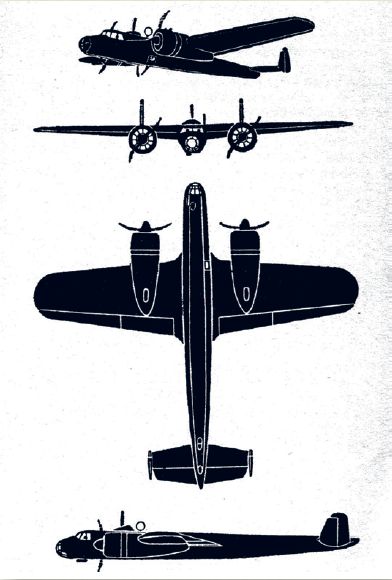
Dorier 17 sillhouette courtesy of Military History Matters

Dornier 17 silhouette courtesy of Military History Matters.

Lt. Col.P.J.Barkham, Commanding Officer of 262 Battery relates the battery`s first action. 

"By the end of July I had left Lent Rise and moved to Dorney Common to take charge of that site. I had not been there very long when on a beautiful clear warm summer evening, with  no wind, as darkness fell there was much enemy activity over the London Docks. Around 11.30 pm. out of the melee, clearly illuminated by searchlights and flying at about 10,000 feet, there was an enemy bomber, a Dornier. It was obviously going to be our first ever, searchlight aided, night, visual engagement. We were not successful, perhaps because our powder burning fuses had been ‘at readiness’ and exposed to the atmosphere for too long to be reliable.-- perhaps not, who knows.-- There were many more anxious nights to follow, but no more hostile aircraft came within our range before the end of August when I left to take charge of a site defending Stanmore Fighter command".

Monday 26th August. 

A local report stated that the gun battery on Dorney Common drew blood. The Hun aircraft was caught in the searchlights over Slough, and a shell fired from Dorney was seen to burst under the port wing. The machine fell away out of the searchlights and crashed in Surrey.  A Heinkel bomber crashed at Caterham, Surrey in the early hours of August 27th, having been hit by ack-ack. fire. The kill was claimed by 148 Battery stationed on Chobham Common.

This is an extract from Round and About Eton Wick: 1939 - 1945. The book was researched, written and published in 2001 by John Denham. 


Monday, 10 August 2020

Extracts from the Court Rolls for the Three Manors

The extracts quoted below were taken from Court Rolls of all three manors and show the great variety of concerns of the courts.

Eton Manor, Moleyn's Fee
View of Frankpledge with Court held there on 29th April 1432

'The tithingmen there, viz., JohnChalone and John Fremie, being sworn came and present that . . . John Hunte had a dungheap placed on the king's way opposite his tenement which is a nuisance to passers-by, so he is in mercy (and fined) 3d. And he is ordered to remove it before the next court upon pain of 40d. '

Here follows the Court Baron.

'The homage being sworn came and presents that... Richard Smyth still permits his gutter to be in ruin to the injury of all his neighbours, so he is in mercy (and fined). And he so ordered to have it well and sufficiently repaired before Michaelmas next upon pain of 40d. '

Eton Manor, Church Fee
(formerly held by Oliver Bordeux)

'Thomas Jourdeley, Hugh Dyere, William Heyward, John Dyere and Thomas Peet being sworn present that Richard Lane who is constable of the town there and at ie Wyke makes default   because he has not come to do his office as he used at the Sheriff's hundred before the gracious gift of this demesne to the College by the King, he is In mercy (and fined) 6d.'

7th January 1452.

Item they present that ... John Wight is a common player of dice and at cards, continually staying up at night, to the injury of his neighbours and  contrary to the statutes (of the Realm), so he Is in mercy (and fined) 6d. '

15th April 1542

‘Item they present that ... Margaret Wyngham is a common scold and disturber of the king's peace, so she is in mercy (and fined) 2d. And furthermore, the same is ordered hence forth not to be a scold on pain of castigation (probably whipping) as ordered in the published statutes

Eton Manor, Church Fee View of Frankpledge with Court, 19th May 1461

'John Clerc constable and beer taster there being sworn presents that... Thomas Jourdeley sold meat at excessive price so he Is in mercy (and fined)'.

Eton, subsidary of Cippenham Manor,
View of Frankpledge with Court Baron of Lord Huntingdon, 4th July 1562

'(The Jury) upon their oath say that the Dean and Canons of the free chapel of the Queen beneath the Castle of Windsor, the Provost and College of the Blessed Mary of Eton, Edmund Windsor  Esquire, John Woodwerde, gentleman hold of the same manor and owe suit of court to this court and with hold suit of court, therefore everyone of them (is In amercement (and fined) 4d.

Manor of Colenorton
A terrier of the lands of John Crawford, Lord of the Manor delivered at the Court Baron, 25th October 1668.

'Eight acres upon Sandells butting upon Broken Furlong on the north and Mill Piece on the south.

Three acres lying by Stonebridge Field butting upon Chalvey Mead on the north and eight acres belonging to Stockdales on the south.

.. . (and also a manor house and thirty two other pieces of land) . . .
  Half acre where the house stands at Eton Wick.

Manor of Eton cum Stockdales
At the Court Leet and Court Baron of Leonard Wessel Esquire, 8th April 1700

'The orders following were taken and established as well by the said Lord as also by the consent, agreement and determination of the Freeholders and Tenants of the said Manor with the advice of the Steward declaring the certain stint and   number of sheep and other cattle that may be kept on the Lammas and Commons within the said Lordship of Manor aforesaid as followeth:

It is ordered that no farmer Freeholder or Tenant shall keep but after the rate of one beast for every five acres of land . . . that no townsman or cottager for and in respect of his house shall have faring or common for more than one beast . . .


... that Henry Moody or those who shall occupy his farm (Dairy Farm) shall maintain the Gate against his house leading into South Field.

Manor of Eton cum Stockdales and Colenorton 
View of Frankpledge with the General Court Baron of William Stuart, 6th March, 1871

'The Jurors present Mr George Lillywhite (of Manor Farm) to be Bailiff of the said Manor . . . they present William Groves (of Eton) to be continued in the office of Hayward.

It is presented and ordered also - that no hogs or pigs be turned into the corn fields until all the harvest shall be got in, under penalty of two  shillings per head to the ord of the manor . ..'

Manor of Eton cum Stockdales with Colenorton View of Frankpledge with General Court Baron, 1893

'Jurors present and order that Thomas Barnes of the 'College Arms' had deposited a large quantity of rubbish upon a meadow near Rail Pond, and the same is an encroachment on the lammas lands within this Manor and that the same   Thomas Barnes be ordered to remove the same within two months . ..'

Occasionally the records reveal the basic facts of incidents which must have provided excitement in the lives of the villagers. Perhaps one of the most colourful concerned Prince Richard of Cornwall, crusader, statesman, and the only Englishman to become King of Germany. He had been granted the manor of Cippenham and part of that of Eton by Duncan Lascelles; his manor house and park were just north of the parish. The moat, which lay within the park, can still be seen by Wood Lane. Here he spent a very happy honeymoon with his first wife, Isabella. However, there were troubled times ahead.

Even though Magna Carta had been signed by King John, there was still dissent between the barons and the king and, during the Barons' War, Prince Richard was captured. During his imprisonment he vowed that if he regained his freedom he would found an abbey. Two years later he fulfilled his promise: in April 1266 a   colourful procession made its way from the Cippenham Manor house to newly built Burnham Abbey for the signing of the charter. Land and privileges were given to the Abbey including part of South Field and possibly also the mill at Cuckoo Weir. In spite of its splendid beginnings it was not a rich house and as landlord it almost certainly exacted all and any dues and rents owing. A rental drawn up in Edward Ill's reign shows clearly that the Abbey held land at Eton Wick. One can only wonder if its school and hospital ever benefited the people of the village.


This is the final part of the serialisation of The Story of a Village - Eton Wick - 1217 - 1977. The Eton Wick History Group is most grateful for the kind permission of Judith Hunter's husband to publish her book on its website.

Monday, 3 August 2020

The Eton Wick Newsletter - December 2017 - `Our Village' Magazine


Ten Years Old - or maybe sixty eight

Yes, this issue of 'Our Village is number 30 and marks the tenth anniversary; but It was born of an Idea In 1949 that this rural, post WWII village should produce a 'one off magazine of Eton Wick news. It was named 'Our Village' and was in fact produced again In 1950. Those two earlier Issues were produced by duplicator and sold at six pence (21/2p today's currency). Articles covered The Village Hall; post war village development; sports; youth club; poems etc., All of course much influenced by the gradual return to normality after the long six years of war and shortages. 

To mark our anniversary we have selected one of those earlier items: 

'Our Heritage' by Florence Ivy Wilson' (1950) 

When I first came to Eton Wick I was told by a man from Windsor that the people of this village were originally those who had flitted from Windsor because they could not pay their bills. I am sure this Is a libel, but if it Is true, then it happened a long time ago, for there was undoubtedly a settlement here in Saxon times, and some Saxon customs are still in use today. Early records are few, but as Canon Shephard tells us in his book 'Old Days of Eton Parish' many of the local names are from Saxon origin. Shot, butt, ward, croft, weir, all these are Saxon terms. 'Wick' is a hamlet, 'ton' a village surrounded by a palisade, (in this case no doubt the river) and leyof is an island. Eton (Ey-ton) therefore means the island town. Bufan means 'above' from which the name Boveney is derived, and Domey comes from 'Donna' which means bumble bees, and Is the bumble bee island (Has anyone been stung lately). 

What was the place like in those early days? We can form some idea, in spite of the scarcity of written evidence. It was certainly much more thickly wooded, for later, when the Domesday Book was written In 1086 it is said that there were woods and copses to feed 200 swine. The river must have been very different then, for there is evidence that the main stream has considerably shifted its course, and in those days it was probably several intersecting streams flowing round a number of islands, on the largest of which Eton itself was founded. Salmon and Lampreys were among the fish caught and trapped, and eels were plentiful. Domesday Book mentions 1,000 eels (in Mill Pool at Deadman's Hole). 

We know that the Manor of Eton belonged to Queen Edith who was the wife of Edward the Confessor and sister to Harold who was killed in 1066 at the Battle of Hastings. She would probably have had a Steward or Reeve to safeguard her interests. Doubtless many a basket of eels, many a fine pig, horse or sheep, together with honey from his wife's bees, and butter and cheese from their dairy would have had to find their way to the old Saxon Palace at Old Windsor. A Hayward would have been appointed to safeguard the hay crop and care for the cattle, and disputes would have been settled at a Court Leete before an open Jury. 

This Court Leete was revived by Eton College in January 1947, they, having acquired the Manor Farm at Eton Wick and with the rights of the Manor of Eton. The temporary bailiff, Mr Bob Bond, swore in the jury who then confirmed him in his office and Mr John Pass was then appointed Hayward. Various matters of dispute were settled regarding the upkeep of hedges and ditches abutting on the Commons, and the number of cattle to be grazed. Long Common and Little Common and the Common rights which entitle households to graze an agreed number of cattle are still jealously guarded from these early days. 

Lammas rights come down to us from the 7th Century and have undoubtedly saved us from a lot of indiscriminate building. Lammas Day was the first day of the grazing season after the hay crop, and the name is derived from Loaf Mass or Bread Feast. In Saxon times the day was kept as a day of thanksgiving for the first fruits of the harvest. It is interesting to see Mr Tom Bond and his family working their land by the Eton Wick Road and to think that the organisation of the fields retains a link with the past which has been unbroken for the last thirteen hundred years. 

The above article is printed exactly as it first appeared sixty seven years ago, and perhaps reflects the old rural interests of that time, and the more active relevance of Lammas. Probably John Pass was the last of so many Haywards, and although Bob Bond may have been succeeded by other Bailiffs It is not considered necessary for us to know, and we for our part do not consider it necessary to enquire. 

Long Common is variously known as The 'Great' or Eton Common and reaches from Eton's Common Lane, through the village to the two bollards approaching Bell Lane. Little Common is quite separate and approximately 300 plus metres north of Sheepcote Road, (by the Motor Museum). The land worked by Tom Bond was the large South Field opposite the Church of St. John the Baptist. He only had the land In the early post WWII years and used it to grow currant bushes and fruit trees. Neither of course acceptable had it been Lammas designated land. The land was later sold to Eton College and is now mainly mono cropped. 

*Deadman's Hole is perhaps last shown on local maps of the pre 19th Century. It was situated close to the water course we know as Cuckoo Weir and Just north of 'Chinese' or 'Long Bray Bridge'. Often In river terms a 'hole' indicates the area Immediately down stream of Eyots (Islands) or promontories. I.e. Boveney Hole is just upstream of Boveney Church and Andrews Boathouse. 

Florence Wilson was a very good Councillor of Eton Urban in those post war years and helped influence the present day larger 'Eton Wick'. She was on several village committees from Village Hall, Women's Institute and Treasurer of the Youth Club. She also wrote plays using the pen name of Ivy Brides, an adaptation of her maiden name Florence Ivy Briddes. Lammas lands and Lammas law must still be relevant today, but with a much changed residency in old Eton Wick, together with the loss of most active farming, apathy has replaced the diligent adherence to all things Lammas or Commons. 

Frank Bond 


This article was originally published in the Eton Wick Newsletter - Our Village and is republished with the kind permission of the Eton Wick Village Hall Committee. Click here to go to the Collection page.

Monday, 27 July 2020

War Memorial Committee Meeting Held July 1920

Committee Meeting held July 1920 

The Treasurer reported that all monies raised, including the sale, totalled £235.15.9d. Monies paid to date were Sargeant's £173.18.0. Mr Nutt £10. and the Diocese Faculty £4.14.6. The printing was a further £1.1.10. - total £189.14.4. leaving a balance of £46.1. 5. Unpaid accounts were: Mr Nutt £10. Sargeant's £23.13.6. 

Proposed Mr Barrett, seconded Mr Ashman that Sargeant's be paid on condition they add the name of Peter Knight to the memorial, and "remove the ring from the top of the memorial free of charge". Agreed. A list of all subscribers to the Memorial to be published.

A final General Meeting was held on July 27th 1920 to place the accounts before the subscribers.

This is an extract from Their Names Shall Be Carved in Stone  
and published here with grateful thanks to the author Frank Bond.

Monday, 20 July 2020

Photographic History - Village Characters - Miss U.M. Badger MBE


Miss Ursula Badger MBE came to live in Eton from Wales during WWII and since that time has worked unceasingly for the townsfolk. In 1991/92 she was Mayor of the Royal Borough of Windsor and Maidenhead. Ursula was awarded the M.B.E. at Buckingham Palace on 21st December 1994. 


Miss Badger was the instigator of the Charteris Day Centre for the elderly. The Centre was in Eton Square, and was opened by the late Lord Charteris of Amisfield. The building was previously the Doctors' Surgery, and before that, the New Inn Public House. 

(In 2017 after 25 years at the premises in Eton Square the Centre was moved to the Eton Wick Village Hall.)

Monday, 13 July 2020

World War 2 Eighty Years On - July 1940


The Eton Wick cricket club continued to play their home fixtures in the rural setting of Saddocks Farm where the rivalry between the local teams attracted good village support. Wins were celebrated, as when the Wick played the visiting Windsor team ‘Victoria’ winning an interesting and entertaining match by 30 runs, having dismissed the ‘Vics’ for 52. The strong bowling combination of Stacey and Buckland took four wickets for 15 runs and 3 for 30 runs respectively. In reply Buckland and McGill soon achieved victory for the Wick. War restrictions and rationing brought a break with tradition. The serving of a cricket tea to the visiting teams ended when tea became rationed in July to 2 ozs per person each week.  


Saturday July 13th.

          
An explosion at High Duty Alloys on Slough Trading Estate killed three and injured more than forty men of which three died later of their injuries.  At the time the incident was attributed to enemy action, as HDA was a major supplier of alloy aircraft parts and incendiary bomb components, but later this proved to have been an industrial accident.  To manufacture many of the intricate aircraft components a heavy forging hammer had been installed.  The regular dull thump, day and night could be heard at times in the village, the countryside around Eton Wick being much quieter in 1940.
Enemy activity during June and July had been concentrated over the South coast with attacks on coastal convoys in the English channel.  July 10th  considered Day 1 of the Battle of Britain , saw  Dornier 17’s and Ju 88’s escorted by Messerschmitts 109’s attack shipping, ports and airfields. It was not until August 1940 that widespread night raids commenced  over Britain.

This is an extract from Round and About Eton Wick: 1939 - 1945. The book was researched, written and published in 2001 by John Denham. 

Monday, 6 July 2020

Old Days of Eton Parish - CHIEFLY TOPOGRAPHICAL.

AT the time when the little Chapel of Ease was built, Eton presented a very different appearance to what it does now. Only a few of the present College boarding-houses were in existence; several shops and the Christopher Inn (St. Christopher, it is called in a Baptismal Register, Sept. 22, 1721) still stood within the old College bounds.

In the High Street, the only house on the west side, between Barns Pool Bridge House and the little Chapel, was a timber house with a large timber yard adjoining. The ground now covered by the houses Nos. 126 to 137 was enclosed by a paling, and shaded by lime trees, and behind was a large meadow called Newman's Meadow.

Beyond the Chapel of Ease (Eton Church History), on the west side of the street, there were also several breaks in the line of buildings. The site now occupied by the Christopher Hotel was open ground.

Most of the houses were low, or at most one-storied, with high-pitched roofs and quaint gables. Many had steps leading down to them, and the windows were mostly small and filled with quarried glass. Some small shops of this character stood in front of the alms-houses, a little back from the road with lime trees before them. Close to Strugnell's Buildings, which are nearly the only surviving relics of the old picturesque houses, stood the parish stocks, in which offenders against the law were condemned to sit with hands and feet locked in, a warning to all beholders. These stocks remained there till the middle of the last century.

In 1811 there was no Post Office. Letters were left at Mr. Hetherington's in High Street and called for by a boy once a day at 6.30. At that date the only side streets were Hawke's Lane or King's Stable Street, once said to have been used for royal stables, and the first part of Brocas Lane. The last house on the right in this lane was the Eton Union Workhouse.

In somewhat later days the Union was removed to what is now the Sanatorium garden, and thence to its present position at Slough.

In what is now Eton Court, there were hatters' shops and slaughter houses. At the back of the east side of the street were extensive gardens.

Tangier Mill, built probably at the beginning of this same century' close to the present waterworks, stood alone and gave its name to Mill fields.

Among the industries of the time was the making of clay pipes, which is still carried on in King's Stable Street, although the demand has greatly decreased.

In many cottages women were in those days busy with their spinning wheels, spinning flax, and when the times were bad a supply of flax was a recognized form of charity.

The space now occupied by Eton Square, Meadow Lane, Baker's Buildings or Union Terrace, and Ernlyn's Buildings, was still either garden or meadow land.

Somewhere near the latter a cattle fair used to be held yearly in March. In South Meadow pony races took place in August and were joined in and enjoyed by the inhabitants generally, many of them riding as jockeys. This was of course before the coming of the railway, and there was no danger of this local event being vulgarised by the inroad of bookmakers and so-called gentlemen of the turf.

But now we must look a little more particularly into the topography of the parish generally. And first as to maps. No really ancient maps of the parish are to be found. Among the earliest is W. Collier's plan of Windsor and Eton, dated 1742. A copy of this hangs in the Cloister Gallery. There is also in possession of Eton College a plan of the parish of Eton, 1798, and a tithe map of the parish 1843 (with the commutation of tithe' as settled in 1839). A map by H. Walker, dated 1839, is owned by Mr. Howard J. Hetherington. From the last chiefly is taken the map printed in this volume.

Then as to boundaries. These may be best described by quoting verbatim an account of the Perambulation or the Boundaries, or the Beating of the Bounds as it was popularly termed, held on Wednesday, August 2, 1815. But before doing so a brief explanation should be given, as to the origin and purpose of this perambulation.

It was a survival of a custom, more ecclesiastical than civil, which came down from the days of Merrie England. In olden times the perambulation took place in each parish at Rogationtide. It began at what was known as the Gospel tree, where the parish priest attended by the choir read the Rogation Gospel, and certain appropriate Psalms were sung. The purpose of the ceremonial was to pray for God's blessing on the land, and at the same time to secure to each tenant the rightful boundaries of his holding. Queen Elizabeth made an effort to retain this godly custom by her injunction issued 1559, and a Homily setting forth the double purpose of the observance was printed for use. in the Rogation season. Under gloomy Puritan influences, this institution met with little encouragement. Anything of the nature of a procession was regarded with suspicion and as unworthy of the gravity of the true Christian. But, as we have said, it survived in Eton, though held not in Rogationtide as formerly, but in August. How may we account for this change of date?

Probably it was to avoid any collision between the boys of the College and the town. The day chosen was after the breaking up of the School for the summer holidays, which took place then on Election Monday, and after the Election into College had been declared. The following is the account of the proceedings.

"On Wednesday the and of August 1815, the Parish Officers, Charity Children and Inhabitants, having assembled in the Workhouse yard, proceeded, with music playing and colours flying, down the street to the College Hall. Here, after having sung the first verse of the morning hymn, they were provided by the Provost and Fellows with a breakfast of roast and boiled beef, and ale. They then proceeded to Black Pots and fixed a bound mark on a withy tree at the water side; a verse of the Old Hundredth Psalm was then sung, and three cheers given. The procession then commenced, and proceeded from thence by the side of and through the ayte, along the ridge of the bank separating the Shooting Fields and Cut-throat Lane (in the Parish of Upton) to Beggars Bridge, and having here fixed a bound mark and observed the usual ceremony, they proceeded through the middle of Chalvey Ditch to Bell's Farm, making a bound mark as the procession passed by Little Park Close, opposite the Parishes of Upton and Burnham. From Bell's Farm they proceeded through the water to the Old Ditch, and having cut a mark they proceeded along the ditch and through the garden and house occupied by William Lanfear, and having nailed a bound mark over the door, they proceeded up the Lane, past Tilstone Gate, by the Boveney side of the hedge to Boveney Ditch, to a withy tree at the corner, where having nailed a bound mark they proceeded along the side of the ditch (leaving Biddle's Close on the right) to Boveney Bridge; they then took water, and having nailed a bound mark on the bridge, and cut a cross on a withy tree on the opposite side of the water, they proceeded and took half stream from thence to Barge-man's Bridge ; after having nailed a bound mark on that bridge, they passed over to the opposite side, where they entered Farm Ayte and continued their course across the ayte to a bound post. They turned by the side of a creek, on the left of Dabchick Ayte, leaving a small part of the ayte planted with withy stumps, in the Parish of Clewer. They took water in the creek, and proceeded by the side of that ayte and Snap Ayte to a division between Snap and Beck's Aytes, across to the Brocas, where a bound mark was driven in the ground ; and from thence by the side of the bank to Carter's steps at Windsor Bridge, they passed over the rails of the bridge to the Corner House, occupied by William Peltham, through the door-way and window facing the river, nailing a bound mark at each place. They again took water, and proceeded along by the side of the bank to the stile in the Back Fields, at the head of the creek, and after having cut a bound mark on a withy tree at the corner, they crossed the water and Mr. Cutler's Ayte to the opposite side of the ayte below the weir, from whence they proceeded by the side of the ayte to a new piece of ground made at the end of it, where having cut a cross on an old stump, and. likewise on the tree opposite, they kept close to the bank to Newark, and having nailed a cross on the post, they took half-stream from thence by the head pile in mid river opposite the oak tree in Wharf Close, where having fixed a bound mark they kept close to the Eton side of the new made • ground to the old head of Black Pots Ayte, where crossing they kept close down the river on the Windsor side of the ayte to the withy tree from whence they started, and thus the boundaries of the Parish were perambulated.

" God save the King' was then sung. The Procession landed, and proceeded to the Brans, where refreshments were provided for the children of the school by the Parish Officers.

 " N.B.—It may be necessary to observe that the Mayor of Windsor, the Chamberlain, and Town Clerk met the Procession at Beck's Ayte, and continued with it to the Head Pile at Black Pots, and likewise that three cheers were given at each bound mark. The Procession consisted of the Revd. Mr. Roper (as Chaplain to the Provost), the Steward of the Manor, the Parish Officers, Charity Children and inhabitants.

Overseers: William Milward, Thomas Nason, Jnr, George Burgiss.”

A similar account was printed in 1825.

The custom was continued till the forties, when with the introduction of the maps of the Ordnance Survey this marking the bounds became superfluous. On the last occasion of its observance there was also a good deal of horse play, and a respected parishioner was pushed into Chalvey ditch and got an unpleasant soaking.


This is an extract from Old Days of Eton Parish by The Rev. John Shephard originally published by Spottiswoode and Co., Ltd. in 1908.