Showing posts with label Parish Magazine. Show all posts

Tuesday, 25 July 2023

Parish Magazine - History Group Meeting Report - 'Festive Evening'

Eton Wick's thriving and enthusiastic History Group thoroughly enjoyed themselves at their 'Festive Evening' on 26th January 1996. The first half of the evening was devoted to a light-hearted Local History Quiz, which involved answering questions on photographic slides of various views in the area. Multiple choice answers were offered, which was rather fortunate for comparative newcomers, but even long term residents had difficulty with some questions, for example, would you have known why a gentleman took to the Thames on an amphibious motorcycle (he did it to win a wager!), and what was the annual event at the village ponds, which used to exist in Common Road - surely the correct answer must be the "model boat sailing competition" - but no, it was motorcycle racing (no doubt organised by the chap with the amphibious motorcycle!).

The winner of the Quiz was Dr. Judith Hunter, the local historian; however, attendance and interest in the History Group is such that her success was not easily won; it was only after a tense tiebreaker that she gained the vital point to enable her to reap the reward of a fine basket of fruit.

The Group very much appreciated the tremendous amount of work and time which Mr. Tony Cullum must have spent in pre-paring the Quiz questions, not to mention the often hilarious alternative answers which he offered; he also proved a very adept Quizmaster, with the help of Mr. Frank Bond on the slide projector.

After the competition the Group spent the remainder of the evening socialising over a splendid buffet supper and delicious punch. Earlier in the evening Mr. Bond had reported that the Group had sufficient funds, with the help of substantial donations, to cover the cost of the repairs and reconstruction work to 'The Pound' at Folly Bridge; and work would commence on 31st January.

The contract has been awarded to Mr. Livesey of Victoria Road. When the work is complete a plaque, explaining the history of the structure, will be sited inside the Pound. Mr. Bond reminded the group that the entry fee for forthcoming meeting has had to be increased from 50p to 70p in order to cover costs. 

Monday, 1 May 2023

From the Parish Magazine - Eton Wick History Group - 100 Years 1897 -1997 Queen Victoria's Jubilees

Frank Bond introduced the April meeting of the Group with a request for suggestions for marking the Millennium; he thanked the donors of the raffle prizes and also those kind members who provide the refreshments for every meeting. Mr. Bond gave a special welcome to Eddie Wilkes; it was "lovely to see him back again"; also, he drew the members attention to the copies of Norman Oxley's book about Arthur Young Nutt, who fulfilled a period of service at Windsor Castle from 1867 to 1912, engaged initially as a draughtsman and attaining the position of Surveyor to the Dean and Canons of St. George's Chapel, Custodian of the Royal Mausoleum and Head of the Office of Works at the Castle. 

Examples of A.Y. Nutt's work were to be seen in the photographs and illustrations of the talk which followed Mr. Bond's introduction: John Denham spoke of "100 Years 1897-1997 (Queen Victoria's Diamond Jubilee)" In fact, the talk drifted back even further to 1887 and covered Queen Victoria's Gold and Diamond Jubilees when Eton and Eton Wick both joined with Windsor for the celebrations. 

The Jubilees provided a wealth of proof of the tremendous loyalty and enthusiasm which the public held for Victoria and the Royal family, and the ingenuity of people like Mr. Nutt with his ceremonial arches at the College end of Eton High Street and on Windsor Bridge, the parties, the processions, the military bands and the street decorations. 

Mr. Denham was also able to entertain with anecdotes about more local everyday matters, such as the savings bank, which was introduced for local children in 1897, their increasing numbers which resulted in pupils being refused from Boveney Newtown; the licensing for marriages of Eton Wick Parish Church and its first marriage between Ann Deverill and Alfred Seymour. 

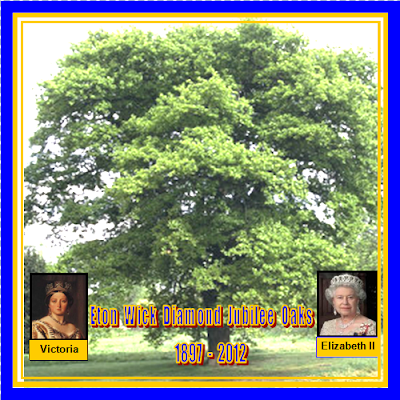
Eton Wick's Football team's game against the Eton Temperance team on 20th November 1887, when Eton Wick lost 2-0: We heard how Toddy Vaughan had planted the oak tree on the green in Common Road - this could have been in either 1887 or 1897 and the History Group are going to fix a plaque to the tree, with due celebration, later on this year. 

We look forward to our next meeting, scheduled for 25th June, when the topic for discussion will be °THE IINFLUENCE OF ETON AND ETON COLLEGE ON ETON WICK", 

Perhaps those who have not yet returned their questionnaire to Mr. Bond could do so before that meeting.  


Monday, 13 March 2023

From the Parish Magazine - Eton Wick History Group - The National Inventory of War Memorials (UK) Project

At the Eton Wick History Group meeting in February, I spoke briefly about the above Project which came into being in the early 1990's and is on-going. Throughout the country memorials sprang up commemorating the dead of the two World Wars but no one thought to make a record of them or their location. It would appear that some have ended up in skips when a Church, hospital or other public building has been demolished. This angered members of the public and prompted 'the powers that be' to act. 

The Imperial War Museum was given funding to enable the project to get started and many groups were approached to help including the British Legion, the Western Front Association and the Women's Institutes. Now with further funding, three full time staff and two volunteers, all the information obtained (plans, photographs, newspaper cutting and the written matter) is being put on computer and will eventually be available to researchers. 

If anyone knows of a memorial which they think may have been missed because it is in an obscure place, do please let me, or Frank, know. It is as a W.I. member that I have sent the project details of all the memorials in Eton, Eton Wick and Boveney (which I know of), fourteen in all, with the exception of the one to Charles Horatio Hobbs, formerly Engineer in the Eton Fire Brigade who was killed at Kroonstad, South Africa on July 4th 1900. His memorial tablet is on the wall outside the offices of the Eton Town Council. This building, of course, was originally the Eton Fire Station. 

I have not been able to discover when the tablet was dedicated. Does anyone know whether the minutes of the Eton Volunteer Fire Brigade have survived and if so where they are? 

Colnbrook (buckinghamshireremembers.org.uk)

The unusual Colnbrook & Foyle War Memorial inscribed on a pillar in St Thomas' Parish Church. The Memorial was erected in 1935 and a further wall Memorial to the Fallen of the Second World War was added in 1945. Both memorials stand next to the Memorial Altar.

This report was written by the late Joan Ballhatchet and published in the Parish Magazine in the March 1999 edition.

Monday, 13 February 2023

From the Parish Magazine - Eton Wick History Group Meeting - 'The Changing Face of Eton'

'The Changing Face of Eton' was the topic explored by Dr. Judith Hunter at the History Group's Meeting on the 12th March; and, as is always the case with Dr. Hunter, the Group was treated to a fascinating blend of interesting and amusing facts and on this occasion, she covered a time span from the 16th to the 20th Century. We were told of wharfs which no longer exist, of tolls on bridges (the Turnpike Trust Act); and have you ever noticed the stone memorial outside Baldwin's Be which commemorates the death in a fire of two boys at that house? 

Some of had no idea that Eton had a thriving pipe making industry for 200 years; but were not surprised to hear that The Cockpit is the oldest surviving house in Eton, dating back to 1442, although the stocks outside came from Clever in 1920. We also heard of the various celebration archways and colonnades designed by Alfred Young Nut for Queen Victoria's Diamond Jubilee - on which there will be much more at the next meeting on Wednesday, 30th April, a evening devoted to '100 YEARS 1897-1997 'Queen Victoria's Jubilee. This topic was previously scheduled for the 25th June but the June and April meetings have been reversed. 

Mr. Bond was pleased to announce that the Group is to award a book and certificate to pupils of Eton Wick School; it will be known as the "Eton Wick History Group: The James Kinross Award". 

During the 1990's the Parish Magazine of Eton, Eton Wick and Boveney reported on the meetings of the Eton Wick History Group. A member of the audience took shorthand notes in the darkened hall. This article was published in the April edition of 1997.


Monday, 10 October 2022

From the Parish Magazine - Eton Wick History Group Meeting - An Everyday Story of Farming Folk

On the 16th of September 1998, the Eton Wick History Group heard how, at one time, four of the farms in the village were farmed by Tarrants. Peter Tarrant, who works not on a farm but at the Airport, was the guest speaker. He had spent much time researching his family's history and was able to tell his audience that his family had been associated with farming since the late 18th Century. The origin of the name 'Tarrant' was De Trent' (c.1100); and early Christian names were often Reginald and Ralph. His family tree diagram clearly showed links between the various Tarrants. 


It was most interesting to see maps showing the original layout and names of fields in the area, and to see 'turn of the century' photographs of various farms and cottages and compare them and their surroundings (many Elm trees then) with the way they look today. There were photographs of haymaking in the 1920's; and how nice to see the beautifully thatched round ricks. To see the old threshing machine by the Dutch Barn (in 1948) when the threshers would move in at the appropriate time and sleep in barns wherever they happened to be working. 

To the non-farmers in the audience, it was perhaps a surprise to hear that, in the past, every tenant farmer had to scour his ditches by 30th November, hedges had to be trimmed or layered by let November, animals had to be branded (no substitutes allowed), and farmers were allowed to grow 5 acres of turnips in every 20 acres they farmed. 


We all know now about the Hayward - he was paid 6d. when the cattle were turned out (apparently not until after 6.00 p.m. on 1st May each year) and 4d. per week after that, and no-one was allowed to stop the cattle from grazing. There were about a dozen dairy farmers up until the 1930's and we heard tales of cattle eating wild garlic and subsequent complaints about garlic-flavoured milk! 

Mr. Tarrant was able to outline the history of many of the farms in the area; and not just the farms but also the tracks which run through them, for example the one from our Common Road through the fields to Common Lane at Eton is called 'The Meads'; and if you, follow the Meadow Lane track right through to Boveney where it reaches Boveney it is/was referred to as a turnpike.

During the War, prisoners of war used to work in farms in Eton Wick; and, as a reminder of those times, Mr. Tarrant had brought with him some memorabilia including the head of an anti-aircraft shell, part of an incendiary bomb and some brass cannon cases. He described the posts and trenches in the fields - constructed to prevent glider landings. 

We saw pictures of the 1947 floods and the severe snow of 1963; and heard about Bob Bond's haystack burning down; and the barn which was blown down in 1987, which was also when the roof was blown off Mr. Tarrant's father's cottages. Then there were the chickens; Mr. Tarrant senior had bred chickens for show as well as for egg production - specialising in Buff Orpingtons and Silver Lace Wine Dots. The final photograph was a beautiful sunset - seen beyond some Elm trees. 

Frank Bond thanked Mr. Tarrant for his fascinating talk and highlighted the 9th December meeting when each member is asked to bring one item of interest for a 'Members Exhibition'. 

During the 1990's the Parish Magazine of Eton, Eton Wick and Boveney reported on the meetings of the Eton Wick History Group. A member of the audience took shorthand notes in the darkened hall. This article was published in the October edition of 1996.

Monday, 12 September 2022

From the Parish Magazine - Eton Wick History Group Meeting - The Canadian Red Cross Memorial Hospital

The Canadian Red Cross Memorial Hospital

Members of the Eton Wick History Group learnt that the person to go to for information on the Canadian Red Cross Memorial Hospital at Taplow is, without a doubt, Mrs. Jean Tyler (formerly Jean Ireland of Eton Wick).  She entertained the Group at their Meeting on the 17th of April, with fascinating facts and anecdotes relating to Cliveden and the history of the hospital: information which she had gleaned during the many years she had worked in its Photographic Department. Mrs. Tyler had been given the task of sorting out all the photographs held at the hospital, and she had brought to the meeting some display boards into which she had incorporated many of those interesting photographs, together with extracts from the 'Chronicles of Cliveden', and other memorabilia.

The History Group learned that the Cliveden House we know today was constructed in 1871, but that the Cliveden estate was in the Manor of Taplow before 1066, held by Earl Godwin, and that in 1660 the second Duke of Buckingham built the first house on that site - it burnt down and a new one was constructed in 1824 for Sir George Warrender only to be burnt down again just

twenty-four years later; and the next re-building was the Classic style house which stands today. The Astors, who were the last family to own Cliveden (they gave it to the National Trust in 1942), gave their tennis court and bowling alley for conversion into the hospital for Canadian soldiers during World War I; it catered for 100 patients at a time, and subsequently more space was made available when the Astors offered their Polo ground which meant they could accommodate 600 patients 24,000 patients were treated there throughout the First World War. At the end of the War most of the buildings were removed. However, under the same arrangement the hospital was rebuilt and re-equipped in 1940 and by the end of World War II it had cared for a further 25,068 patients. The Canadian people gave the hospital to Britain at the end of the War, and it became a national research centre for Rheumatism, particularly among children.

The hospital had its own school for the children, and they were also taught how to carry out certain tasks themselves, such as cooking and typing; a particular highlight for the children was the visit of the Canadian Mounties when in Windsor for the Horse Show. Many local ladies will remember the hospital as a maternity hospital - Mrs. Tyler quotes a figure of over 60,000 babies born there.

When the hospital finally closed in March 1985, the Maternity and research units were moved to Wexham; and a stained-glass window and alter rail from the Chapel went too. The site of the old hospital remains vacant planning applications for the construction of retirement homes were refused. Much of the foregoing information was also illustrated by photographic slides and Mrs. Tyler, ably assisted by her audience, identified many Eton Wick folk amongst the faces in the group photographs. 

The History Group very much enjoyed Mrs. Tyler's talk and the Group looked forward to its next meeting, on the 22nd of May 1996, when the Lock Keeper from Old Windsor talked about The History of The River Thames Middle Reaches. 

Tuesday, 9 August 2022

From the Parish Magazine - Eton Wick History Group Meeting - History of the Council

The meeting of the Eton Wick Village History Group on 4th September 1996 commenced with a surprise: the most welcome announcement from Mr. Kinross that he was going to hand over, for the benefit of the Group's funds, £2,000 which he had received as unexpected compensation as a result of his successful claim (via the local Borough Ombudsman) that the Royal Borough and the Royal County of Berkshire were guilty of maladministration in the matter of industrial development on Common Land in this area. 

Mr. Kinross felt that as, in his opinion, this History Group was the only body which had taken an interest in our Commons (and he referred to the restoration of The Pound) the Group's bank account was the obvious home for this money, which had come in from the Council coffers. He thanked Mr. Frank Bond and his team and asked that they accept the cheque for £2,000 to further the aims and successes of the Eton Wick History Group. 

Mr. Bond thanked him profusely and suggested that perhaps the first purchase from these new funds could be audio equipment, which could be made available to certain other groups in the community. 

Councillor Ronald Clibbon

Mr. Bond then introduced Mr. Ron Clibbon, who was to talk about the 'History of the Local Council'. Mr. Clibbon had served on the Urban, District and Bucks Councils. He said that he had experienced great difficulty in finding any early records, but eventually Bucks County Council found minutes of Eton Council dated 6th May 1897, when the Chairman was Mr. Austen Leigh and another Council was Mr. Somerville.

138 High Street: Council's offices 1890-c. 1957

He told the group that Eton Wick was part of Eton Rural district until 1934 when it was transferred to Eton Urban District Council. At that time Eton Wick had no main drainage, no electricity and no street lighting; electricity wasn't installed until after the Second World War and we had 'open lagoon' sewage until 1954! 

102 High Street: Council's offices after c. 1957

Mr Clibbon took the group through the history of not only the local councils but also the construction of the various Council properties in the area; and he told of the considerable discussion which took place in deciding which trades should have shops in the parade, the terms of their leases and what their rents should be; they decided on a fish shop, butcher, chemist, baker, grocer, newsagent and greengrocer. 

We learned that the Duke of Edinburgh came to open the Stockdales Road Recreation Ground on 14th October 1952. The last major development was Haywards Mead, which was to provide dwellings for older people. 

Mr. Clibbon's talk encompassed considerable information, not only about the running of the Councils but also about the many local people who have done so much for the area in so many ways_ The meeting ended with a show of slides which included many reminders of the past such as the boys' clubs, the Scouts (formed in 1932) and Guides (1933); Harry Wakefield's football club which he formed in 1946, and the cycling club which went round Cornwall in 1949. 

The next meeting of the History group in be on the 23rd October, when John Coke, the Chairman of the Slough & Windsor Railway Society will talk on The Rail Connection into Windsor'. 

During the 1990's the Parish Magazine of Eton, Eton Wick and Boveney reported on the meetings of the Eton Wick History Group. A member of the audience took shorthand notes in the darkened hall. This article was published in the September edition of 1996.


Monday, 11 July 2022

From the Parish Magazine - Eton Wick History Group Meeting - The Influence of Eton and Eton College on Eton Wick and Infant Welfare


Mr. Cullum introduced the 25th June 1997 meeting of the History Group. He mentioned that plans for a visit to the Rowing Lake site had not yet been finalised; the unveiling of the Group's new plaque at the tree planted by 'Toddy' Vaughan to commemorate Queen Victoria's Diamond Jubilee was to be marked by a small ceremony towards the end of July. 

Mary Gyngell and Mr. Povey had both written to Rail Track concerning the untidy state of the viaduct and Rail Track had since removed all the old boarding and have undertaken not to re-rent the arches. After acknowledging the generosity of the ladies who provided the Group's refreshments, Mr. Cullum handed over to Mr. Bond for the topic for the meeting: 'The Influence of Eton and Eton College on Eton Wick', after which Mrs. Ballhatchet would give a brief talk on 'Infant Welfare'.

Mr. Bond opened by pointing out that both Eton and Eton Wick had been in existence for many years before the College arrived in 1440, that Eton itself may already have been 700 years old at that time; and that whilst Eton College never set out to Influence Eton Wick, it had done so, in one form or another, for 557 years. 

Mr. Bond then painted, in words, an onward-flowing picture of the area from those early times, when the sand around here would have been thickly wooded (lots of willow and oak) and boggy with more streams and an abundance of fish (1d. a bushel for young salmon!), it is apparently recorded in the Doomsday Book that Eton paid a tax of 100 eels. He pointed out how fortunate Eton Wick is to be surrounded with Lammas and Common lands and he urged the members to be on their guard against any invasion of this protected land. (Mr. Bond later mentioned that apparently two Eton Boarding Houses and houses near The Willowtree stand on Lammas land - although it should be noted that this can be permitted provided a similar area of land is freed to be registered as Lammas to compensate for the loss). 

Mr. Bond was able to tell us a great deal about the history of the College, including lesser known facts such as the King (Henry VI) allowing weekly markets and two annual fairs because of the influx of people required for the construction of the Chapel and College - and keeping the College boys in Chapel whilst the Pig Fair' was on because the boys used to cut the pigs' tails off; and Edward IV's planning to send all the goods and chattels from Eton College to St. George's Chapel but suffering a change of mind when he realised that Windsor Castle could not accommodate his 'lady friend', Jane Shore; she was then housed at Eton College and all the College possessions were returned! 

Needless to say, Mr, Bond's talk contained an abundance of information and it would be impossible to reproduce even a fraction of it here. As to the influence of Eton College and Eton on Eton Wick: The College must have hindered the growth of Eton itself, as a town, in that the spread of the College buildings resulted in demolition of town property and Eton residents moving out to Eton Wick. Against this must be balanced the opportunities for employment offered by the College over hundreds of years to both Eton and Eton Wick residents. It should be remembered, too, that many Eton masters and their wives initiated and supported local projects and that Eton Wick enjoys its Village Hall courtesy of its College benefactor, Toddy Vaughan. Another Eton master, Mark Anthony Portly (b. 1731) founded the charity which resulted in the setting up of Eton Porny School. College boys still come and help our more elderly residents and two boys help at Eton Wick School. 

Mrs. Ballhatchet continued by outlining the influence the College had on the provision of health care for mothers and children - starting (in 1915) one of the first baby clinics in [Buckinghamshire, which was run by a Nurse Orchard with a committee Including Eton masters' wives. By 1917 the 'Babies Welcome' clinic was well established, records of babies' health were kept and talks were given by the local doctor, Nurse Orchard or one of the masters' wives. Mothers were able to make purchases at the clinics of such items as baby milk and Viral, material, knitting wool and patterns, second-hand clothes - and Eton College dripping? Eton Wick's clinic always did well in County competitions and presentation of the certificates awarded was made at an annual picnic at one of the boys' boarding houses; and there was always as Christmas Party. This clinic, started 82 years ago, still meets once a month with a local doctor and nurse in attendance.

The next scheduled meeting was to be on WEDNESDAY, 10th September 1997, when a representative of Oxford Archaeological Unit will give a talk on 'THE ETON COLLEGE ROWING LAKE'.

During the 1990's the Parish Magazine of Eton, Eton Wick and Boveney reported on the meetings of the Eton Wick History Group. A member of the audience took shorthand notes in the darkened hall. This article was published in the August edition of 1997.


Monday, 13 June 2022

From the Parish Magazine - Eton Wick History Group Meeting - Archaeological History and Finds of Eton College's Rowing Lake


On the 13th of August and 10th of September the Group explored the archaeological history and finds of Eton College's Rowing Lake site. Approximately 45 enthusiasts visited the site itself in August, meeting at the newly formed information Centre at Boveney Court Farmyard to commence with a short explanatory talk, given by Mr. Tim Allen of the Oxford Archaeological Unit, and then transferring by minibus and cars to be conducted around the site by Mr. Allen: subsequently returning to the farm to examine various finds. This was the end of the archaeologists third summer of excavation there and they have examined two-thirds of the Rowing Lake project area. The remaining third will continue in agricultural use until after the year 2000, by which time it is hoped that half of the rowing course will have been dug and the main contractors will then be ready to clear remaining land to enable the archaeologists, with the help of students and school-leavers to check it out before the final 1200m of lake is excavated. Our site visit had to be drawn, reluctantly to a close when the light failed, and we were treated to a beautiful sunset.

The finds have been numerous, some very exciting, and Mr. Allen's enthusiasm was most infectious, so there was a very good turnout when he came to give a talk to the Group on the 10th of September. He illustrated it with many photographic slides depicting not only some of the fascinating finds, but also explanatory maps and diagrams to enable us to pinpoint their precise locations. Mr. Allen explained that the archaeologists' first step had been to fly over the site and examine crop marks, areas which remained wet when others were parched, mounds etc. Crop marks in the area showed the site of Roman and Iron Age enclosures and Bronze age burial mounds and wet areas proved that the Thames had previously meandered down a different channel. In 1993 they thought that anything of interest would be found on dry ground (magnetic and electrical resistance tests don't works when the area is wet) but, in 1994 they dug trenches in the wet areas and soon found a large Mesolithic (8000-4000 BC) site they found 35,000 flint tools in an area of 50m. A hearth and some pottery were dated at 4000 years old and vertical posts which were probably bridge supports proved that the major channel of the Thames flowed through the project site until some 2000 years ago evidence of two bridges was found in 1995 and a further four in 1996 - one bridge dated from 1400 - 1300 BC and another from 800 - 400 BC (even remains of a beaver-lodge were found, complete with dead beaver). Until about 300 AD the channel continued around the south side of Eton Wick where the Neolithic enclosure was found in South Field: in fact, there were enclosures at each end of the original channel. 

The remains of beetles, snails, plants, and pollen in the peat have enabled the archaeologists to reconstruct a complete environmental history of the Rowing Lake site: how 6,000 years ago it would have been completely wooded and then gradually the land was cleared. Large groups of people lived there in Neolithic times they were the earliest farmers in Britain and thousands of flints, pottery and animal bones dating back 6,000 years were carefully excavated; pots were round-bottomed which indicated they were from the continent and had been brought by the first settlers in Britain; quern stones were found and they would have been Roman, as would have been the remains of a cart and Roman pots. 

There were two Bronze Age barrows circular ditches generally with burials in the centre: a number of skeletons - there had been 7 cremations in and around the East barrow alone and inhumation burials (normally laid on their side and with their knees tucked up under their chins) of an 18 year old woman with a decorated pot dating to 1500 BC, a roan of about 45 and a child of 12; also one skeleton laid on its back which still had an amethyst pendant and could have been Saxon; and then, of course, there was the skeleton, Luke, who dated back at least 2.500 years. There were, too, skeletons of cattle and sheep. Another exciting find was a Bronze Age well, lined with planks the earliest known of in Southern Britain. A coin made in Kent between 100 and 50 BC was found; and another coin dated 210 AD. it is thought that during the Roman Period the area became a low status farmstead site; and the head of an aid (a primitive wood plough) was found it dated back to about 900 BC.

There was, of course, much more; and we look forward to the return of the archaeologists in 2000 or 2001, when we hope there will be more exciting finds to record.

During the 1990's the Parish Magazine of Eton, Eton Wick and Boveney reported on the meetings of the Eton Wick History Group. A member of the audience took shorthand notes in the darkened hall. This article was published in the October edition of 1997.

Wednesday, 18 May 2022

From the Parish Magazine - Eton Wick History Group Meeting - Local Entertainment Before the Age of the Telly.

The members of the Eton Wick History Group enjoyed illustrated talks from three speakers when they met on the 8th July, 1998. The topic was 'LOCAL FETES, FAIRS, CARNIVALS AND CONCERTS' and the group was entertained by John Denham, Joan Ballhatchet and Frank Bond. 

Frank was the first to take the floor; he described the various 'big' days in Eton Wick going back 200 years to when, for the 100 people who then lived along Common Road or in farm cottages, a 'big' day was simply having a day off from work. There would be traditional days of celebration; May Day for example, the day when cattle and horses were let out on to the Common; the 1st August (Lamas) which was at harvest time; there was Eton College's `Fourth of June' celebration when many of the inhabitants of Eton and Eton Wick would turn out to see the Procession of Boats. Another special day was the one reserved for `Beating the Bounds' - this was originally an ecclesiastical duty, with the civil authorities later becoming aware of the necessity to mark out the area's boundaries; the College used to provide a breakfast of ale and roast beef for those taking part. (Perhaps we could 'Beat the Bounds at the Millennium?) Less formal, but just as welcome, treats would be those such as Mr. Lovell's Concert Parties; Pelham's Funfair at Eton Wick; Sunday School and Boys' Club outings and pub outings; and the Horticultural Society's tradition of donating fruit and vegetable, taken by horse drawn cart, to King Edward VII Hospital. There was certainly no shortage of functions to prepare for, anticipate and enjoy. 

Mrs. Ballhatchet gave a vivid and fascinating description of the Horticultural Shows, which were among the highlights of the Summer. Trestle tables were laden with fruit, vegetables, flowers, needlework, and various types of craft work manufactured by men and boys; there was poultry and livestock; there was a beer tent; there were coconut shies, and races for children and adults, with prizes presented by a VIP.; and in the evening there would be dancing to a band which would have played all day. The earliest record of an Eton Wick Horticultural and Industrial Exhibition appears in the first Parish Magazine, and the event was to take place on the 21st August 1878 in the Wheatbutts orchard. Mrs. Ballhatchet read out various highlights from the Magazines' reports, which included subjects as diverse as the need for Eton Wick's Drum and Fife Band to have new uniforms (1887) to the fact that a 'Collection of English Snails' had received a special award, a swan in a lake scene was constructed entirely of fish scales; and on one occasion two live wasps' nests were displayed as exhibits. The last Horticultural Exhibition entry was in the Parish Magazine of September 1939; but after the Second World War, in the 1950s, the exhibitions recommenced under the title 'The Allotment Holders' Show and these continued until 1963 by which time there was a new entertainment in the form of the annual Wicko' Fair which, with its many star turns and celebrity attractions, eventually, grew to be so well known, popular and successful it became difficult to control, it had lost its 'Village flavour' and so was finally abandoned after 1982. 

A delight of the evening was the sight of so many photographs of Concert Parties and Pantomimes - originally these were held to raise money for the football team's kit - the team originally wore their own white shirts and black shorts made from the blackout material. The entertaining troupe was called The Unity Players' (after 'United'); and costumes for the shows were made from parachute material, crepe paper, 1/- worth of dirty muslin from Petticoat Lane and any other odd bits and pieces that came to hand; props and scenery were painted in the old mortuary; and a generator provided power from outside the building. 

John Denham was the expert on Scout Fetes, also their Gang Shows, raffles, jumble sales, whist drives, in fact anything which would bring in money. The first of the Village's Scout Fetes is recorded as being in 1952 and it was held in Wheatbutts, where the Scout Hut was then sited. This but was burnt down in 1961 - it had been hired out to a skiffle group who had suspect wiring. The fetes and gang shows (which were in true Ralph Reader tradition) were held over a period of about 45 years; there were exhibitions, and the displays were always of a very high standard. Mr. Moss of Eton Wick School introduced the boys to the game of 'Shinty' and this soon became Eton Wick's adopted sport; the Shinty finals were always played out at the Scout Fete, including men against women - it eventually became so rough that Mr. Moss pulled out! Other entertainments at the fetes ranged from Penny Rigden's dancing troupe to Guards' weapon displays and American Air Force drill exhibitions. These fetes continued until interest waned in 1973. 

Earlier in the evening Frank Bond had pointed out that this was the end of the 7th year of the Group; and he thanked Mary Gyngell who had provided cakes for every meeting over that period; and thanks, were also given to the Committee, particularly Joan Neighbour, Zena Redhunt, Rene Thompson, Mrs. Jean Tyler and Brenda Irvine. The programme for 1999 was issued in September, suggestions for subjects welcome. 

During the 1990's the Parish Magazine of Eton, Eton Wick and Boveney reported on the meetings of the Eton Wick History Group. A member of the audience took shorthand notes in the darkened hall. This article was published in the August edition of 1998.

Tuesday, 19 April 2022

From the Parish Magazine - Eton Wick History Group Meeting - The Pubs in Eton and Eton Wick

About 80 people attended the first meeting of 1995 on Wednesday, 1lth January. The Pubs in Eton and Eton Wick were the subject of the talks illustrated with slides and presented by Tony Cullum and John Denham. At the turn of the century there were twenty-four pubs, taverns, and inns in Eton. The number in Eton Wick varied as time went by but for many years now the four, we know have been in existence, the oldest being the Three Horseshoes.

On display during the evening was a scrapbook showing the history of The Three Horseshoes. This was compiled by members of the Eton Wick & Boveney Women's Institute in 1975 and was entered in a county competition shortly after our move into the Berkshire Federation following the county boundary changes of 1974. The talks and slides were followed by a social time with a variety of refreshments including John Denham's famous punch. Our thanks to Mary Gyngell who made all the eats, (little cakes, sausage rolls and mince pies). We had a raffle to which helped to defray the extra expense.

In his opening address, chairman Frank Bond spoke of the progress made with the plans for re-storing the Pound. Mr. Geoff Hayes, a local man who has specialist knowledge regarding the restoration of old buildings is preparing specifications for builders' estimates. This is pro-ably going to be a bigger job than had at first been anticipated. 

The next meeting will be on Wednesdays 22nd February in the Village Hall at 730 p.m. Full details will be given on posters and in the local papers, nearer the date. 


During the 1990's the Parish Magazine of Eton, Eton Wick and Boveney reported on the meetings of the Eton Wick History Group. A member of the audience took shorthand notes in the darkened hall. This article was published in the January edition of 1996.

Wednesday, 16 March 2022

From the Parish Magazine - Eton Wick History Group Meeting - Inns, Taverns and Alehouses

At their 13th December meeting, Eton Wick's history enthusiasts were treated to a fascinating talk on the topic of "Inns, Taverns and Alehouses". The well-known local historian and Archivist for the Royal Borough's Collection, Dr. Judith Hunter introduced her subject by quoting "What history you cannot find in the manor house and the church; you find in the inn". She then took her audience, with the help of many photographic slides, on a 'pub crawl' commencing with the very basic ale houses of medieval times right through to this area's public houses and hotels of today. To think that it all began with a humble folk indicating that they had home-made ale to sell, by erecting a sort of 'witch's broom-stick', like a flagpole on the front of their hovel; and that in the 1550's a condition of an Inn's licence was that it should not. offer meat on Wednesday, Friday, or Saturday - thus forcing folk to buy and eat fish on those days, increasing the requirement for fisherman and boats which could then be called up, in case of emergency, for naval use.

Three House Shoes

We heard that the deeds of Eton Wick's 'Three Horse Shoes' date the building back to 1700 and it may well have been a 'pub' then; and that Windsor had a tavern as early as 1300; and would you have known that part of Windsor's 'Castle Hotel' was once an inn called the 'Mermaid'; or that, if you were being chased by police and you nipped into the front and out of the back of one of those houses which used to stand on the Castle side of the road at the bottom of the Hundred Steps, you were then in the Castle Ditch and safely out of police jurisdiction?

Dr. Hunter's imparting of historical facts was delightfully interspersed with such interesting and humorous snippet of information; and she is bound to be asked to talk to the group again before long.

Earlier in the evening Frank Bond had reported on the Group's financial status and commented that £100 had been earmarked towards a plaque for The Pound, for when the work there had been completed, he urged members to help swell the funds by purchasing, for a mini-mum donation of 50p per copy, the Environmental Fund booklet. He is considering publishing a book of old photographs and interesting facts about Eton Wick, and profits from sales would be invested in the Group.

The Committee is keen to have someone volunteer to record, a history in the making, present day events and changes in village, for example, the archaeological finds at Dorney, the traffic calming measures both in Eton and Eton Wick, the fire which destroyed a barn and all Mr. Palmer's winter fodder for his livestock, and even the removal (after so many years) of the air raid siren.

The following meeting was held on Wednesday, 6th March 1996, and the topic was the History of Dorney Church, Village and Court. 

During the 1990's the Parish Magazine of Eton, Eton Wick and Boveney reported on the meetings of the Eton Wick History Group. A member of the audience took shorthand notes in the darkened hall. This article was published in the January edition of 1996.


Monday, 31 January 2022

From the Parish Magazine - Eton Wick History Group Meeting - Old Photographs of Eton and Eton Wick

At the meeting on the 29th October the Group was saddened to hear of the deaths of Miss Banham and Ernie Gyngell. We shall miss them both and our sympathies go out to their families, particularly to Mary Gyngell who has not only to cope with her bereavement but also is to have a hip operation - despite an of which she still produced her usual trays of home-made cakes for the evening's tea interval.

So it was in sombre mood that the Group settled down to hear Frank Bond take them through some of his collection of old photographs of the area. However, spirits were soon lifted as he dealt with each photograph in some depth, producing a history in pictures which commenced with a slide of a picture of Eton High Street dating back 150 years. Some of the photographs were taken at the turn of the century and it was fascinating to register the changes which have taken place over the years; interesting, too, to have Mr. Bond identify so many of the people in the photos; and not just his own family, as in the 1895 snap of boys (one of whom was his father) on the footpath to Chalvey carrying huge bunches of dog-daisies to be sold at Dorney Gate or Boveney Lock but also others such as Alf Quarterman, Hammer Stannett - perhaps the last real Hayward, and John Henry Kemp the lockkeeper.

Henry "Hammer" Stannett the last real Hayward.

Many of these older photographs were taken by Mr. Lovell, who ran the local combined Post Office, bakery, and hardware shop; others were by Mr. Hearn who came from Sunbury to Eton Wick in 1908. He was a saddler, his shop sign said he also repaired umbrellas, and when his wife died, he finished with the shop and set up an engineering works in Victoria Road; he also started a taxi business with a Model T Ford.


We heard how the original (1840) school, at the top of The Walk, was made into an institute for men and boys when the present school was built; and how the institute was turned into a shop in 1902 by a Mr. Pratt - whose painted sign can still be seen on the side wall 95 years later; the shop then passed through the hands of a succession of owners: Harman from 1908, Anderson from 1913, and then various others until 1988/89 it was converted into the flats we see there today. 

Villagers reminisced over photos of our two old village ponds, including one of the 'big' pond taken in 1920 with Mr. Bond's sister, Eva (now 83) standing by the fence. This big pond was deep enough to swim in, and it existed until the 1930's after which it was filled in. In yet another shot we could see the ten houses which made up Prospect Place: these houses were mainly 'one-up-one down' with shared toilet facilities, and one at least of them housed a family of eight! And it is hard to believe that the 'modern' houses at the end of Common Road closest to Bell Lane contain the structures of the original old properties, which simply had an external skin and roof built over them to modernise and increase the size of the accommodation. One of the lady tenants had this work carried out around her whilst she remained in the property: she would not move out for fear of losing her Lammas grazing rights. Unfortunately, she suffered such hardship during the course of the work that she fell ill and died soon afterwards.

There were happy photographs of haymaking and of children running races during what must have been a celebration of either Empire Day or the Coronation of Edward VII; and there were the sadder ones as of the unveiling of the War Memorial at the Parish Church. But what the evening brought home to the Group more than anything else, was the importance of keeping a photographic record of our ever-changing surrounds - whether it be new construction it the removal of an old 'landmark' like the old air raid siren. All should be recorded for posterity with details on the back of each print giving the date, the location and the names of any people captured in the frame.


The next Meeting will be on the 10th December when the topic will be 'THE OLD CHRISTOPHER INN (opposite Eton College Chapel) with punch and mince pies to follow. 

During the 1990's the Parish Magazine of Eton, Eton Wick and Boveney reported on the meetings of the Eton Wick History Group. A member of the audience took shorthand notes in the darkened hall. This article was published in the September edition of 1996.


Tuesday, 28 December 2021

From the Parish Magazine - Eton Wick History Group Meeting - History of the Churches of Eton Wick.

The Eton Wick Village History Group was treated to a trio of presenters at their last meeting on 26th June 1996, each of the trio representing one of Eton Wick's places of worship.

1930's Chapel Plan

Neville Thorman spoke first, about the newly extended and refurbished Methodist Chapel, which was built in 1886 entirely as the result of the vision of Frances Annie Tough, a young woman who had come to Eton Wick in 1877 from Rotherhithe, on her marriage to Charles Tough who had been appointed manager of Bell Farm. Annie Tough, with her sister, had become very much involved with the Methodist Church in Rotherhithe and when she came here she soon saw the need to encourage a religious approach locally, and she spent part of her first Sunday in the village delivering tracts. She found travelling to the Primitive Methodist Church in Windsor inconvenient and was rebuffed when she asked them for money to help build a chapel here; she tried Maidenhead and they decided to support her by sending a Mission Band to Eton Wick; she went to the Windsor Congregationalists' services in 'The iron Room' on the Common but, initially at least, found them uninspiring. Annie Tough's mission was to build a chapel and eventually the present site was obtained, through a certain amount of bargaining with a developer, James Ayres, who gave her the land as a reward for her perseverance. The small, congregation of Primitive Methodists set to and found the £300 that it cost to construct the Chapel, some by paying one shilling per week as a pew rent, and it opened. in October 1886. Frances Annie Tough died in 1930 aged 76. The first extension to the Chapel cost £519; and this most recent refurbishment (the 2904 Project) has cost £130,000. Many of the people who have done a lot for the Chapel are commemorated with plaques on the walls of the Chapel Mr. Thorman concluded his most interesting talk with slides showing the refurbishment in progress and also how the Chapel serves the community.

St Gilbert's 

The Roman Catholic Church of St. Gilbert was built in 1964 and Chris Stevens was able to tell the Group where the clergy for this Church came from and how it is only in the last five years that St. Gilbert's has had a secular clergy_ There is no recorded Catholic Church between Windsor and Boveney until 'Our Lady of Sorrows' was built in Eton in 1915 (Lord Bray - an Old Etonian thought that the Catholic boys at the College were lacking in instruction and so had the church built), although there may have been a 'Chapel of Ease' or Chantry for the groups who would go on pilgrimage, tracking along the river. For some years prior to the building of St. Gilbert's, Mass was celebrated on Sunday mornings in the Village Hall - hired for the princely sum of four shillings per week. Chris Stevens told the Group how an original and attractive design for the church was rejected by the Diocese but was later used for the church at Wargrave. St Gilbert's was built, at a cost of £16,000, to a different design on land which was purchased for £1,500. The church was blessed but not consecrated - perhaps it could be consecrated on a appropriate anniversary? St Gilbert, the son of a rich man, wanted to be a priest but initially was turned down because he was a cripple, but. he persisted and became one of the great teachers of religion_ St. Gilbert's is in the Parish of Burnham.

St John the Baptist

Finally, Peter Kreamer told the Group how the Church of St John the Baptist was built in 1866 and so is the oldest church- in Eton Wick. Peter regards himself as the Church's odd-job man. The Church of England became interested in Eton Wick in the 1830's when one of Eton College's chaplains, Henry Harper, encouraged the building of a school room on the corner of Eton Wick Road and The Walk, which doubled as a church. However, by the 1806's the local worshippers needed a larger building, this was recognised by the Provost of Eton College who still then had responsibility for Eton Wick, and by 1867 St John the Baptist, had been built and consecrated, with a lot of the financing contributed not only by Eton College, but by the people of Eton and Eton Wick - the site itself was given by Queen Victoria and she also gave £100 towards the construction costs. The architect was Sir Arthur Blomfield, whose son went on to do many designs for the War Graves Commission. The cost of the construction of the church was E1,573, and the church remained under the auspices of Eton College until 1875 when the Church of St. John the Evangelist was built in Eton. In 1891 the 'Children's Window' was installed - paid for by offerings collected at the children's services In 1892 the first licensed burial took place in the new ecumenical churchyard -that of a six week old child of the Langridge family, who were at Manor Farm at that time. In 1897 the church was licensed to conduct marriages. Mr. Kreamer then went on to speak of when the church was flooded in both 1894 and 1947, of the installation of gas lighting (1935) and subsequently electricity (1951); and of the many local activities prompted by the Church, often in competition with other local organisations.

But it is good to note that there are times when all three Churches work together; just to give two examples: all are represented at the Remembrance Day Service at St. John the Baptist; and the ladies all get together in one of the churches for the Women's World Day of Prayer.

Mr. Frank Bond thanked the speakers. He mentioned that The Pound was to be officially locked with ceremony on 12th July. The next meeting of the group will be on Wednesday, 4th September, when Mr. R.J. Clibbon will speak on 'The History of the Local Council'.

During the 1990's the Parish Magazine of Eton, Eton Wick and Boveney reported on the meetings of the Eton Wick History Group. A member of the audience took shorthand notes in the darkened hall. This article was published in the September edition of 1996.


Monday, 4 October 2021

From the Parish Magazine - Eton Wick History Group Meeting - A History of the River Thames

A report on the May 1996 meeting held at the Village Hall.

Roy Dunstan is a Lock Keeper, at present at Old Windsor, and my word he knows his River Thames, from its source at seven Springs in Gloucestershire to the Estuary. He was the speaker at the May meeting of The Eton Wick History Group and he talked of the changes in the control of the river over the centuries, the various organisations which held jurisdiction over it - from the Mayor of the City of London in the twelfth century right through to today's Environment Agency, with particularly fond mention of the Thames Conservancy. He spoke on the serious subject of pollution and, in contrast we heard about the Lock Keeper's wife at Cliveden - 'Mad Mary' - with her long tweed skirt and wildly swinging legs!

Boveney Lock Keeper
Dave Gibson
Mr Dunstan told us about the early weirs and locks - Boulters was built in 1772 and Bray,Boveney and Old Windsor locks were built during the first half of the 19th century; and he explained how busy the Thames used to be, with barges carrying Witney wool and Cotswold stone down to London; and some of the barges were huge - apparently one weighed 140 tons, and had a crew of six and was towed by twelve horses. In the 17th century over 100,000 tons of cargo was being carried on the Thames - now, of course, we see it used mainly for recreation. In more recent times, one huge barge almost caused a disaster when, in 1992, the unmanned ‘Actief’ (a floating restaurant) broke loose from its mooring and drifted down towards Windsor Bridge - Dave Gibson, the Boveney Lock Keeper saw what had happened, jumped on his bike, overtook the vessel, enlisted the aid of a couple of College staff near Windsor Bridge, and between them they managed to board the boat and make it safe before it could collide with the bridge - unchecked it could have badly damaged the bridge or swung across it, stopping the river's flow and causing flooding to the surrounding area. The heroes received a Norris McWhirter award for their bravery.

Barge horses sometimes had to be swum across the river when the towpaths changed from one bank to the other – a situation often caused by rich riparian land-owns not wanting the towpath (but really the bargees) on their side of the river. These riparian owners also objected to the visitors who wanted to enjoy the Thames when passing through Maidenhead during Ascot Week, but their 'Keep Out' notices merely served to provide bonfire fuel for the visiting city dwellers.

Thanks to the conservators, who have been busy cleaning up the Thames since 1866, the river is now cleaner that it has been for many years and fish have a better chance of survival; salmon have returned and to encourage them further some of the weirs have been fitted with salmon ladders to assist them up stream. The river's flow is now expertly controlled by skilful management.

During the 1990's the Parish Magazine of Eton, Eton Wick and Boveney reported on the meetings of the Eton Wick History Group. A member of the audience took shorthand notes in the darkened hall. This article was published in the June edition of 1996.

Monday, 26 July 2021

From the Parish Magazine - Eton Wick History Group Meeting - The Original Christopher Inn

A report on the December 1997 meeting held at the Village Hall.

The 1998 programme of talks was issued at the Group's meeting on the 10th December, promising yet another year of interesting topics; the Committee never seems to run short of subjects, despite the fact that this meeting marked the end of the 7th year of the Eton Wick History Group. The 1998 programme appears separately in this magazine. Mary Gyngell has had her hip operation and is home - we wish her well. (Needless to say, she made the cakes again!). Congratulations to Vi Millis and her husband who celebrate their 60th Wedding Anniversary and Vi's 90th Birthday last month. A man in Canada had sent Frank Bond an 1897 map of Boveney New Town and one of Windsor and a £1 note! 

Tony Cullum then entertained the Group with a talk on the original 'Christopher" Inn, which was situated opposite College Chapel in Eton. Mr. Cullum used the opportunity to take us on a journey through history, commencing with the Inn at Bethlehem at which there was no room and easing us through time, touching on maps of the 6,000 miles of excellent Roman roads in Britain, Hadrians Wall and the other wall from the Clyde to the Forth. 

Soon we had left Augustus, Tiberius, Caligula and Claudius behind and were into stage-wagons, drawn by six or eight horses; and then the spring suspension stage coach, high-perch phaetons, cabriolets and landaus - a trip from London to Bath would probably have been a three to four day journey - hence the need for coaching inns like the "Christopher". 

 And, did you know the difference between a tollgate and a turnpike gate? (A turnpike gate is sturdier and had spikes on the top!). 

There was talk of Thomas Telford and also of john Macadam - who found that the secret of a good, lasting road was to dig down to a depth of 12" , fill with granite chippings and leave it to the horses" hooves to grind it down into a solid base. And there were plenty of horses hooves pounding away, with over 1,000 vehicles leaving London every day in the early 1800s.

 Stagecoaches would leave Windsor at 7 a.m., 9 a.m. and 3 p.m. and, in good conditions, would take about 4 hours to get to London. There is mention of 'The Christopher' in 1511, when it was a shown as a large complex of buildings with land leased with it "contained within 1 acre and occupied by Ruth Cox". The Inn has held various landlords including in 1636 Francis Dickin, from 1753 to 1775 a George King and, when the Inn finally closed, the landlord was a Jack Knight. 

For some time it was the only ale house in Eton which could offer bedrooms. In September 1803 a Baldwin's Bridge Trust dinner was held there at a cost of £5.6s.6d. plus 10/- for extras.

In 1665 College boys were forbidden to go there, but it later became very popular with them and they would claim that they had to go there to meet friends coming from London, or to collect parcels from the mail. Eton's 'Pop' boys used to enjoy the food and ale there, particularly a drink (a bit like punch) called 'Bishop' at 12 shillings per barrel. 

Under the then Head Master, Dr. Hawtrey, the College obtained possession of the site in 1842 and it was used first as a French Pupil Room and then as a boarding house. Jack Knight, the former landlord, moved into 131 High Street and set up shop selling drinks to the boys; in 1871 his lease and goodwill were taken over by a Mrs. Emily Brown and in 1872 it was moved o the present Rowlands/Tap. The present 'Christopher' was opened in 1846 at 110 High Street and owes its existence to the closure of the old 'Christopher' - now called Hodgson House. 

Extract from John Denham's index of Eton Traders

For the remainder of the evening, the Group repaired to the Small Meeting Room to enjoy a splendid buffet meal and Christmas punch. 

The next meeting took place on 21st lanuary when the topic was the 'HISTORY OF SALTERS STEAMERS' and the speaker, Keith French. 

During the 1990's the Parish Magazine of Eton, Eton Wick and Boveney reported on the meetings of the Eton Wick History Group. A member of the audience took shorthand notes in the darkened hall. This article was published in the first edition of 1998.


Monday, 21 June 2021

From the Parish Magazine - Eton Wick History Group Meeting - Celebrating the coming of the railway

The History Group met on the 10th, November to celebrate two anniversaries; one, was to recognise the 8th anniversary of the group's first meeting in November 1991. When the newly formed Eton Wick History Group met for that first time it was expected that about eight people might attend, in fact 46 people were at that inaugural meeting. Seven or eight meetings have been held every year since and the topics have rarely ranged further afield than Cliveden.

The other anniversary, the subject of the evening's talk and display of memorabilia, was the 150th anniversary of the railways coming to Windsor. Dr. Judith Hunter had kindly volunteered to tell the tale of the railways' coming, and to her own research had been added material provided by Renee and Tom Thompson of Tilstone Close. The fine display of railway memorabilia was provided by John Coke of the Slough and Windsor RailwaySociety.

Dr. Hunter began by showing a map of the Slough area dated c1830 when Slough was just a little village with two to three hundred people, Windsor had just half-a-dozen streets, and Eton (apart from the College) was barely more than the High Street. The main methods of transport were by horse, stagecoach or private carriage. But in 1830 the railway era had begun and merchants in Bristol and London were interested in having a railway connect the two cities. 

There were lots of proposals put forward from 1830 to 1835 until eventually the route for the line was agreed upon; going through Slough, Maidenhead, Didcot and on to Bristol - not yet, of course, branching to Windsor - but including Isambard Kingdom Brunel's nationally important 'Sounding Arch' at Maidenhead. Later he was to design the single-span (approximately 200 ft.) iron bridge over the Thames at Eton, linking the viaducts on the Slough to Windsor line. 

Work on construction of the main line began in 1835 and by 1838 it had got as far as Slough, but there was no station at Slough. The reason for this was that Eton College had objected most strongly to proposed routing of a railway close to the College; the Headmaster, Dr. Hawtrey, had talked about the difficulties for masters in preventing the boys taking the train to London (for vice!); it was also suggested the lively Eton boys might drop stones and bricks from the bridges onto the railway carriages. There was long and vociferous opposition and in 1835 the Lords' Committee added clauses to the Great Western Railway Act to prevent any station being opened within 3 miles of Eton College. (There was also some opposition from The Crown, but it was impossible to get a railway into Windsor without going over Crown land somewhere). 

A station was constructed at Langley, where there was a church, an inn and alms-houses, but it remained closed (for 8 years)' and trains stopped at Slough: where there were no platforms, where there was nowhere to buy tickets (so they were sold in The Crown Inn on Crown Corner; later the 'North Star' was built - nearer to the railway halt - and tickets were sold there). 

Members of the Royal Family would board the train at Slough for Paddington; and despite their own objections, Eton College hired a whole train to take boys to Queen Victoria's Coronation. By 1840, College objections had been withdrawn and Slough Station was built (with both the 'Up' and 'Down' platforms on the Slough side). The 'Royal Hotel' was built close by and had its own Royal Waiting Room. 

Cooke-Wheatstone Telegraph 
image courtesy of the Science Museum

Within 18 years of the railway coming to Slough it had grown into a market town - but still only half the size of today's Eton Wick. In 1842, the first terminus for the electric magnetic telegraph service from Slough to London was in-stalled, in a cottage on a small hill by Slough Station. In 1845 the telegraph was used in the capture of a murderer, JohnTawell, who had poisoned his former mistress in Slough, then boarded a tram for London. His description was telegraphed ahead; he was followed from Paddington to his lodgings and was arrested tried and hanged. 

Meanwhile members of Windsor Council were pressing for trains into Windsor, Henry Darville for GWR and James Bedborough for the Southern Railway. Apart from assuming that a railway terminus in Windsor would boost trade, it should also resolve the problem of full carts having to be half-emptied before horses could draw them up Thames Street hill - goods could come in by train instead. The Crown withdrew its opposition to railways crossing its land, after negotiating compensation; and two Railway Acts were passed, both in 1848 - first the Great Western Railway (opened 8 October 1849) and then the South Western Railway (which initially, from December 1849, had to stop at Black Potts and only came on into Windsor in 1851, to the Riverside Station with its 14 sets of doors which gave the Cavalry easy access and ensured the Queen's carriage was always stopped close to an exit. 

The GWR's original viaduct was constructed of timber and was replaced by the present brick-built structure between 1861 and 1863, and its Windsor Station was very modest; the present excessively large and 'Royal' station was built in 1897. In 1929 another station was opened, in Chalvey, but it only operated for 13 months before closure. The branch line into Windsor had crossed Lammas Land and the parish were compensated, but no-one knew what to do with the compensation until, in 1894, Eton Urban District Council and Eton Wick Parish Council agreed that it should be used for the Recreation Grounds we enjoy today.

During the 1990's the Parish Magazine of Eton, Eton Wick and Boveney reported on the meetings of the Eton Wick History Group. A member of the audience took shorthand notes in the darkened hall. This article was published in the December 1999 edition.

Tuesday, 25 May 2021

From the Parish Magazine - Eton Wick History Group Meeting - Village Shopkeepers - Past and Present

"As we live day by day we don't notice changes which are happening around us " 

So said Frank Bond as he introduced his talk on "Village Shopkeepers - Past and Present" on the 27th May 1998. He referred first to the hamlet which was Eton Wick in the year 1800, with just 100 residents; and the to the early 20th Century shops which sold hardware„ groceries etc., and his talk progressed through to illustrate not only the various changes which had occurred. in Eton Wick' s shops and services up to the present day, but also the considerable changes in the community itself There had been seven farms, now some had been adapted for riding schools and others given over to engineering. The countryside itself has undergone changes with areas previously used for crops now given over to leisure and recreation facilities. 165 years ago there were 300 people living in Eton Wick. There was no evidence of any shops here then, or any easy means of getting to shops elsewhere; for there was no transport, other than horse-drawn vehicle or 'Shank' s pony' . People grew their own vegetables, they would purchase milk, flour etc. from the farmers, and they would make home-make jams, pickles and other preserves for their larders; some would have kept poultry for their eggs and meat. There would have been work for the village' s blacksmith, a chimney-sweep, and also for cobblers and  boot makers. 

MUFFIN-MAN

By the 1920' s Eton Wick was being visited by the muffin-man, and a winkle-man and a man who sold fly-papers; did the fly-paper become a muffin-man or a cobbler in the Winter months? Gypsies came selling clothesline props and pegs - most people were a little afraid of Gypsies because of their apparent ability to successfully lay a curse on you if you upset them. Visits from the 'rag and bone man' with his horse and cart were more welcome, particularly by the children who might be given a balloon in ex-change for old rags. As the years progressed there were the annual visits from a `gentleman-of-a-darker-hue' who went from door to door selling ties, collar-studs, etc. from a suitcase. A Mr. Henry came out from Windsor every Thursday with a cart loaded with galvanised goods, ironmongery, soda, soap-flakes and the famous 'Reckitts Blue'. Another welcome visitor, perhaps in later years, was Tom Cox on his Walls Ice Cream Stop Me and Buy One' tricycle - the fact that he only had one leg gave him few problems. There were two other ice-cream vendors - Vettise's and Sacco's - they just came round on Sundays. Out of season these ice-cream sellers would use their carts to transport the rabbit skins and other goods they bought locally. Tom Cox also sold cakes and bread for Denney's bakery (14 cakes for 1s. 0d.). He was also pretty handy with his bicycle pump in that when some poor soul stepped out of hedge in front of him he hit him over the head with it. 

STABLE FIRE 

The Greyhound Pub with Mr & Mrs Newell

Eton Wick had its own coal merchants, delivering by horse and cart. Bill Parrot' s horse was stabled in what is now 'The Greyhound' skittle alley. Early in the 1930's Scottie Hood' s horse' s stable caught fire and Scottie had to be physically restrained from entering the inferno to rescue his horse. The horse perished but the village had a whip-round and raised enough for him to buy another horse. The coal carts, and others, would be cleaned up and would carry the children of the village on Sunday School outings. 

Chantler then took the shop over and added gas masks to the provisions on offer. Harry Chanter was a very helpful and kind man. He was a trustee of the Eton Poor's Estate for 60 years, he was held in great an affection. There were other tenants of the shop after Mr. Chantler, until it was converted into flats in 1987. 

ICE CREAM 

A Mr. Slade set up shops in St  Leonard' s Place (possibly named so because of its view across the Thames to St Leonard' Hill?), this was the first shop in Eton Wick to sell ice-cream. Mr Slade moved on to The Grapes'. In the mid 30' s Joan Taylor set up as a newsagents, early in the 50's it was taken over by the Cowells, then Paxton, Lock and in the 1960' s by Mr. Lunn. In recent years the shop has been converted into fiats and is now called Taylor Court. Yet another shop which no longer exists is the old aquarium shop in Wellmans Cottages. This shop was run from 1908 until 1923 by Bill Hearn - he stocked umbrellas, saddlery, etc. He sold the shop when his wife died and took premises in Victoria Road (From `General' Hill who made nuts in the War?) where he set up a workshop - he ran two taxis. Later this business was to become Ellis Motors, and engineering works was still in operation at the time of the talk. Mr Wiggins followed Mr. Hearn into the 'aquarium' shop (yet another place where Tom Cox used to work); it became Graham's grocers and Provision Merchant, then John Barron. Later it became The Aquarium Shop, and has now reverted to being a private dwelling. We mustn't forget the cycle shop run by Ted Woolhouse from Bonaccorde Cottages "Royal Enfield Made Like a Gun", now a private residence. 

There was a doctor' s surgery in Alma Road, and can you believe we once had a Co-op in Alma Road! There was also a small shop in Shakespere Place (1880). Charlie Ayres started selling groceries in there in 1898. Bill Bolton failed as a butcher there; he was followed by Lucie Binfield, then Mr. Wilshire and then the Chinneries who dealt with rationing. Harry Cook then used it as a workshop. This too, has since been convened into flats. Prior' s, the newsagents in Moore's Lane, was built by Annie Tough's father, James Moore. This shop was occupied by Mr Sibley and then by Mr Prior. 

31 & 31a Eton Wick Road

Another butcher's shop was George Mumford's at 31 Eton Wick Road (Bracken Flowers and a Betting Shop were there in 1998). Mr Mumford tended to get into trouble for letting people have meat in excess of the ration (it  even had a 'Flanagan and Allen' mention at the Victoria Palace). Mr Mumford altered the premises to accommodate his elder daughter and converted part (later to become the betting shop) into a Laundrette. The butcher's shop was later to become a Greengrocers, then a baker' s and is now Bracken the Florist. 

Bistro

In 1951 the Eton Urban District Council built the `Darvilles' parade of shops. In the shop 

nearest to the Village Hall was Mr Barnes (wet and fried fish), next came 'Arnolds' the Butcher's, (when Roy Arnold retired it became a hairdressers).The third shop was O'Flaherty (chemist); fourth was Clinch's Bakery and Darvilles the grocer next to them. Anderson (newsagent and gents' hairdresser) occupied the sixth unit and A. Bond & Son (greengrocer) the final shop opposite the Shepherds Hut. 

Terry Anderson (who acquired the land for the Catholic Church) sold to Gowers; Clinch sold to Darville - who doubled the size of the shop; O'Flaherty sold out to a Mrs. Baker, but there have been several tenants since. When Frank Bond sold his Greengrocers shop it had been in business for 90 years. 

In I973 the Bell Lane parade of shops was built; Joyce Howard (ladies clothing); another was for hi-fi and electrical goods and then homemade brewing equipment and vehicle sundries. Country Fair, the equestrian shop, is to close and be replaced by a bistro. The hairdresser' s has become `Pipedreams' for cake-baking accessories. 

The final photograph shown on this fascinating evening was of Mrs. Cooley and Pam with their milk-float - the last of our milk delivery people. A suggestion for a Millennium Memorial - commemorate site of the 1st school, the 1st official building for church services and the 1st Institute for Eton Wick. All in one building at the bottom of the garden of 'The Greyhound'

The following meeting was held on the 8th July 1998 when the topic was LOCAL FETES, FAIRS, CARNIVALS AND CONCERTS. 

During the 1990's the Parish Magazine of Eton, Eton Wick and Boveney reported on the meetings of the Eton Wick History Group. A member of the audience took shorthand notes in the darkened hall. This article was published in the June 1998 edition.